

Blog - Date posted: 22/07/2026 - Date updated: 19/08/2026
Machine Room-Less Lift: Guide for Homes & Buildings
Whether you’re building a new home, renovating an ex isting property, or planning a commercial project, choosing the right elevator is an important decision. One of the most popular options today is the machine room-less lift.
Unlike traditional elevators that require a separate machine room, a machine room-less lift integrates the drive equipment into the lift shaft or the lift’s own structure.
This design helps save space, reduces construction work, and provides greater flexibility for architects and homeowners.
But are all machine room-less lifts the same? What technologies are available? How much do they cost? And are they suitable for every building?
This guide answers these questions and explains everything you need to know before investing in a machine room-less lift.
TL;DR
- A machine room-less lift does not require a separate machine room.
- It saves building space and simplifies construction.
- They are suitable for homes, villas, apartments, offices, hotels, and low-rise commercial buildings.
- Costs vary depending on size, travel height, number of stops, finishes, and installation conditions.
- Choosing the right lift depends on your building layout, future needs, and local service support.
1. What Is a Machine Room-less Lift?
A machine room-less lift is an elevator designed without machine room that usually houses the motor, controller, and other drive equipment. Instead, these components are integrated into the lift shaft or built into the lift structure itself.
Traditional elevators often require an additional room above the shaft or beside it. This increases construction costs, takes up valuable building space, and can limit architectural design.
Machine room-less lifts eliminate this requirement while still delivering reliable performance and safety.
Today, machine room-less lifts are commonly installed in:
- Private homes
- Villas
- Townhouses
- Apartments
- Office buildings
- Hotels
- Clinic
Their compact design makes them particularly popular for projects where space is limited or where adding a machine room would be impractical.
1.1 What Is the Structure of a Machine Room-Less Lift?
A machine room-less lift is designed to integrate all essential lift equipment within the shaft or the lift’s self-supporting structure. Unlike traditional elevators, it does not require a separate machine room above or beside the shaft.
The exact structure depends on the lift technology, but a typical machine room-less lift includes the following main components:
- Drive system (screw-driven, traction, or hydraulic)
- Guide rails
- Control system and controller
- Safety devices and sensors
- Landing doors and cabin doors
- Emergency lowering system
- Electrical and communication equipment
In many modern home lifts, the drive system and controller are compactly integrated into the lift structure itself. This helps reduce building requirements while maintaining safety, reliability, and ease of maintenance.
The simplified structure is one of the main reasons machine room-less lifts are popular in homes, villas, offices, clinics, and small commercial buildings.
1.2 How Does a Machine Room-less Lift Work?
Although there is no separate machine room, a machine room-less lift still includes all the essential mechanical and electrical components needed for safe operation.
Depending on the lift technology, the drive system may be installed at the top of the shaft, within the guide rails, or inside the lift’s own self-supporting structure.
The controller is typically positioned in a discreet cabinet or integrated into the lift frame, making maintenance access straightforward while keeping the installation compact.
When a passenger selects a floor, the control system sends commands to the drive mechanism, which moves the lift smoothly between levels. Modern sensors continuously monitor the lift’s position, speed, door status, and safety systems throughout every journey.
Despite its smaller footprint, an machine room-less lift includes the same core functions as traditional elevators, including:
- Intelligent control systems
- Automatic floor leveling
- Emergency stopping systems
- Door protection sensors
- Battery-backed emergency lowering
- Emergency alarm and communication features
The exact configuration depends on whether the lift uses screw-driven, traction, or hydraulic technology.

1.3 Where Can a Machine Room-less Lift Be Installed?
One of the greatest advantages of a machine room-less lift is its flexibility. Because it requires less structural space than a traditional elevator, it can be installed in many different locations depending on the building layout and the lift design.
Common installation locations include:
- Beside the staircase
- In the center of the home
- Through a stairwell opening
- In an unused corner
- Within a self-supporting glass shaft
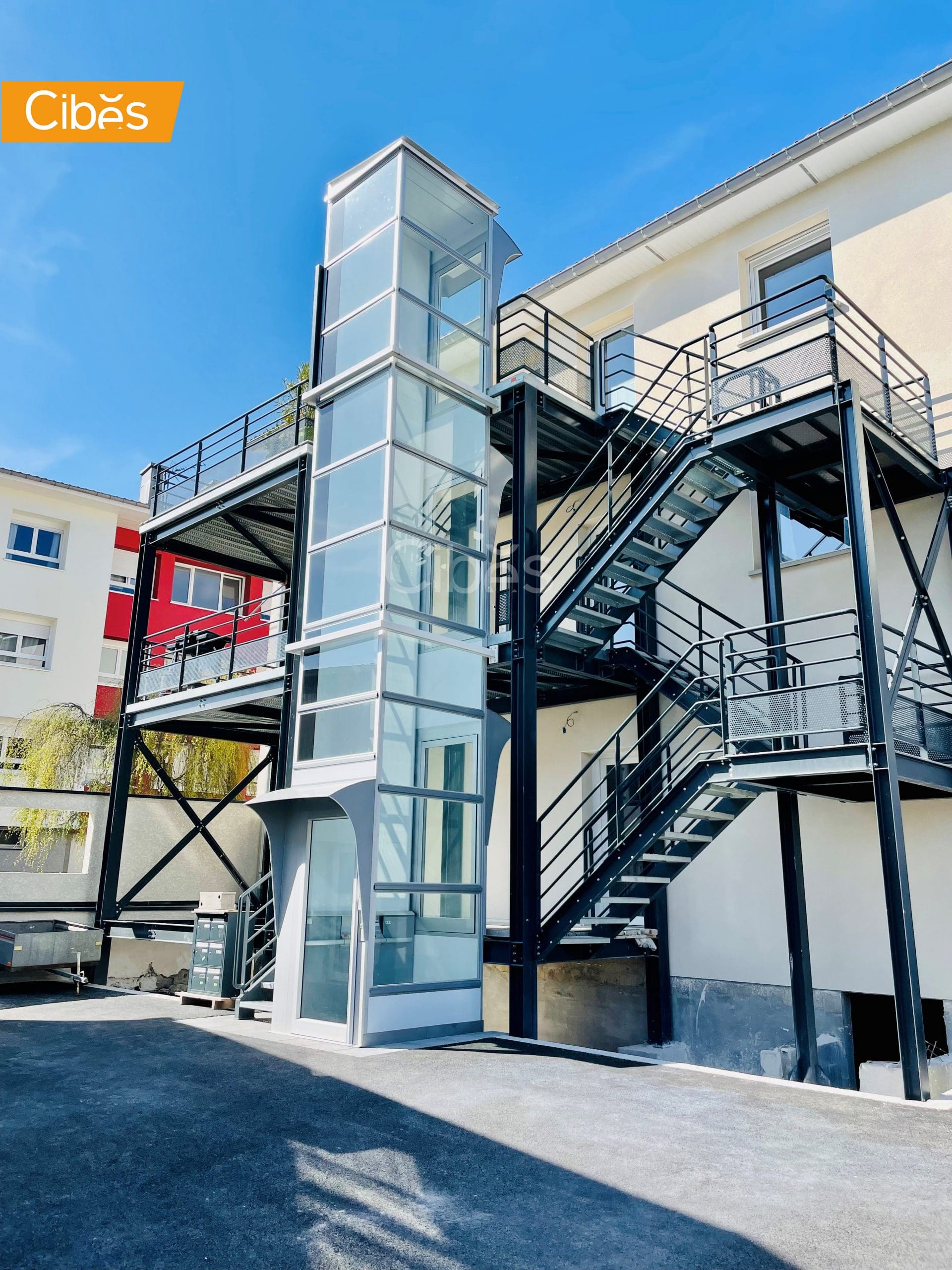
- Attached to the exterior of a building
- Inside office lobbies
- Hotels and apartment buildings
For existing homes, many homeowners choose to install the lift in areas that require minimal structural changes, helping reduce renovation costs and installation time.
2. What types of machine-room-less lifts are available?
One of the biggest misconceptions about machine room-less lifts are that they all operate the same way. In reality, “machine room-less” (MRL) refers to the lift’s design, meaning it does not require a separate machine room. The drive system can still vary significantly.
Today, the three main technologies used in machine room-less lifts are screw-driven, traction, and hydraulic. Each has its own operating principle, installation requirements, maintenance needs, and ideal applications.
Understanding these differences will help you choose the lift that best fits your home or building.
Comparison of Machine Room-less Lift Technologies
| Feature | Screw-driven Lift | Traction Lift | Hydraulic Lift |
| How it works | A motor rotates a threaded steel screw, moving the lift platform or cabin up and down. | An electric motor moves steel ropes or belts connected to a counterweight. | A hydraulic pump pushes oil into a cylinder to raise the lift, and gravity lowers it. |
| Machine room | Not required | Not required on some modern models | Not required on some modern models |
| Best suited for | Private homes, villas, townhouses, renovations, and low-rise building | Apartment buildings, offices, hotels, and commercial buildings | Low-rise commercial buildings and applications requiring higher lifting capacity |
| Recommended travel height | Low to medium rise | Medium to high rise | Low rise |
| Pit requirement | Little or no pit, depending on the model (0-120mm) | Usually requires a deep pit (600 – 1500 mm) | Usually requires a pit (150-180mm) |
| Overhead requirement | Low | Moderate | Moderate |
| Maintenance | Low (auto-lubrication) | Medium (ropes, counterweights) | High (fluid & pump checks) |
| Installation complexity | Generally simpler with less structural work | More planning and structural preparation required | Moderate, depending on the hydraulic system |
| Suitable for existing homes | Excellent | Possible if sufficient space is available | Suitable for some retrofit projects |

3. Which Machine Room-less Lift Is Best for Your Project?
There is no single machine room-less lift that is best for every building. The right choice depends on your available space, building design, number of floors, expected usage, and long-term maintenance preferences.
3.1 Screw-driven Machine Room-less Lift
A screw-driven lift is often the preferred choice for private homes because it is designed to fit into compact spaces while requiring minimal building modifications. Since it does not use a counterweight or hydraulic oil, the overall system is relatively simple and well suited to residential projects.
It is a good option if you:
- Are building a new home or renovating an existing one
- Have limited installation space
- Want minimal or no pit construction
- Prefer a compact lift with straightforward maintenance
- Need a lift primarily for family use
3.2 Traction Machine Room-less Lift
Traction lifts are commonly installed in buildings with higher passenger traffic or greater travel heights. They provide faster travel speeds and are well suited to commercial environments where efficiency is important.
A traction lift may be the right choice if you:
- Need to serve multiple floors
- Expect frequent daily use
- Require faster travel between floors
- Prioritize energy efficiency for larger buildings
3.3 Hydraulic Machine Room-less Lift
Hydraulic lifts remain a practical solution for certain low-rise buildings, particularly where higher lifting capacity is required. Although modern hydraulic designs can eliminate the need for a separate machine room, they still rely on hydraulic oil and associated equipment.
A hydraulic lift may be suitable if you:
- Have a low-rise commercial building
- Need to transport heavier loads
- Have sufficient space for the hydraulic system
- Are comfortable with periodic hydraulic system maintenance

4. What Are the Benefits of a Machine Room-less Lift?
Machine-room-less lifts have become increasingly popular because they reduce building requirements while providing the same accessibility and convenience as traditional elevators. Their compact design makes them suitable for both new construction and renovation projects.
4.1 Saves Valuable Building Space
One of the biggest advantages of a machine room-less lift is the amount of space it saves. Traditional elevators require a dedicated room for the motor and control equipment, which reduces usable floor or roof space.
By eliminating the machine room, homeowners can use that space for a rooftop terrace, storage area, solar panels, or other practical purposes. In commercial buildings, every square meter matters, so maximizing usable floor area can increase the property’s value.
This efficient use of space is one of the main reasons MRL lifts have become increasingly popular in modern architecture.
4.2 Easier Installation
Because there is no separate machine room to build, the construction process is often simpler. Fewer structural modifications may be needed, especially in residential projects or existing homes.
Many home lifts also come with self-supporting shafts, reducing the need for major structural work and making installation faster.
4.3 Greater Design Flexibility
Architects appreciate machine room-less lifts because they allow greater freedom when planning the building layout. Without a rooftop machine room, the building has a cleaner appearance and fewer design constraints.
This flexibility is especially valuable for luxury villas, compact townhouses, and buildings with strict height restrictions.
4.4 Improved Accessibility
A machine room-less lift makes moving between floors easier for everyone, including older adults, wheelchair users, and families carrying groceries or luggage.
Rather than being viewed as a luxury, many homeowners now see a home lift as a practical long-term investment that improves comfort and supports independent living.
5. Is a Screw-Driven Machine Room-less Lift Safe?
A screw-driven machine-room-less lift is designed with multiple independent safety systems and must comply with strict safety standards.
The absence of a separate machine room does not reduce safety. Instead, the drive system is integrated within the lift structure while maintaining full passenger protection.
Cibes home lifts are designed and manufactured in accordance with EN 81-41, the European safety standard for vertical lifting platforms intended for people with impaired mobility.
This standard covers the design, manufacturing, installation, and safety performance of the lift.
Common safety features found in Cibes screw-driven lifts include:
- Battery-powered emergency lowering during a power failure
- Automatic door unlocking at the nearest floor
- Full-height safety edges and obstruction detection
- Emergency stop button
- Emergency alarm and communication system
- Child safety lock option
- Self-locking screw drive technology
- Safety nuts and multiple mechanical safety devices
- Certified safety circuits and electrical protection systems
One of the key advantages of a screw-driven lift is its self-locking drive mechanism. Unlike some other lift technologies, the lift cannot descend freely in the event of a power loss, providing an additional layer of safety.
However, safety also depends on proper installation, regular inspections, and maintenance by trained technicians. When installed and maintained according to manufacturer guidelines, a Cibes screw-driven lift provides a safe and reliable accessibility solution for homes and low-rise buildings.

6. How Much Does a Machine Room-less Lift Cost?
There is no single price for a machine room-less lift because every project is different. The total investment depends on the lift’s specifications, the building itself, and the level of customization required.
For a detailed breakdown of pricing, see our guide on home lift price in Cambodia.
The main factors that affect price include:
| Lift type | Reference starting price |
| Screw-driven home lift | USD 30,000 to USD 40,000 |
| Traction home lift | USD 18,000 to USD 25,000 |
| Hydraulic home lift | USD 15,000 to USD 20,000 |
Note: These prices are for general reference only. The final quotation should be based on the actual site condition, number of stops, lift size, cabin design, installation location, and technical requirements.
It is also important to consider the total project cost rather than comparing lift prices alone. A lower-priced lift may require more structural work, while a higher-priced model with its own shaft could reduce construction costs.
Long-term ownership costs should also be part of the decision. Maintenance schedules, spare parts availability, and energy consumption all contribute to the lifetime cost of the lift.
Requesting a professional site survey before comparing quotations is the best way to understand the total investment required.
Cibes Lift Cambodia supplies and installs Cibes screw-driven lifts. We do not supply traction or hydraulic elevators. The comparison above is provided to help homeowners understand how different lift technologies can affect the total project cost.
7. Real Cibes Machine Room-Less Lift Installation Reference in Cambodia
7.1. Borey Chankiri, Phnom Penh
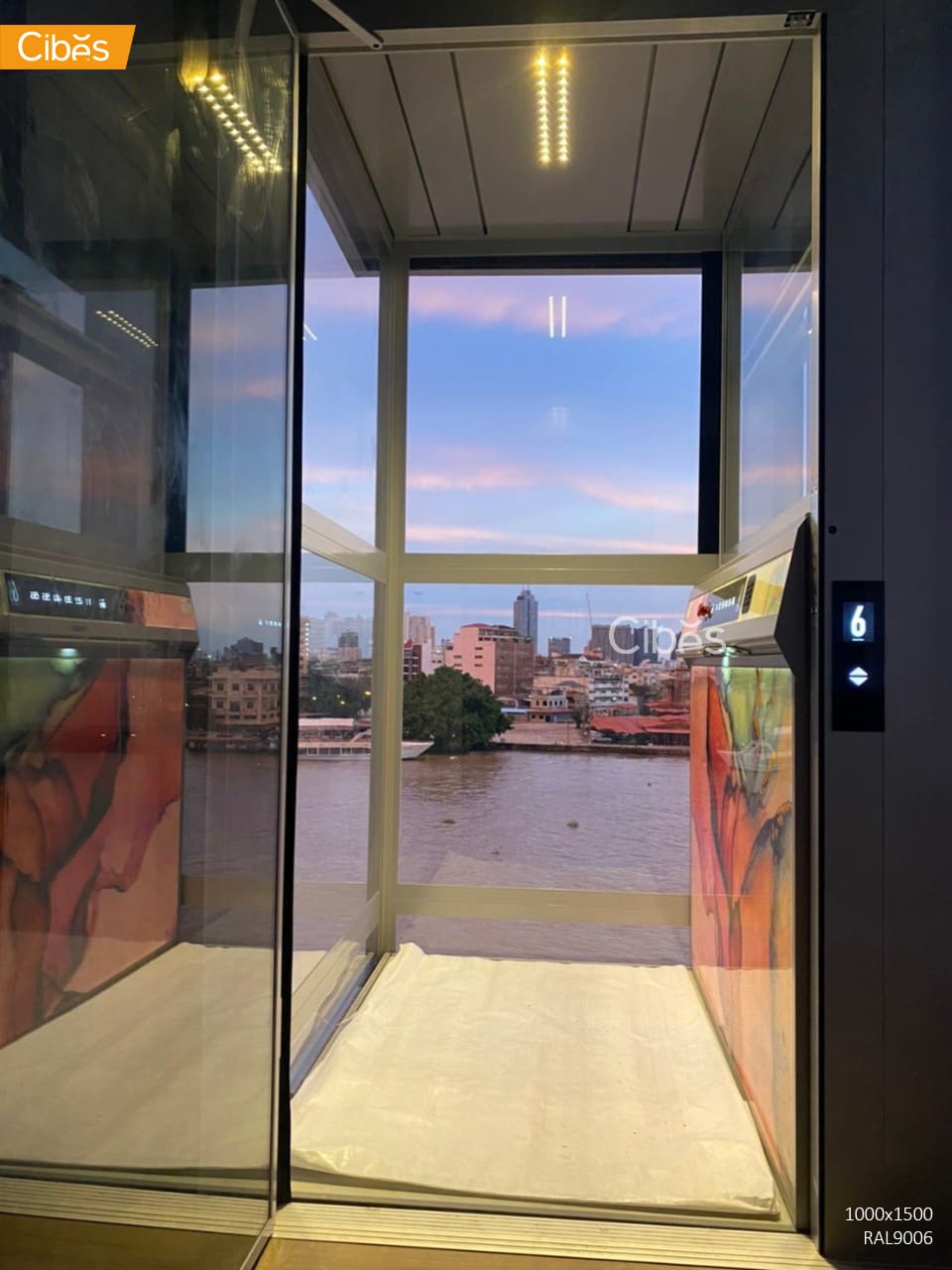
Lift location: Outdoor
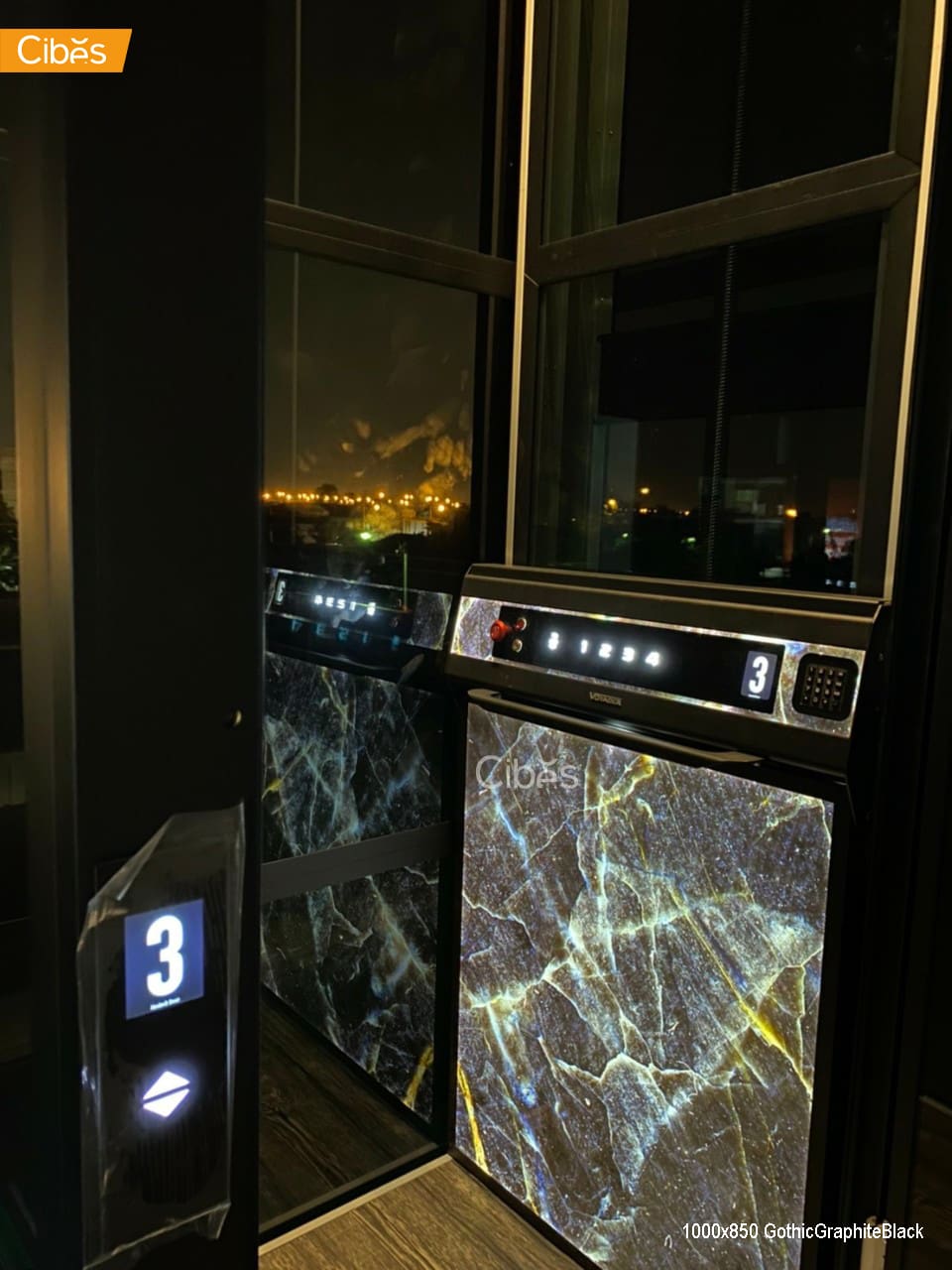
Lift model: Cibes V80 Aurora

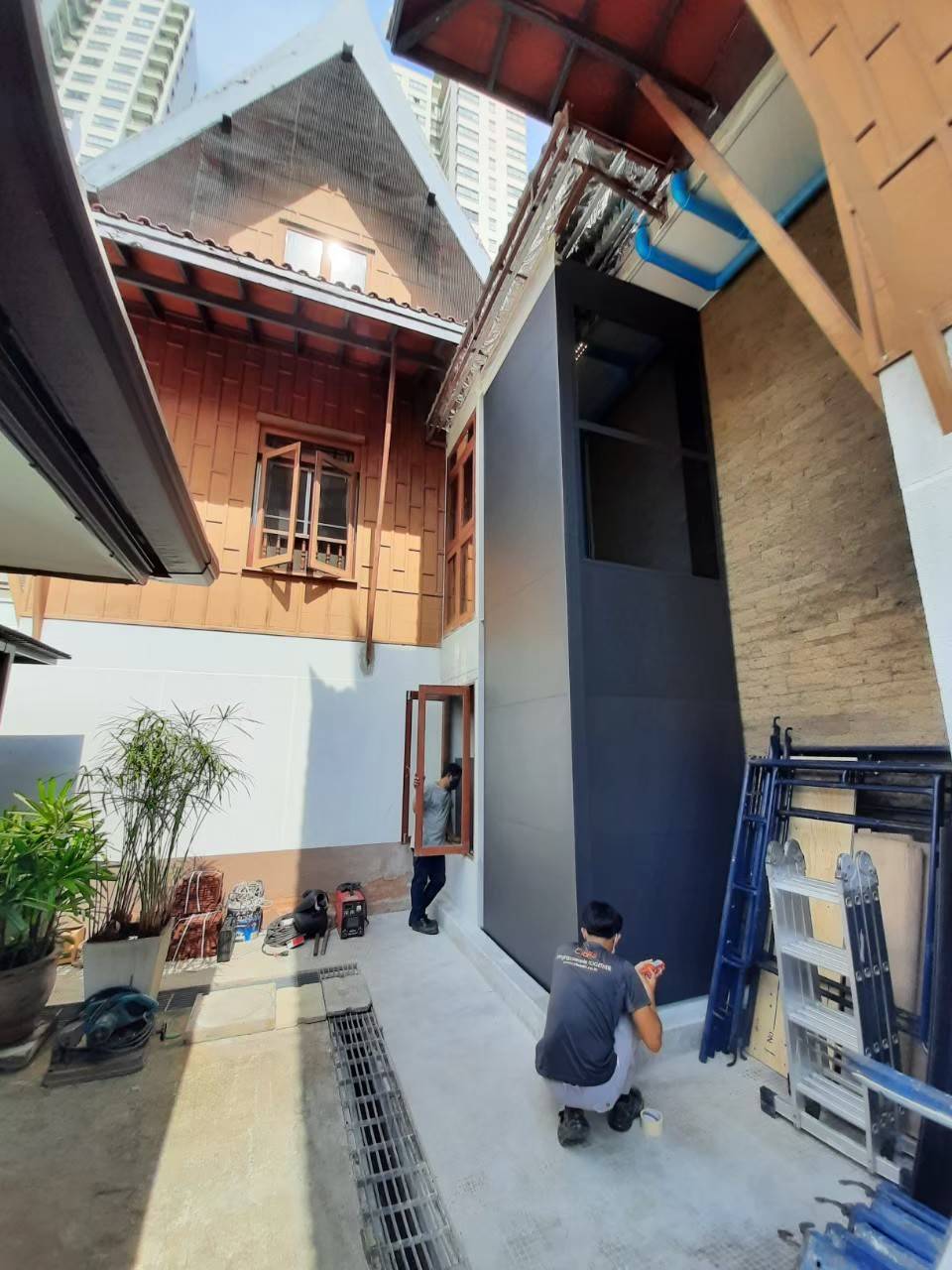
This Cibes V80 Aurora was installed outdoors at a private villa in Borey Chankiri, Phnom Penh. The machine-room-less screw-driven lift provides comfortable access between floors while maintaining the home’s modern architectural design.
7.2. Preah Sihanouk Province
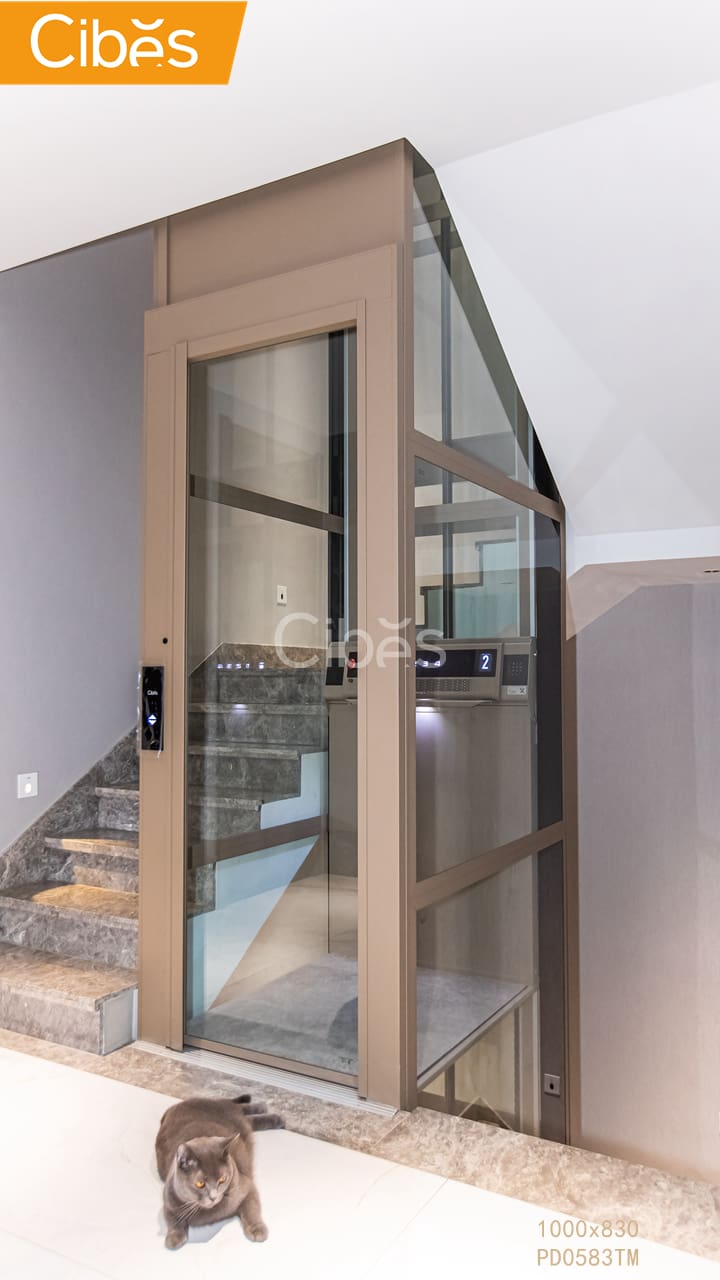
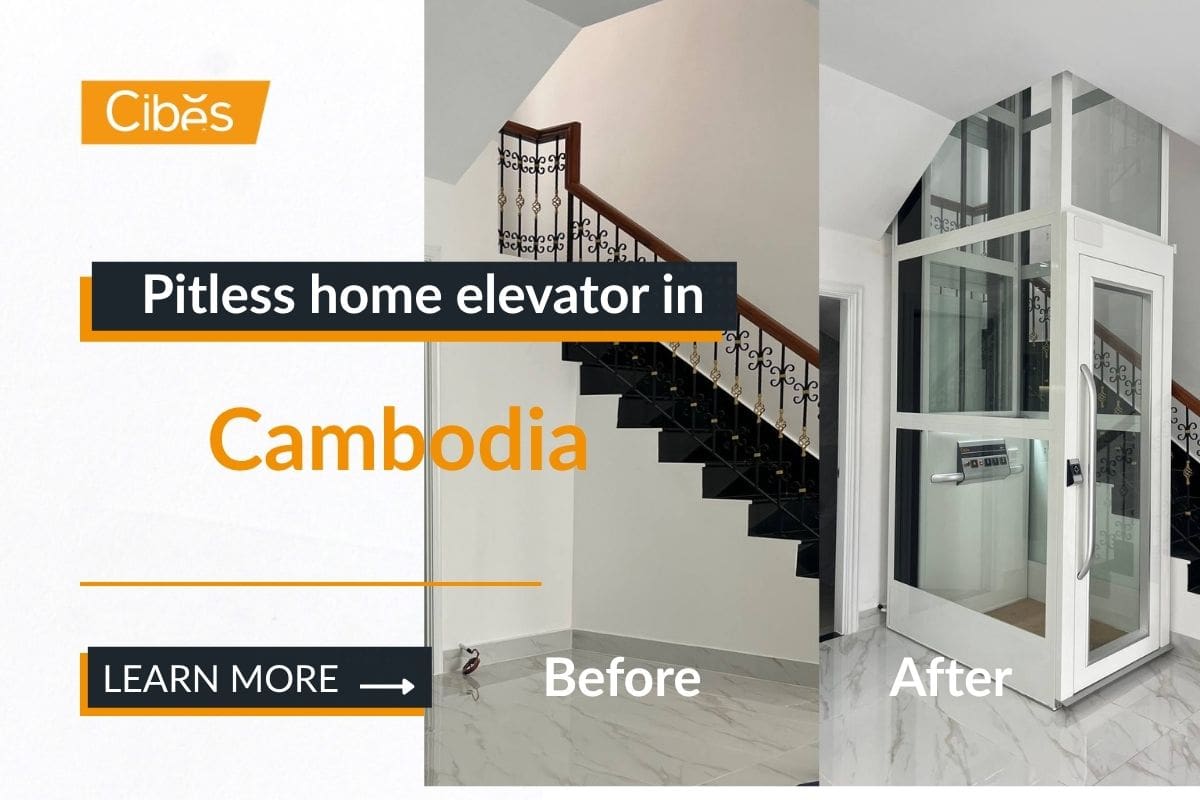
Lift location: in the middle of the stair
Lift model: Cibes V90 Aurora
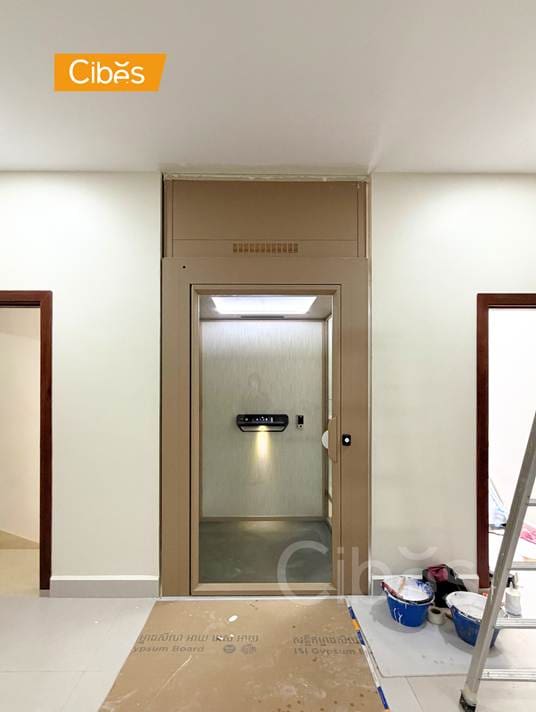
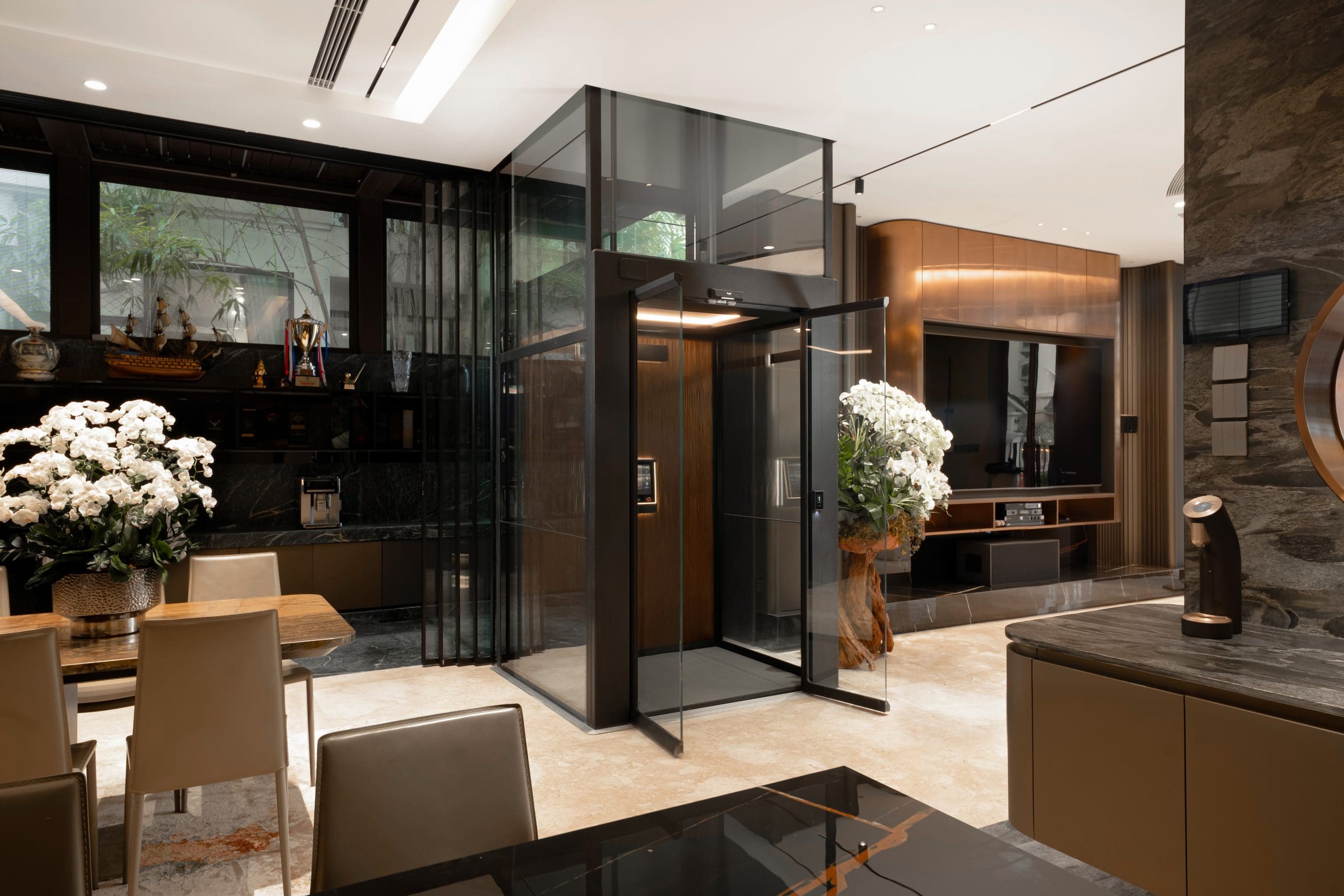
This Cibes V90 Aurora was installed inside a private residence in Cambodia. The machine-room-less lift is integrated into the home’s interior, providing convenient access between floors while maintaining a clean and elegant design.
Its compact footprint and premium finishes allow it to blend naturally with the surrounding living space, making it an ideal solution for modern homes.
7.3. Near Olympic Market
Lift location: the middle of the stair
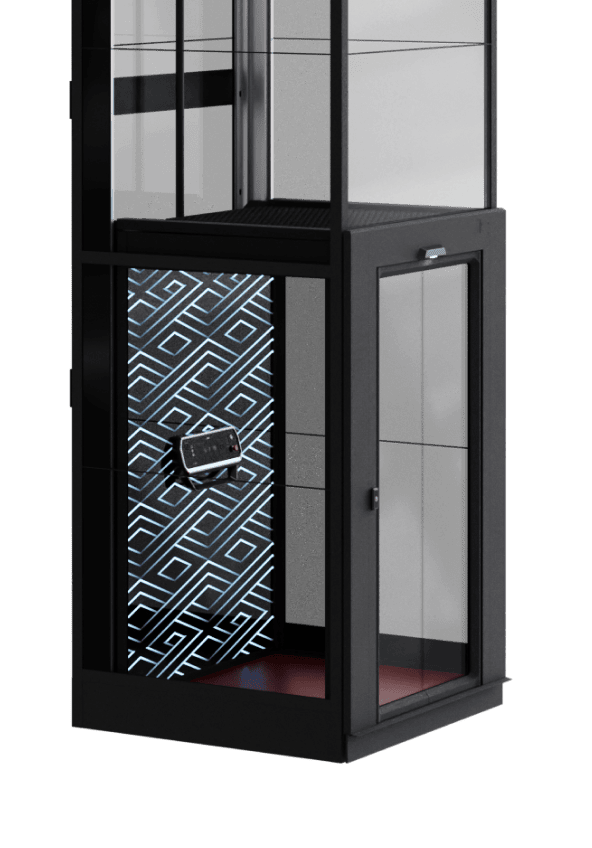
Lift model: Cibes V90 Galaxy
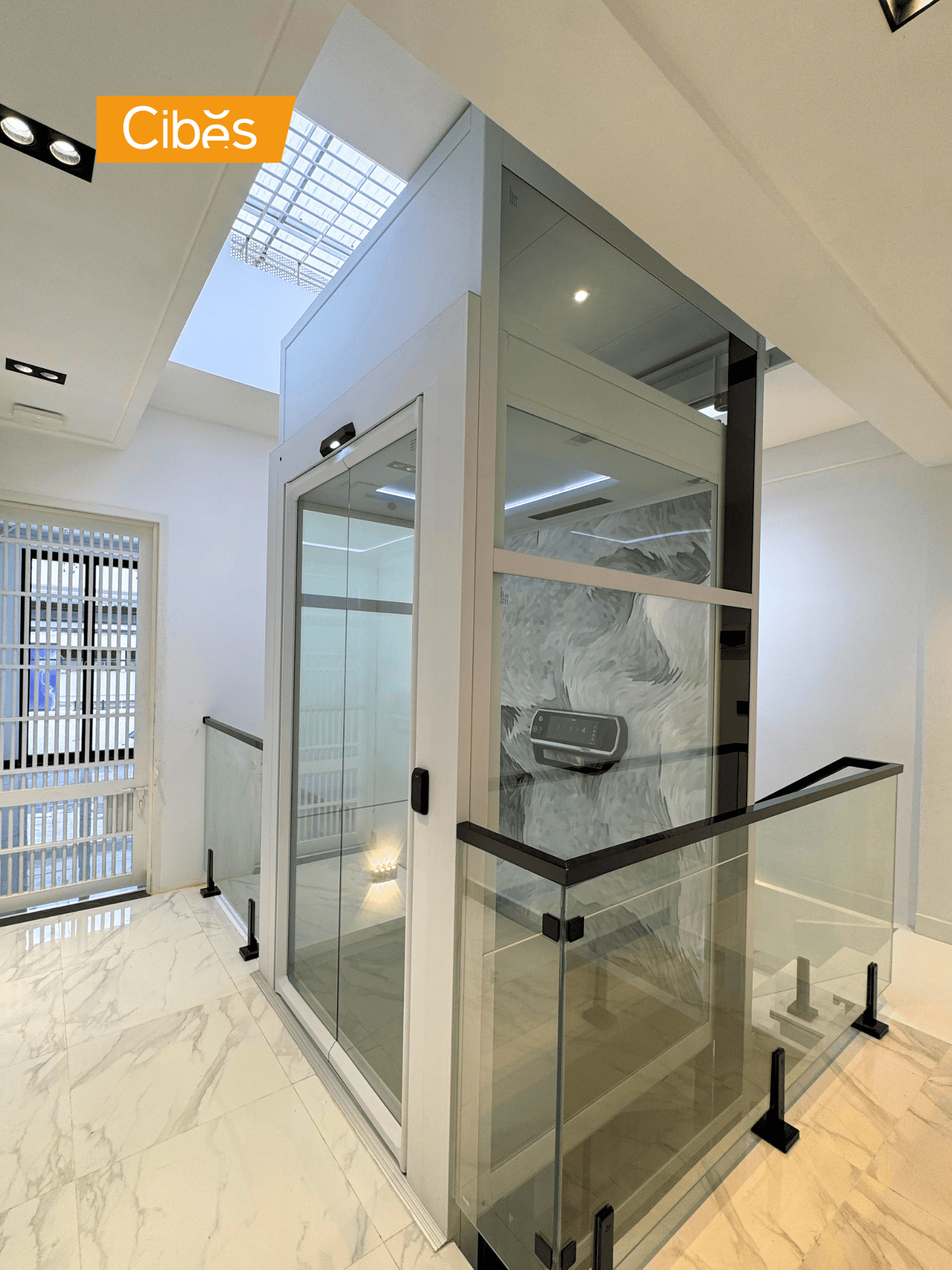
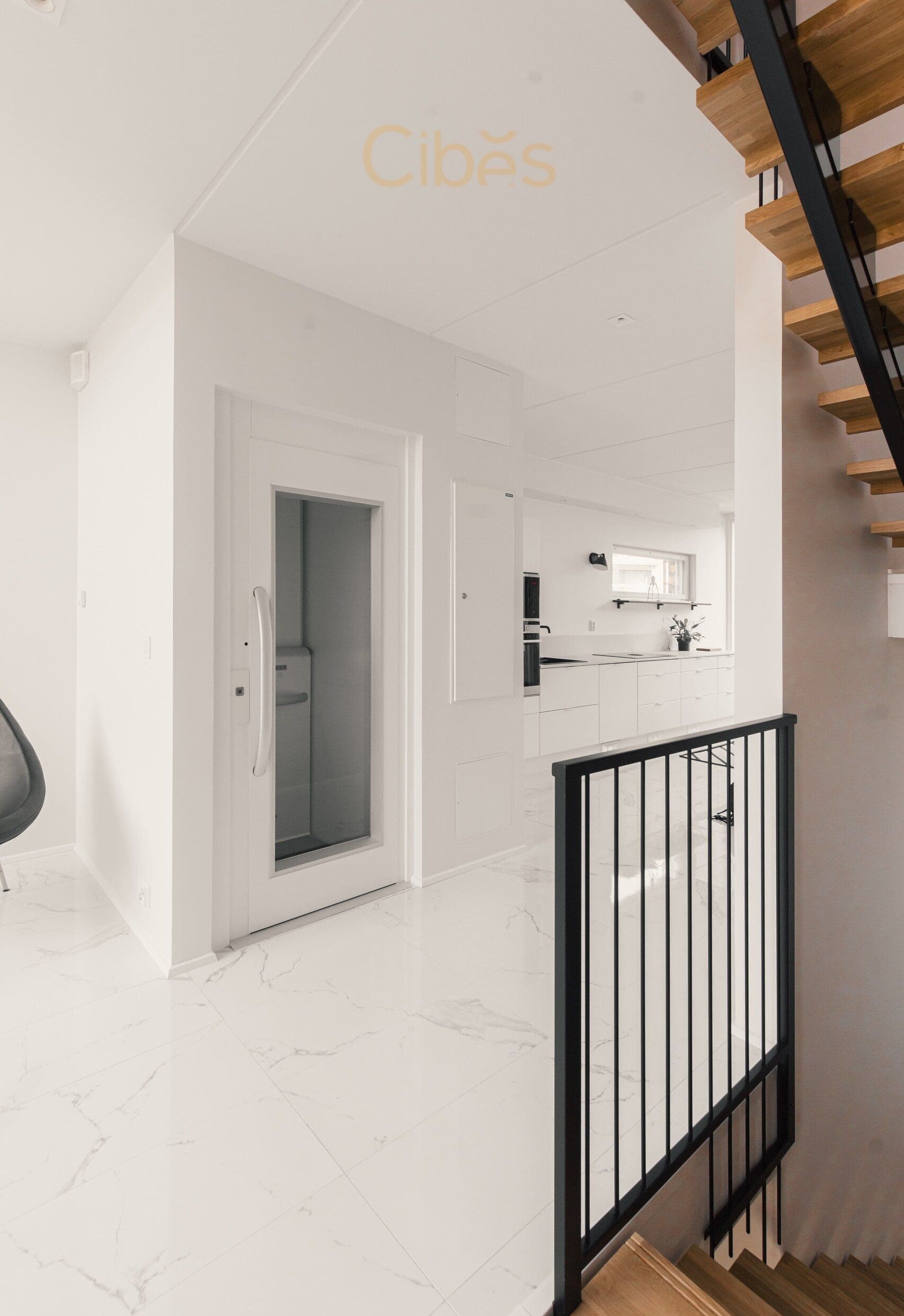
This Cibes home lift was installed in the middle of the staircase, making efficient use of otherwise unused space.
The machine-room-less design allows the lift to be integrated into the home’s layout with minimal structural modifications while maintaining open circulation around the stairs.
Frequently Asked Questions
A machine room-less lift is an elevator that integrates its drive equipment into the lift shaft or structure, eliminating the need for a separate machine room.
Yes. Many MRL lifts are designed for retrofit projects and can often be installed with minimal structural changes.
It depends on the lift technology. Some models require a shallow pit, while others can be installed with little or no pit.
Many modern MRL lifts use efficient motors, LED lighting, standby modes, and advanced control systems to reduce electricity consumption.
The right choice depends on the building. Screw-driven lifts are often preferred for private homes because of their compact design and minimal building requirements, while traction lifts are better suited to taller buildings with higher usage.
With proper maintenance, a high-quality machine room-less lift can provide reliable service for decades, though its lifespan depends on usage, maintenance, and manufacturer quality.
_____________________________________
Cibes Lift Cambodia – Official subsidiary of Cibes Lift Group
Website: www.cibescambodia.com
Hotline: 011 837 183/ 093 837 183/017 837 183
Showroom: Near Chip Mong 271 Mega Mall, House 261, Commercial Street, Phnom Penh, Cambodia

Kahna Pov is the Country Manager of Cibes Lift Cambodia, the official subsidiary of Cibes Lift Group from Sweden. With over 4 years of experience advising on residential lift solutions and coordinating projects, she has supported homeowners, architects, and project teams across Cambodia in selecting Cibes screw-driven lifts that are safe, space-saving, and well suited for private homes.





TL;DR: An imported lift can improve access to a villa, townhouse, or renovated home. Yet the word “imported” doesn’t prove that a lift is safe or suitable. Check the manufacturer, exact model, safety documents, usable space, shaft requirements, power supply, installation scope, warranty, maintenance plan, and spare-parts support in Cambodia. Arrange a site survey and […]
Whether you’re building a new home, renovating an ex isting property, or planning a commercial project, choosing the right elevator is an important decision. One of the most popular options today is the machine room-less lift. Unlike traditional elevators that require a separate machine room, a machine room-less lift integrates the drive equipment into the […]

In Cambodian villas, borey houses and shophouses, a home elevator can be installed in the middle of the staircase, beside the stairs, in an open stair void or outside the house. The right location depends on the available space, staircase design and structural conditions. TL;DR The best location for a home elevator depends on your […]
A screw-driven lift is a compact home lift that moves a lift with a motor, steel screw and drive nut. For Cambodian villas, borey houses, clinics and small buildings, it is often chosen because it can work without a machine room and with a shallow pit or ramp, depending on the model and site condition. […]
A pitless home elevator is a residential lift that operates with little or no pit below the lowest landing. A traditional home elevator needs a pit of about 600 to 1500 mm. A pitless lift works with 0 to 120 mm, so it can sit on a finished floor with minimal building work. TL;DR: This […]