

Blog - Date posted: 05/10/2026 - Date updated: 07/10/2026
How to Choose a Villa Lift in Cambodia: Price, Size and Safety
TL;DR:
A villa lift makes a multi-storey home easier to use for older adults, wheelchair users, children, and anyone carrying heavy items. When choosing a villa lift in Cambodia, compare the available space, stops, travel height, door layout, safety standard, complete installed price, warranty, and local service.
What is a villa lift?
A villa lift is a residential lift designed for a private, low-rise home. It moves people between fixed floors and is planned around lighter daily use than a commercial passenger elevator.
Villa lifts can often fit into smaller spaces and may require less structural work. Some models come with a prefabricated shaft made from aluminium framing, glass, or solid panels. Other models are designed for a concrete shaft prepared by the property owner.
Cibes villa lifts use Swedish screw-driven technology. Selected Cibes V80 and Cibes V90 models can carry up to 400 kg, serve up to eight stops, and travel up to 20 metres. The final specification depends on the lift model, site conditions, available space, and approved technical drawing.

Why do villa owners install a home lift?
Comfort is one of the main reasons. Climbing stairs several times a day can become tiring in a three-storey or four-storey villa. A lift also makes it easier to move laundry, groceries, luggage, and other items around the home.
A home lift can help parents and grandparents continue living comfortably in the family home. Stairs may become difficult after an injury or as mobility changes with age. Planning early gives the family more choices for the lift location, door arrangement, and usable platform size.
A villa lift may also support wheelchair access. However, the outer lift dimensions alone do not confirm accessibility. The clear platform or cabin size, door opening, landing space, approach route, turning area, and room for a caregiver must all be checked.
How much space does a villa lift need?
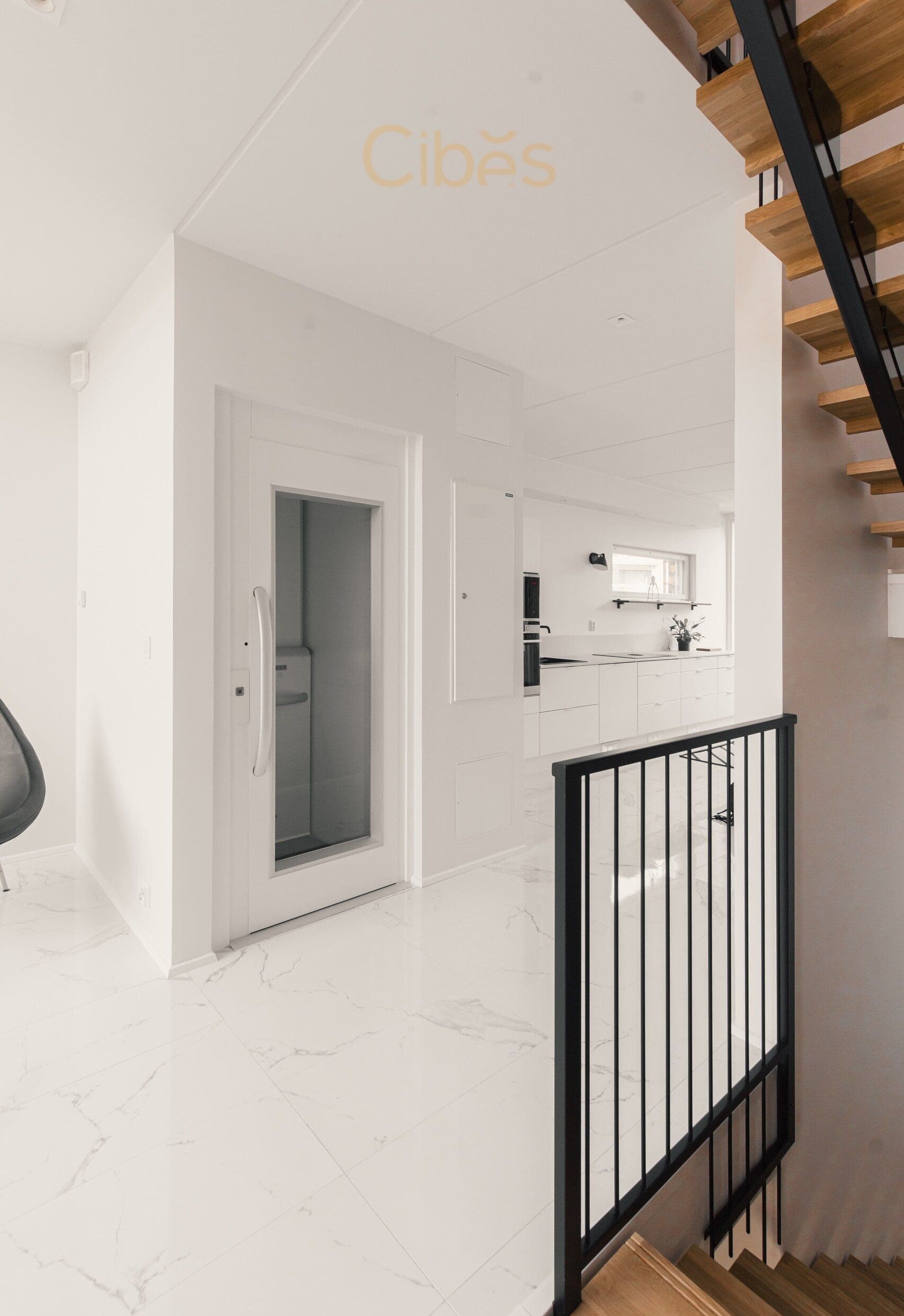
The smallest Cibes villa lift size needs just 1,060 × 960 mm, or about 1m² of floor space. This compact size can be useful in an existing villa where space is limited. For villas with more room, a larger platform or cabin may provide a more comfortable ride, especially when several family members use the lift.
The right size depends on the lift model, number of users, wheelchair needs, door type, entrance direction, and available installation space. The installation footprint is not the same as the clear passenger area. A site survey and approved drawing must confirm the space needed for the lift, doors, landing access, and any ramp. A compact lift should not be assumed to fit a wheelchair.
A compact home lift may fit where a conventional passenger elevator would be difficult to install. Still, the smallest possible lift is not always the most practical. The lift should feel comfortable for the people who will use it, not simply fit into the available opening.

Where can a villa lift be installed?
Common locations include the middle of a staircase, beside an internal wall, inside a prepared concrete shaft, or against an exterior wall. The position should provide safe access at every floor without blocking important windows, doors, corridors, or living areas.
Can a villa lift fit in the middle of a staircase?
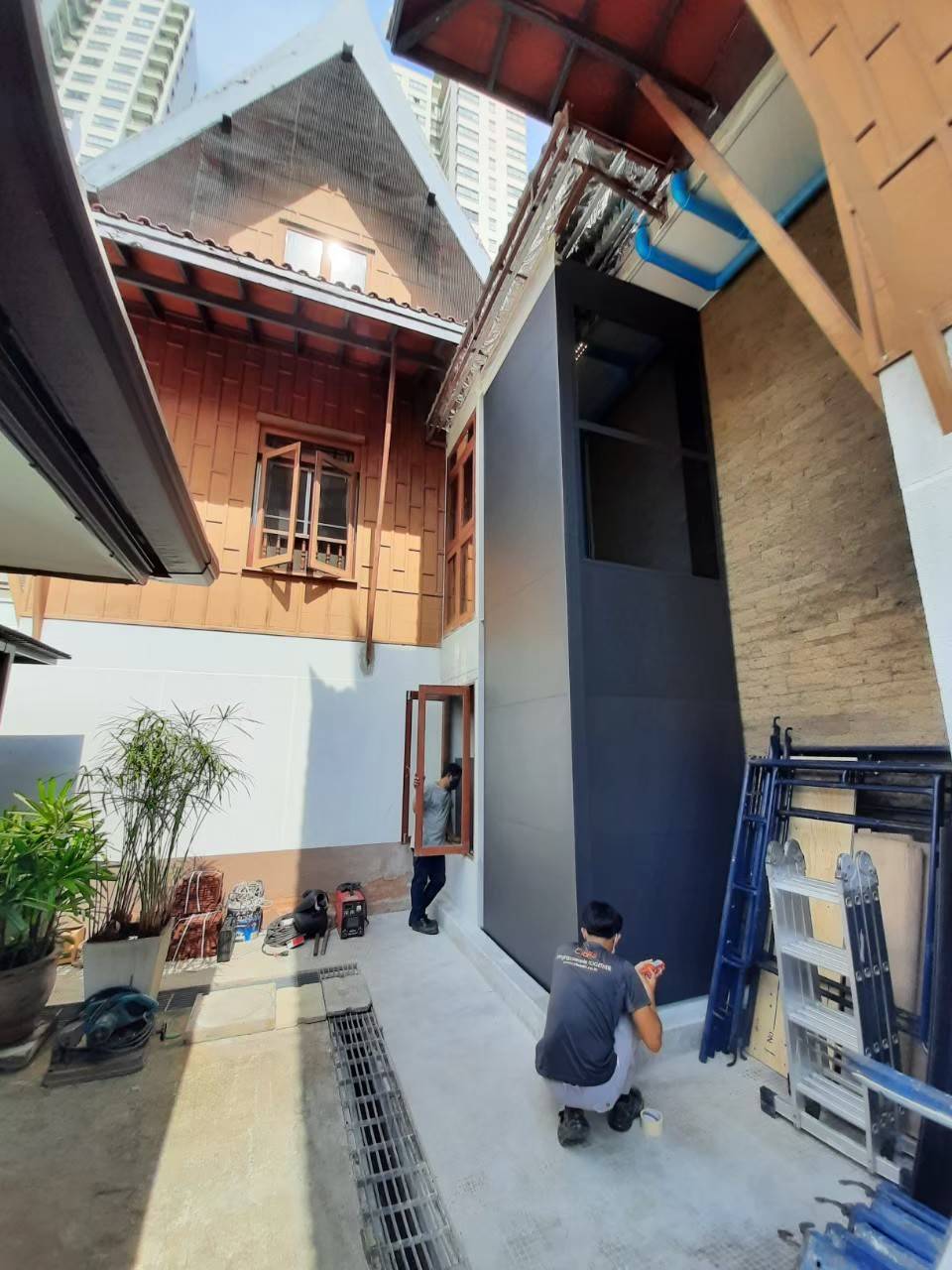
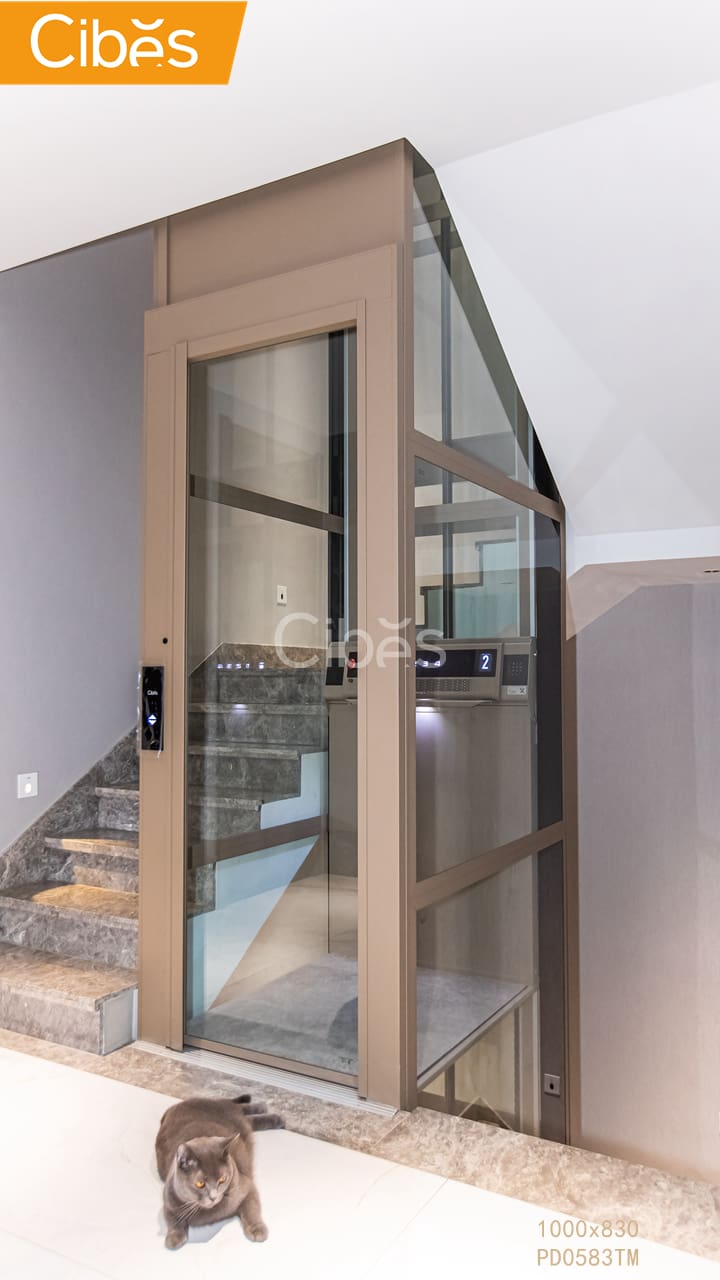
Yes, if the open space and surrounding structure are suitable. A stairwell location can serve several floors without taking space from a bedroom or main living area. The site team must measure the clear width and depth at every level because railings, beams, steps, and ceiling height can reduce the usable area.
Can a villa lift be installed outdoors?
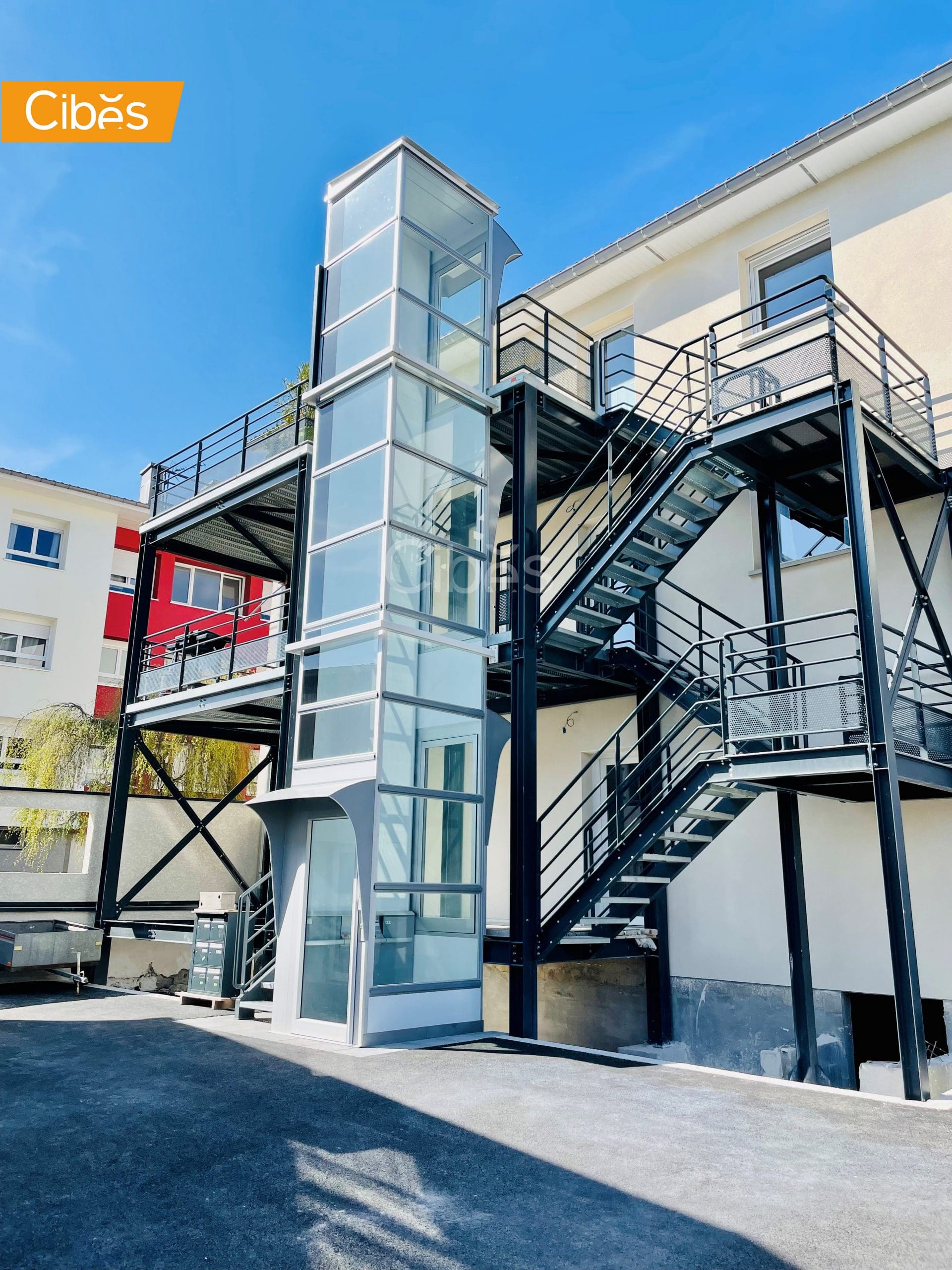
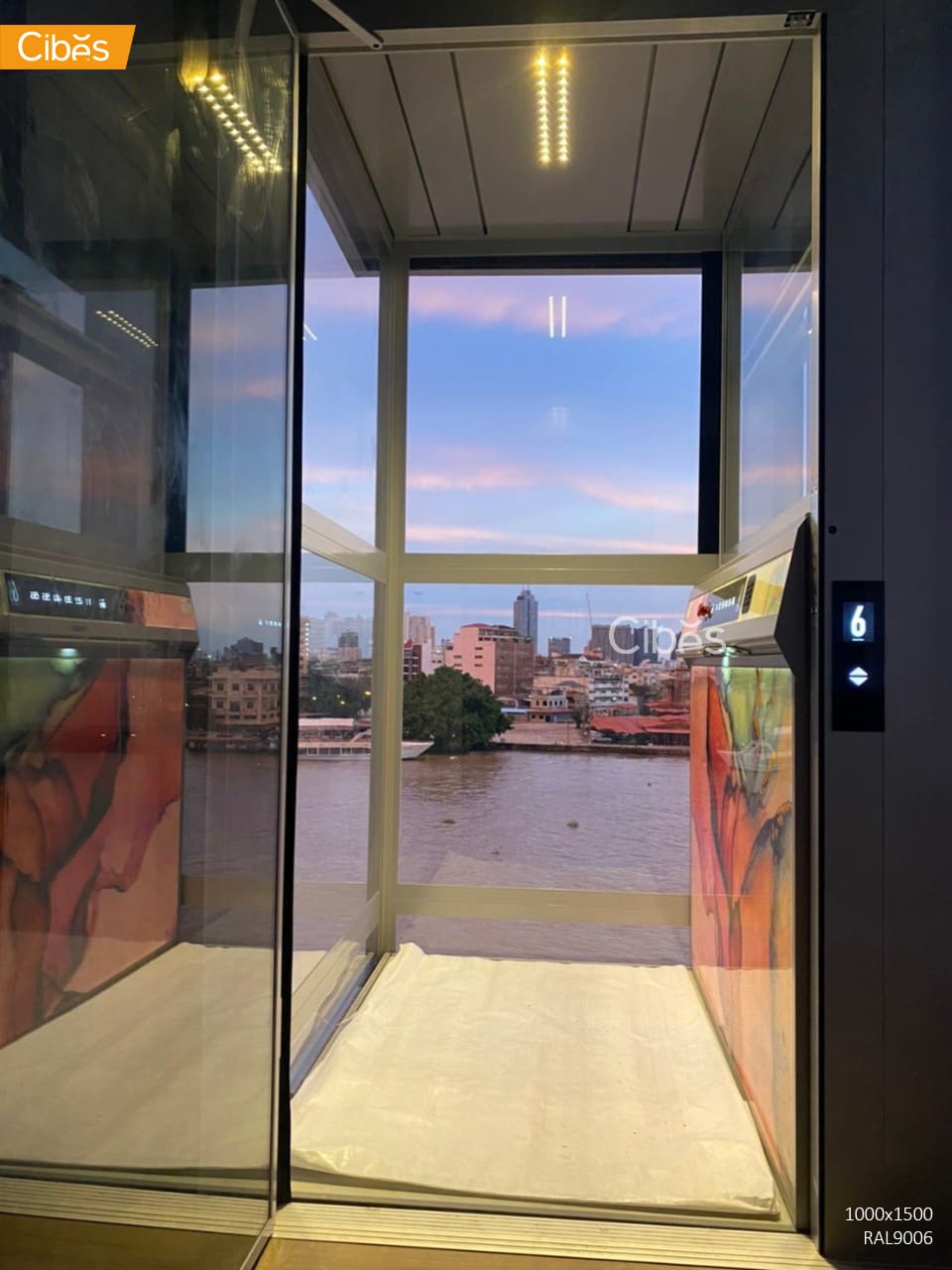
Yes. An outdoor villa lift can work well when there is limited space inside the house. It may connect balconies, corridors, terraces, or separate entrances. Outdoor installation needs extra planning for rain protection, roof coverage, drainage, sealing, corrosion resistance, sunlight, and structural support. These details are especially important in Cambodia’s hot and wet climate.
What information is needed for lift planning?
- Number of floors and required stops
- Floor-to-floor heights or total travel height
- Clear width and depth of the proposed lift area
- Indoor or outdoor location
- New construction or an existing villa
- Preferred entrance and exit directions
- Wheelchair size and caregiver needs, when relevant
- Photos, floor plans, sections, and structural drawings
For a new villa, contact the lift company while the architectural plans can still be adjusted. Early planning can prevent costly changes to beams, slabs, stairs, door openings, and landing areas.

How can a villa lift match the home design?
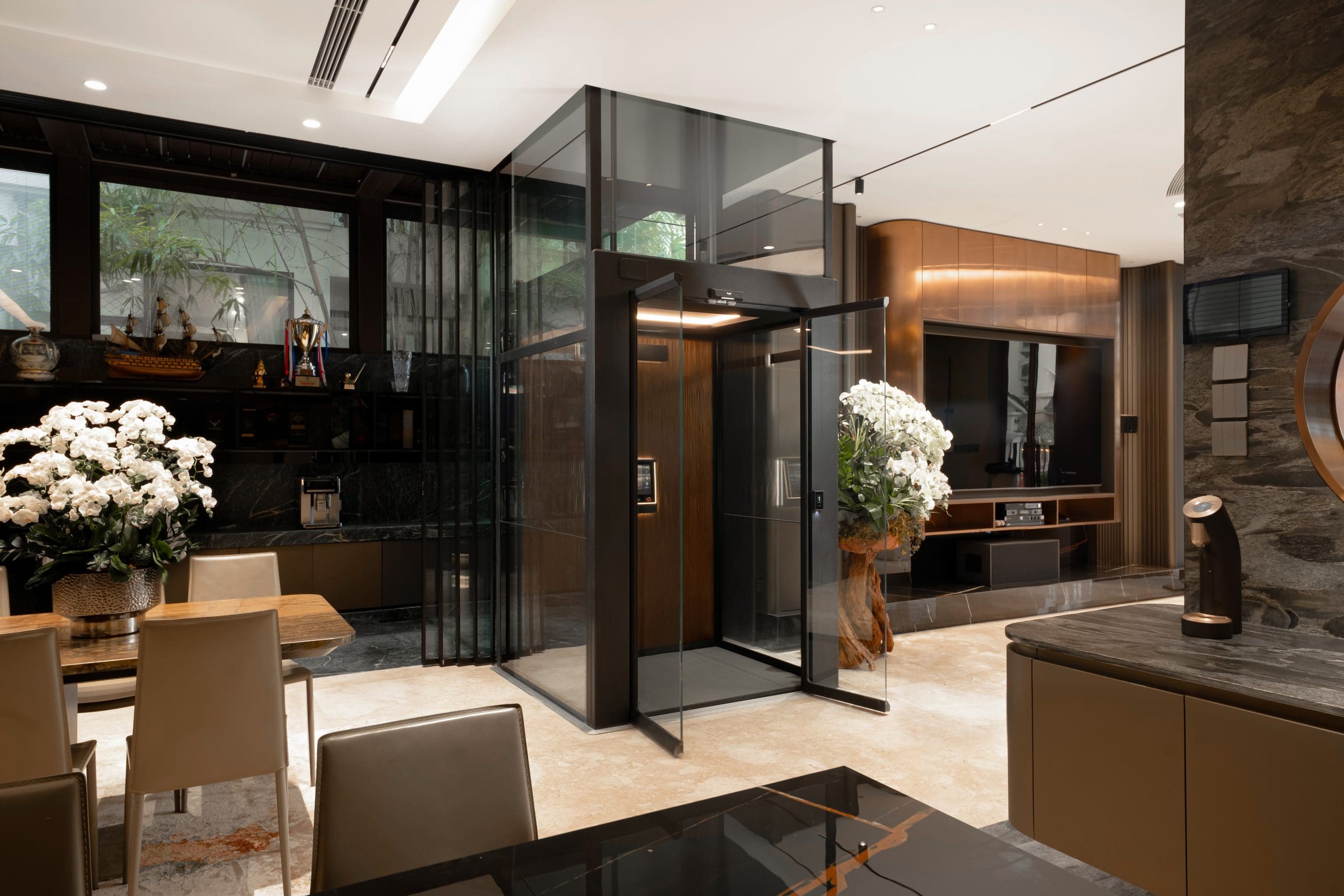
A villa lift should feel like part of the building. A glass shaft can help natural light move through a stairwell or living area. Dark frames may suit a modern villa, while warmer colours and wood-look panels can work well with softer interiors.
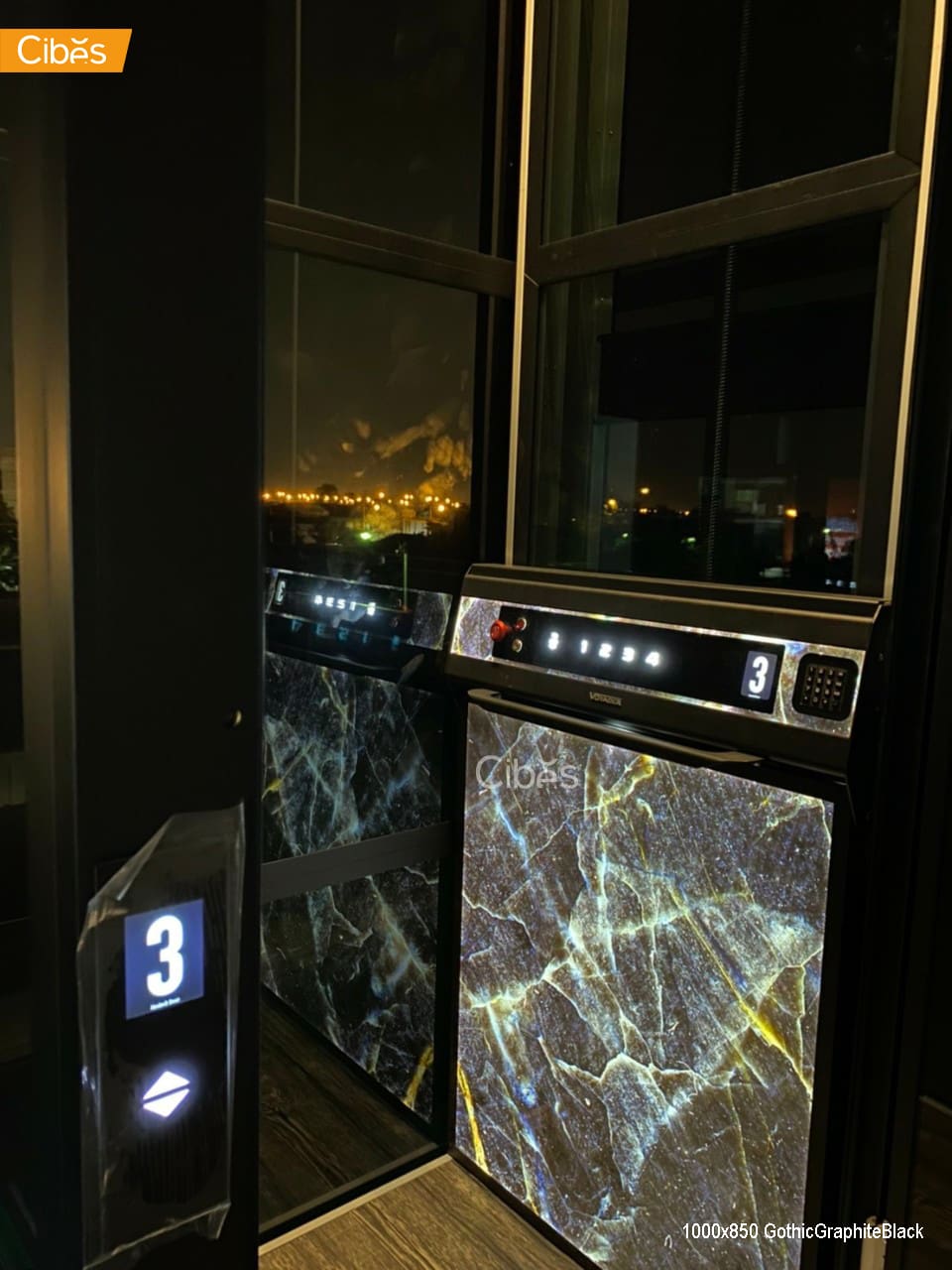
Look at the lift from the entrance, living room, staircase, and upper-floor landings. Check whether the shaft may block a window, reduce a corridor, or interrupt an important view. It is also worth considering how the glass, frame, doors, and lighting will look at night.
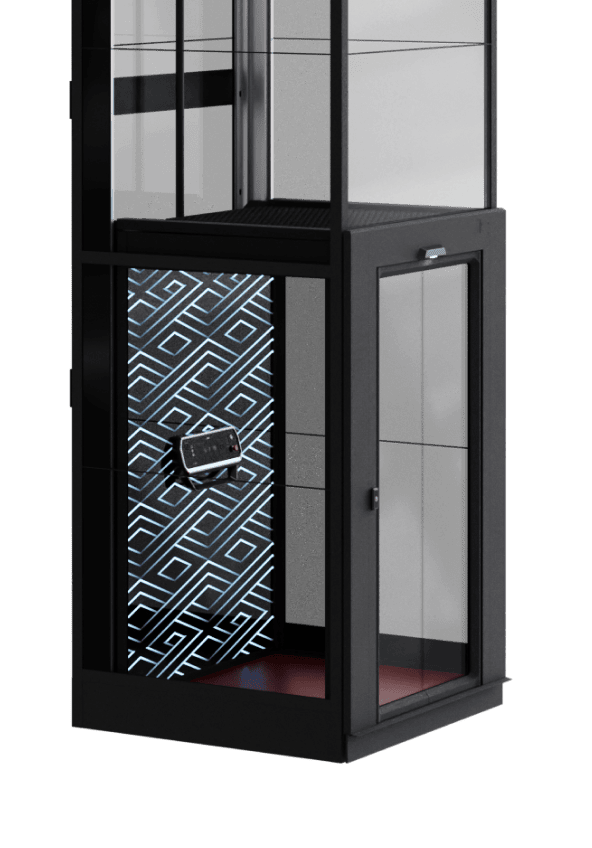
Design choices may include shaft colour, glass, wall panels, flooring, control panels, ceiling, lighting, and door style. View physical samples and completed installations before approval because colours and materials can look different on a screen.
Which type of villa lift is suitable for a private home?
Homeowners usually compare screw-driven, hydraulic, and traction lifts. Each system has different requirements for space, equipment, pit depth, overhead, power, construction, and maintenance.
| Feature | Screw-driven lift | Hydraulic lift | Traction lift |
| Drive system | Motor, drive nut, and steel screw | Hydraulic pump and piston | Motor, belts or ropes, and counterweight |
| Machine room | Usually not required | May require space for hydraulic equipment | Depends on the selected system |
| Pit requirement | Shallow pit or access ramp | Usually requires a pit | Usually requires a pit |
| Space needed | Compact and suitable for limited spaces | Requires space for extra equipment | Requires enough shaft and overhead space |
| Construction work | Generally less structural work | May require more civil work | May require more shaft preparation |
| Best suited for | Private villas and low-rise homes | Homes with suitable space and structure | Homes needing faster travel or serving more floors |
| Design choices | Glass, wall panels, flooring, lighting, colours, and doors | Depends on the supplier and model | Depends on the supplier and model |
| Important consideration | Final design must follow the approved technical drawing | Check equipment space and maintenance needs | Check pit, shaft, overhead, and power requirements |
For many private homes, a screw-driven villa lift is a practical choice because it has a compact system, requires no separate machine room, and may use a shallow pit or access ramp. However, the best system depends on the villa’s available space, number of floors, structure, budget, and user needs.
How safe is a villa lift?
Safety depends on the lift design, installation quality, user behaviour, and regular maintenance. Before handover, the installation team should test every safety function and explain how it works to the homeowner.
Cibes home lifts are designed in line with EN 81-41, the European safety standard for vertical lifting platforms intended for people with impaired mobility. Depending on the model, safety systems may include landing-door interlocks, safety edges, light curtains, emergency stop controls, an alarm or emergency communication system, and backup power for emergency lowering.

Ask the supplier what happens during a power cut, how the landing doors remain locked, what stops the lift when an obstruction is detected, and who responds if assistance is needed. Never bypass a safety circuit. Inspection and repair should only be carried out by trained lift technicians.
Which safety features should be tested at handover?
- Landing-door locking and opening
- Light curtain or obstruction detection
- Emergency stop operation
- Alarm or emergency communication
- Emergency battery lowering
- Landing accuracy at every floor
- Overload protection, when included
- Customer release and rescue instructions
Keep the handover documents, warranty details, maintenance agreement, and emergency contact number where the family can find them easily.
Thinking about a lift for a private villa or residential project?
Watch our Villa Lift video to see how Cibes lifts can fit into different home layouts, including existing homes with limited space:
How much does a villa lift cost in Cambodia?
The price of a villa lift in Cambodia depends on the project. Two villas with the same number of floors may need different lift sizes, door arrangements, shaft systems, finishes, or outdoor protection.
Based on the reference information supplied for this article, Cibes home lift prices in Cambodia can start from around USD 37,700 for a three-stop lift. These are reference prices only. A site survey and confirmed configuration are required for a final quotation.
What affects the price of a villa lift?
- Lift model and drive system
- Number of stops and total travel height
- Platform or cabin size
- Door type, number of doors, and entrance directions
- Prefabricated shaft or concrete shaft
- Indoor or outdoor installation
- Glass, colour, flooring, lighting, and other finishes
- Freight, tax, delivery, installation, testing, and handover
- Civil, structural, and electrical work
- Warranty and maintenance coverage
What should a villa lift quotation include?
Check whether the quotation includes the lift equipment, shaft, freight, tax, delivery, installation, testing, commissioning, handover, warranty, and maintenance. It should also state all excluded work clearly.
Common exclusions may include concrete work, steel supports, electrical supply, drainage, scaffolding, roof protection, painting, and interior finishing. A lower equipment price is not always a lower total price, so compare the complete installed cost and long-term service coverage.
How much electricity does a villa lift use?
Electricity use depends on motor power, travel distance, number of trips, passenger load, lighting, and standby systems. Many Cibes home lift configurations can use a single-phase residential power supply.
For example, a lift with a 2.9 kW motor travelling 12 metres at 0.15 metres per second. At 20 full-distance trips per day, travel would use about 1.29 kWh. At an electricity rate of 730 riel per kWh, this equals about 941 riel per day or 28,230 riel for 30 days, roughly USD 7 per month.
This example does not include all lighting and standby use. Actual travel consumption may be lower when family members move only one or two floors. Confirm the motor power, electricity rate, and travel assumptions for the selected lift before relying on an estimate.
How do you choose a reliable villa lift company?
The company that measures, installs, tests, and maintains the lift may support it for many years. Ask who completes each stage and whether trained technicians and spare parts are available locally.
- Who measures the site and approves the technical drawing
- Who installs, tests, and commissions the lift
- Whether trained technicians are based in Cambodia
- What the warranty covers and how long each part is covered
- How often maintenance is required
- Who responds during an emergency
- Whether completed projects in Cambodia can be inspected
A responsible supplier should also explain the limits of the proposed lift. If the available space is too small for comfortable wheelchair access, the family should know before signing the contract.
What makes Cibes villa lifts suitable for Cambodian homes?
Cibes has developed lift products since 1947. Its home lifts use Swedish screw-driven technology and are designed for low-rise residential buildings. Depending on the selected model, available features may include a rated load of up to 400 kg, single-phase 220 to 230 V power, up to eight stops, and travel of up to 20 metres.
Other available features may include a shallow pit or ramp, no separate machine room, emergency lowering during a power failure, landing-door interlocks, light curtains, safety edges, and choices for the platform, cabin, shaft, colour, floor, and lighting.
Cibes Lift Cambodia provides consultation, site measurement, installation, testing, handover, maintenance, and after-sales support. Specifications vary by model, so all technical values should be confirmed in the quotation and approved project drawing.
Frequently asked questions about villa lifts in Cambodia
What is the difference between a villa lift and a passenger elevator?
A villa lift is designed for low-rise private homes and lighter daily use. It may need less space and structural work. A commercial passenger elevator is designed for heavier traffic and may need a larger shaft, deeper pit, more overhead, or a different power supply.
Can a villa lift be added to an existing house?
Yes. It may be installed in a stairwell, beside an internal wall, through prepared floor openings, or outside the villa. A site survey must confirm the space, structure, access, and electrical supply.
Can a villa lift carry a wheelchair?
Yes, when the clear platform or cabin size, door opening, landing area, and access route suit the wheelchair. The plan should also allow room for a caregiver when needed.
How many floors can a Cibes villa lift serve?
Selected Cibes models can serve up to eight stops with travel of up to 20 metres. The final limit depends on the model and approved specification.
Does a Cibes villa lift need three-phase power?
Many configurations can use single-phase 220 to 230 V power. Requirements vary, so confirm the voltage, phase, current, and circuit protection before electrical work begins.
Not always. Some villa lifts include a prefabricated shaft with glass or solid panels. Other models are installed inside a concrete shaft prepared by the property owner.
When should I contact a lift company?
For a new villa, contact the lift company while the architectural plan can still be adjusted. For an existing villa, arrange a site survey before selecting the model or starting structural work.
Are you planning a villa lift in Cambodia?
Start with a site review, not only a product catalogue. Measure the available space, confirm the number of stops and travel height, identify who will use the lift, and discuss the required door directions. Then compare the complete installed price, safety systems, warranty, and local service.
Contact Cibes Lift Cambodia for a site assessment and detailed quotation. You can also visit the Phnom Penh showroom to compare working lift models, platform and cabin sizes, door operation, materials, and finishes before making your decision.
_____________________________________
Cibes Lift Cambodia – Official subsidiary of Cibes Lift Group
Website: www.cibescambodia.com
Hotline: 081 811 184/ 011 837 183
Showroom: Near Chip Mong 271 Mega Mall, House 261, Commercial Street, Phnom Penh, Cambodia

Kahna Pov is the Country Manager of Cibes Lift Cambodia, the official subsidiary of Cibes Lift Group from Sweden. With over 4 years of experience advising on residential lift solutions and coordinating projects, she has supported homeowners, architects, and project teams across Cambodia in selecting Cibes screw-driven lifts that are safe, space-saving, and well suited for private homes.





TL;DR: A villa lift makes a multi-storey home easier to use for older adults, wheelchair users, children, and anyone carrying heavy items. When choosing a villa lift in Cambodia, compare the available space, stops, travel height, door layout, safety standard, complete installed price, warranty, and local service. What is a villa lift? A villa lift […]
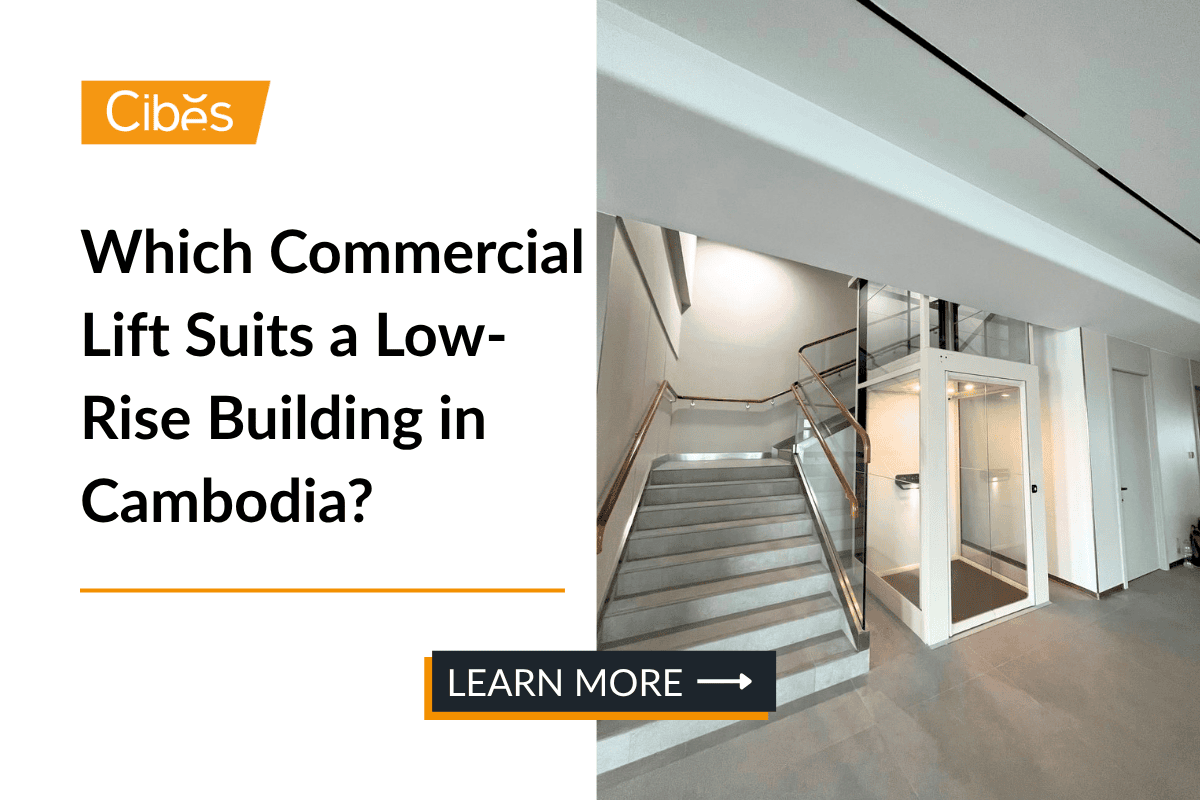
Choosing the right commercial lift for a low-rise building depends on how the property is used, who needs access, and how much space is available. A shop, clinic, office or boutique hotel may not require the same elevator system as a busy high-rise. For many projects in Cambodia, a scew driven lift can provide practical […]

TL;DR: An imported lift can improve access to a villa, townhouse, or renovated home. Yet the word “imported” doesn’t prove that a lift is safe or suitable. Check the manufacturer, exact model, safety documents, usable space, shaft requirements, power supply, installation scope, warranty, maintenance plan, and spare-parts support in Cambodia. Arrange a site survey and […]
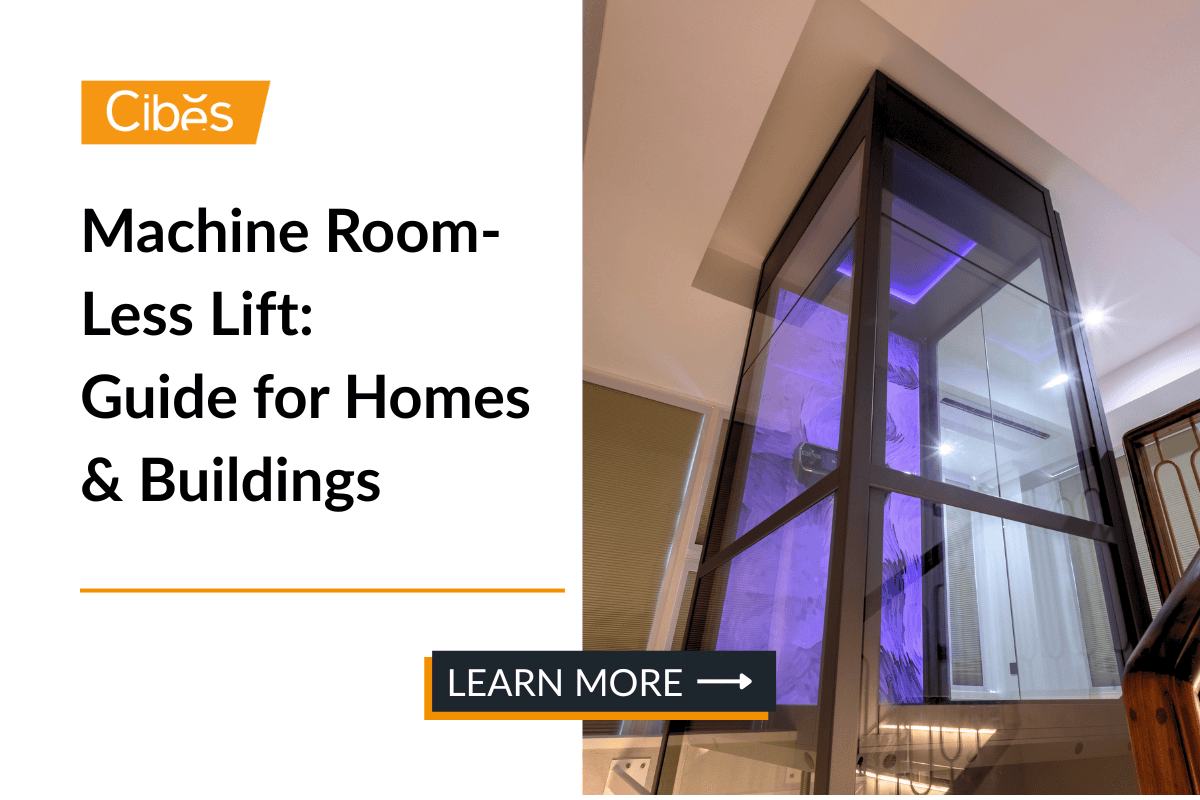
Whether you’re building a new home, renovating an ex isting property, or planning a commercial project, choosing the right elevator is an important decision. One of the most popular options today is the machine room-less lift. Unlike traditional elevators that require a separate machine room, a machine room-less lift integrates the drive equipment into the […]

In Cambodian villas, borey houses and shophouses, a home elevator can be installed in the middle of the staircase, beside the stairs, in an open stair void or outside the house. The right location depends on the available space, staircase design and structural conditions. TL;DR The best location for a home elevator depends on your […]