

Blog - Date posted: 31/10/2025 - Date updated: 20/08/2026
How Much Does a Home Lift Cost in Cambodia?
A home lift in Cambodia can cost from around USD 15,000 to USD 40,000 or more, depending on the lift technology, number of stops, lift size, cabin design, installation location, and site condition. Traction and hydraulic lifts often have a lower starting price, while screw-driven home lifts usually cost more but can reduce civil work because many models do not need a deep pit or separate machine room.
For villas, shophouses, borey houses, and existing homes in Cambodia, the best way to compare home lift prices is not only by equipment cost. Homeowners should also check building work, safety features, warranty, spare parts, maintenance, and after-sales service.
TL;DR
- Home lift cost in Cambodia depends on lift type, number of floors, size, design, and site condition.
- Traction and hydraulic lifts may have a lower starting price.
- Screw-driven home lifts can reduce civil work because many models do not need a deep pit or machine room.
- Homeowners should compare the full project cost, not only the lift price.
- Important things to check include safety, warranty, maintenance, spare parts, and after-sales service.
What is a home lift?
A home lift is a compact lift system used to move people between floors in a private home, villa, shophouse, clinic, or small workplace. It is often smaller than a traditional passenger elevator and is designed for daily convenience, elderly access, wheelchair access, and better comfort at home.
In Cambodia, many homeowners choose a home lift because houses are often built with several floors. A lift can make daily living easier for parents, grandparents, children, and anyone who finds
Comparison of 3 common home lift technologies
| Item | Screw-driven home lift | Traction home lift | Hydraulic home lift |
| Common use | Homes, villas, shophouses, and small buildings | Condos, offices, hotels, and commercial buildings | Homes and low-rise buildings |
| Pit requirement | Low pit or ramp option, depending on model and site condition | Usually needs a deeper pit | Usually needs a pit and space for equipment |
| Machine room | No separate machine room for many home lift models | May need a machine room or machine space | Needs space for pump and oil system |
| Installation space | Compact and suitable for many private homes | Usually needs more space and civil work | Needs space for hydraulic equipment |
| Ride comfort | Stable and suitable for daily home use | Smooth and suitable for higher traffic buildings | Comfortable for low-rise use |
| Maintenance cost | Regular maintenance, often simpler for home use | More parts to inspect, such as ropes, pulleys, and counterweight | Oil system needs regular checking |
| Suitable for renovation projects | Yes, often suitable because it can reduce civil work | Possible, but may need more construction changes | Possible, but equipment space must be planned |
| Suitable for townhouses | Yes, especially when space is limited | Possible if the building can support the required shaft and pit | Possible if there is enough equipment space |
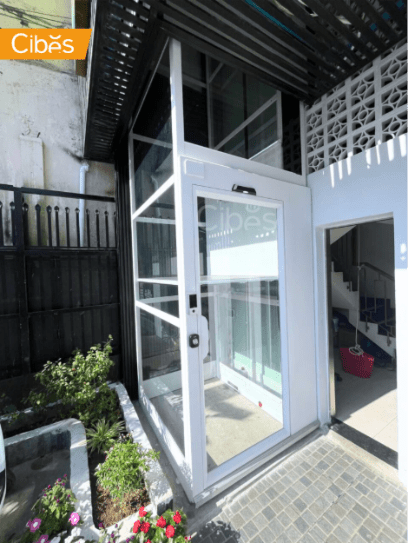
For Cambodian homes, screw-driven home lifts are often practical because they can reduce the need for a deep pit, machine room, and heavy structural changes.
How much does a home lift cost?
The cost of a home lift in Cambodia vary by technology, number of stops, travel height, lift size, design options, installation location, and site condition. As a general guide, prices can start from around USD 15,000 to USD 40,000 or more, depending on the type of lift and the amount of building work needed.
| Lift type | Reference starting price | Notes |
| Screw-driven home lift | USD 30,000 to USD 40,000 | Space-saving, no machine room, low pit or ramp option depending on model |
| Traction home lift | USD 18,000 to USD 25,000 | Usually needs more civil work, pit, and machine space |
| Hydraulic home lift | USD 15,000 to USD 20,000 | Needs space for hydraulic system and regular oil maintenance |
Note: These prices are for general reference only. The final quotation should be based on the actual site condition, number of stops, lift size, cabin design, installation location, and technical requirements.
Cibes Lift Cambodia supplies and installs Cibes screw-driven lifts. We do not supply traction or hydraulic elevators. The comparison above is provided to help homeowners understand how different lift technologies can affect the total project cost.
Screw-driven home lift price
A screw-driven home lift is often chosen for villas, borey houses, shophouses, and renovation projects where space and civil work matter. In Cambodia, this type of lift can start from around USD 30,000 to USD 40,000.
The starting price is usually higher than some traction or hydraulic options, but the full project cost can be easier to plan. Many screw-driven home lifts do not need a separate machine room, and some models can work with a low pit or ramp option. This can be useful for existing homes where deep construction work is difficult.
For homeowners who want a private home lift with less structural change, screw-driven technology is often a practical choice.
Traction home lift price
A traction home lift can start from around USD 18,000 to USD 25,000 in Cambodia. This type of lift is common in condos, offices, hotels, and higher traffic buildings, but it can also be used in private homes when the site allows.
The main point to check is the building work. A traction lift may need a deeper pit, proper shaft space, overhead clearance, and machine space. So even when the equipment price looks lower, the final project cost may increase if the house needs extra construction.
For private homes, traction lifts are usually easier to plan in new builds than in completed houses.
Hydraulic home lift price
A hydraulic home lift can start from around USD 15,000 to USD 20,000, depending on size, travel height, equipment layout, and site condition.
This type of lift may suit some low-rise homes, but it needs space for the hydraulic pump and oil system. The oil system also needs regular checking, so long-term maintenance should be included when comparing costs.
A hydraulic lift may have a lower starting price, but homeowners should check equipment space, maintenance needs, and any hidden site work before making a decision.
To better understand how Cibes home lifts work and why they are suitable for residential use, you can watch the video below:
What factors affect the cost of a home lift?
The final home lift price is not based only on the number of floors. Several details can affect the total cost.
| Cost factor | Why it matters |
| Lift brand | Different brands have different product quality, warranty, service support, and price levels. |
| Country of origin | Imported products may have different costs due to production, shipping, tax, and quality standards. |
| Drive technology | Screw-driven, traction, and hydraulic systems have different construction and maintenance needs. |
| Number of floors and travel height | More stops and higher travel need more doors, shaft height, materials, and installation work. |
| Cabin size | A larger cabin or platform may need more space and materials. |
| Design and finishing materials | Glass, colors, lighting, flooring, and premium finishes can increase the price. |
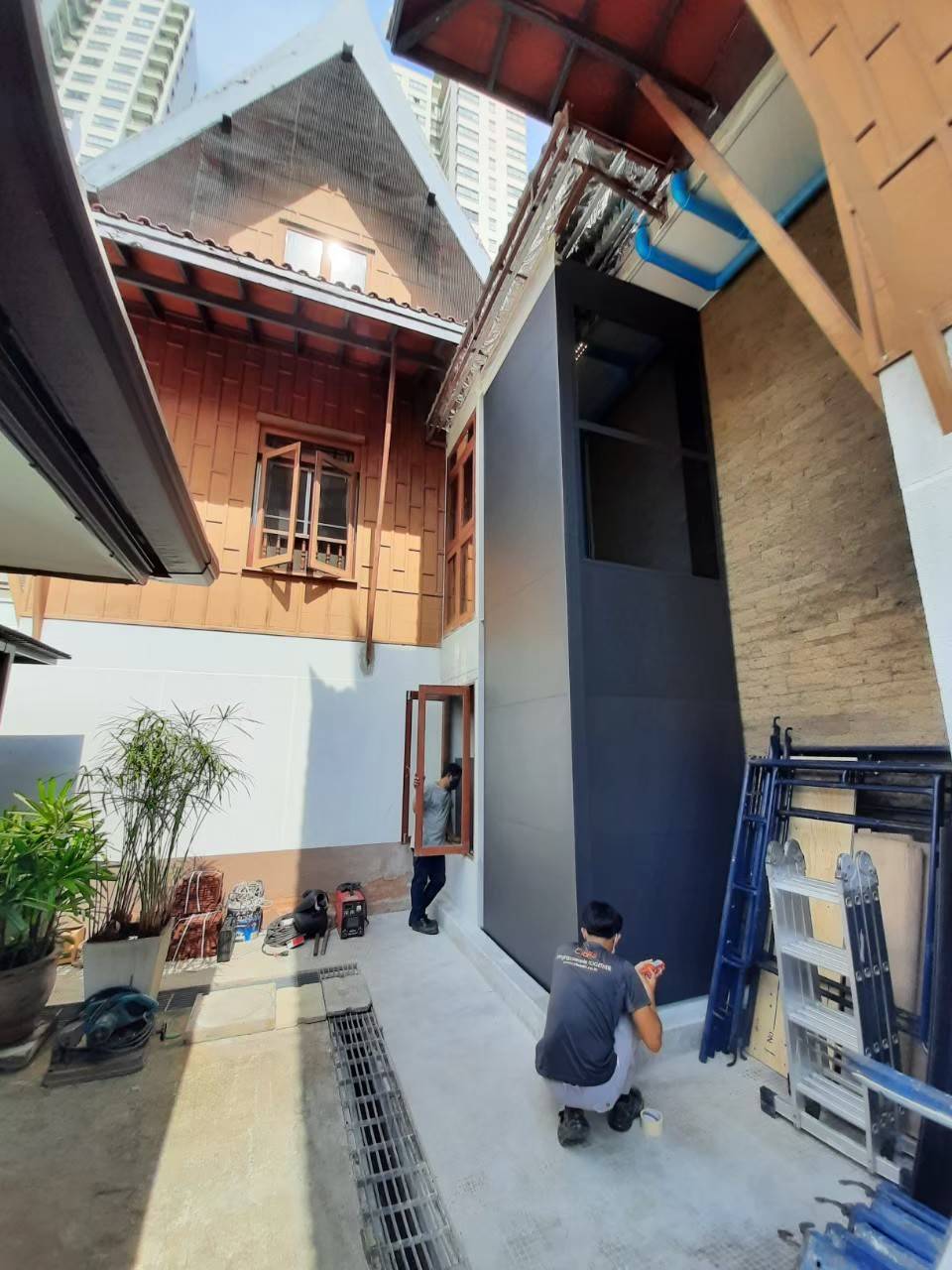
| Actual installation conditions | Existing homes may need slab cutting, support work, outdoor protection, or access planning. |
| After-sales service, warranty, and maintenance | A home lift is a long-term investment, so service quality and spare parts support should be checked before deciding. |
A cheaper starting price may look attractive at first. But if civil work, installation, warranty, spare parts, or maintenance are not clear, the final cost may become higher later.
Why is Cibes an ideal choice for home lifts?
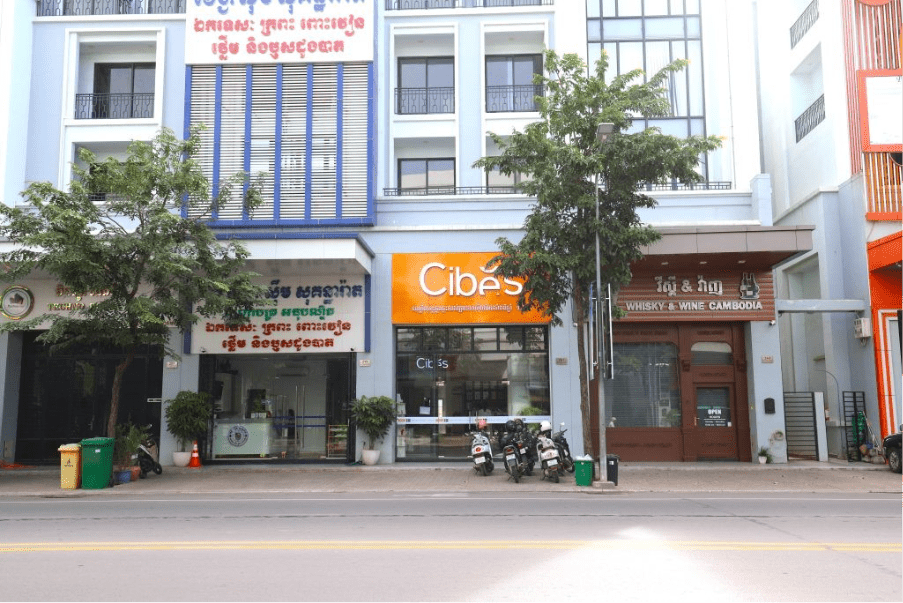
Cibes Lift Cambodia is an official subsidiary of Cibes Lift Group, a Swedish lift company known for screw-driven platform lifts for homes and low-rise buildings.
This means customers in Cambodia work directly with the official Cibes team, not through an agent or reseller.
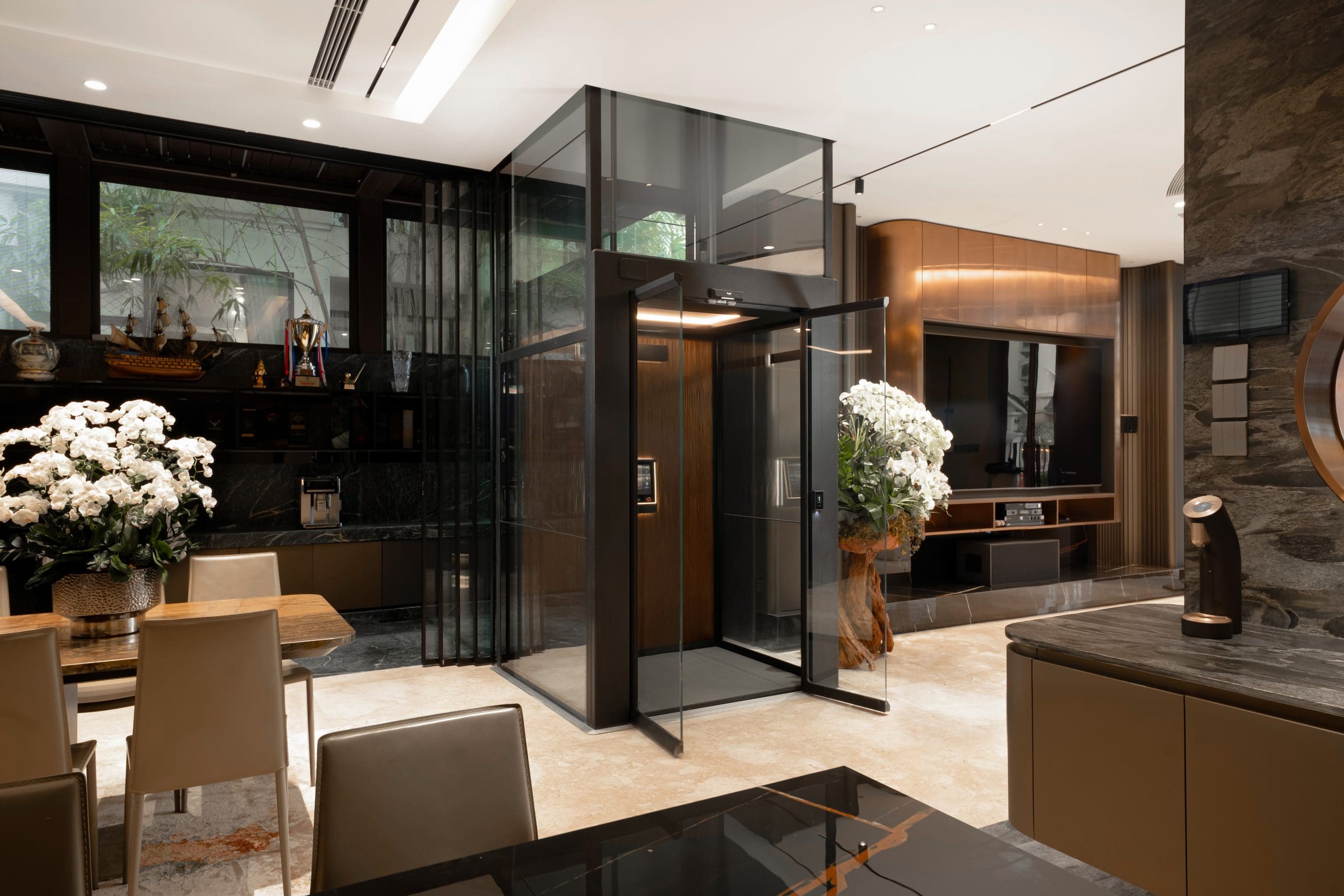
Cibes home lifts are designed to reduce building work while giving families safe and comfortable access between floors. They are suitable for villas, borey houses, shophouses, new houses, and renovation projects.
Key strengths include:
- Screw-driven technology for safe and stable home use
- No separate machine room for many models
- Low pit or ramp option depending on model and site condition
- Elegant design suitable for modern homes
- Imported Cibes lift solutions with local support in Cambodia
- Professional consultation, installation, and maintenance
Cibes Lift Cambodia supplies and installs Cibes screw-driven lifts. We do not supply traction or hydraulic elevators.
For homeowners, this gives a clear choice. If you are looking for a screw-driven home lift with official brand support, Cibes is a strong option to consider.
How much does a Cibes home lift cost?
A Cibes home lift in Cambodia typically starts from around USD 37,700 for a 3-stop lift. For larger homes, more stops, premium models, outdoor installation, or complex site conditions, the price can go above USD 95,300.
As a reference, Cibes home lift prices in Cambodia may range from:
| Number of stops | Reference price range |
| 3 stops | From USD 37,700 to USD 83,800 |
| 4 stops | From USD 41,600 to USD 89,700 |
| 5 stops | From USD 47,700 to USD 95,300 |
These are reference prices only. The final quotation depends on the Cibes model, number of stops, lift size, travel height, shaft type, indoor or outdoor installation, finishing options, project location, and site condition.
The reference price may include major items such as VAT, import costs, transportation, installation, testing, commissioning, handover, and an imported glass shaft supplied with the lift package. Site-related work, such as floor opening, pit modification, electrical preparation, finishing work, or extra logistics for difficult locations, may need to be checked separately.
For an exact price, Cibes Lift Cambodia needs to review the home layout, available space, number of floors, installation location, and site preparation requirements.
Case study: Cibes home lift in Cambodian home
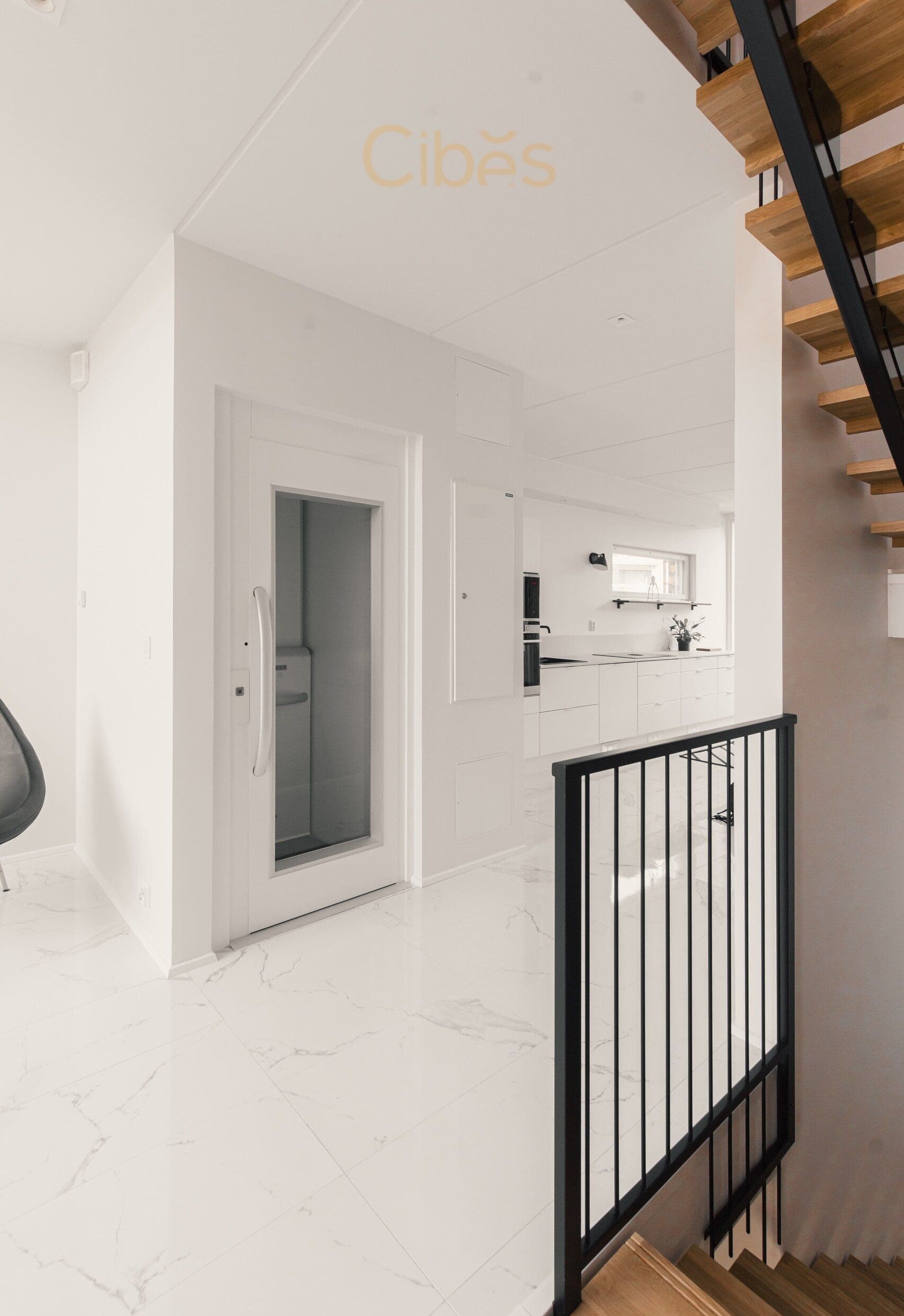
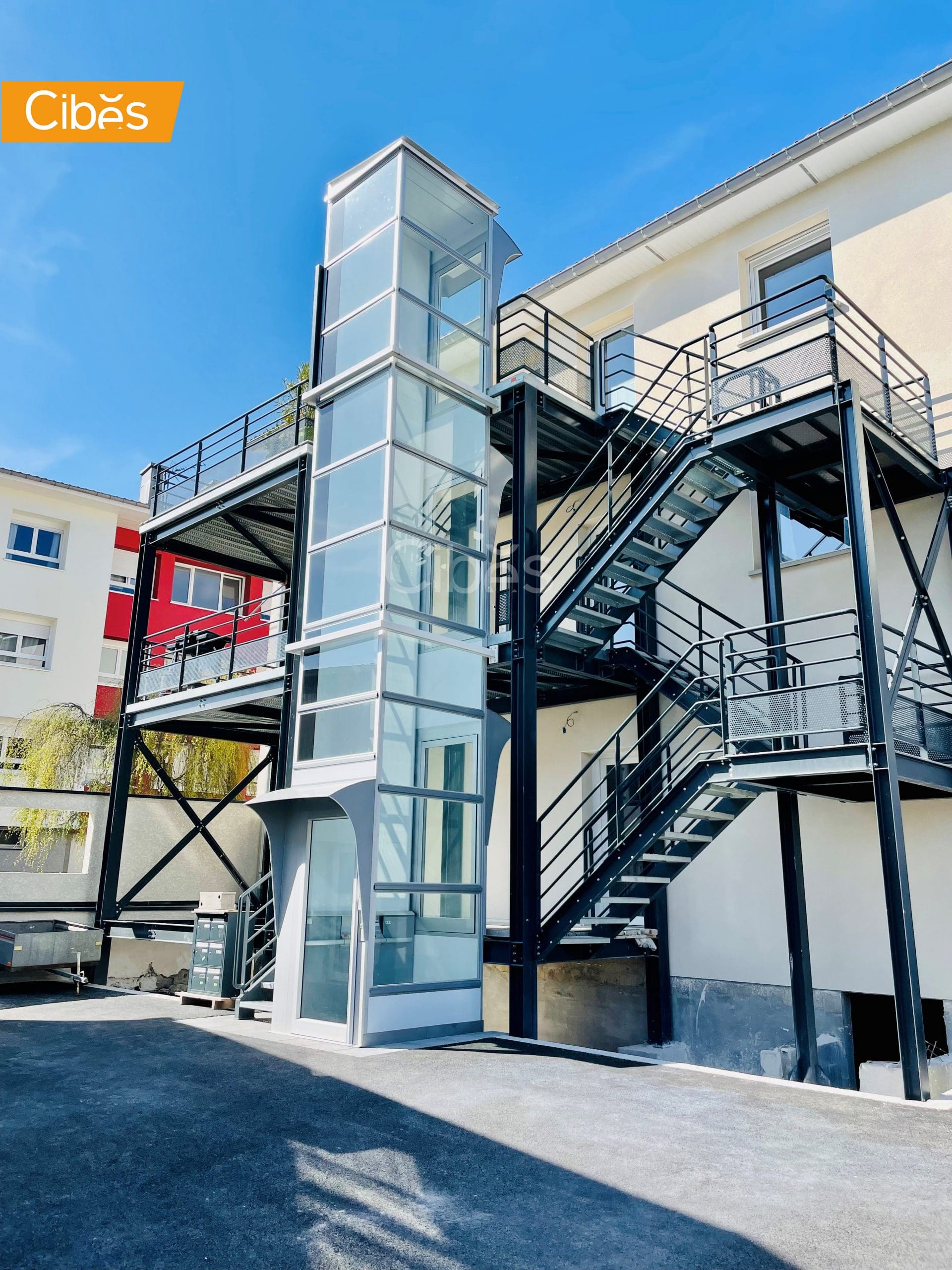
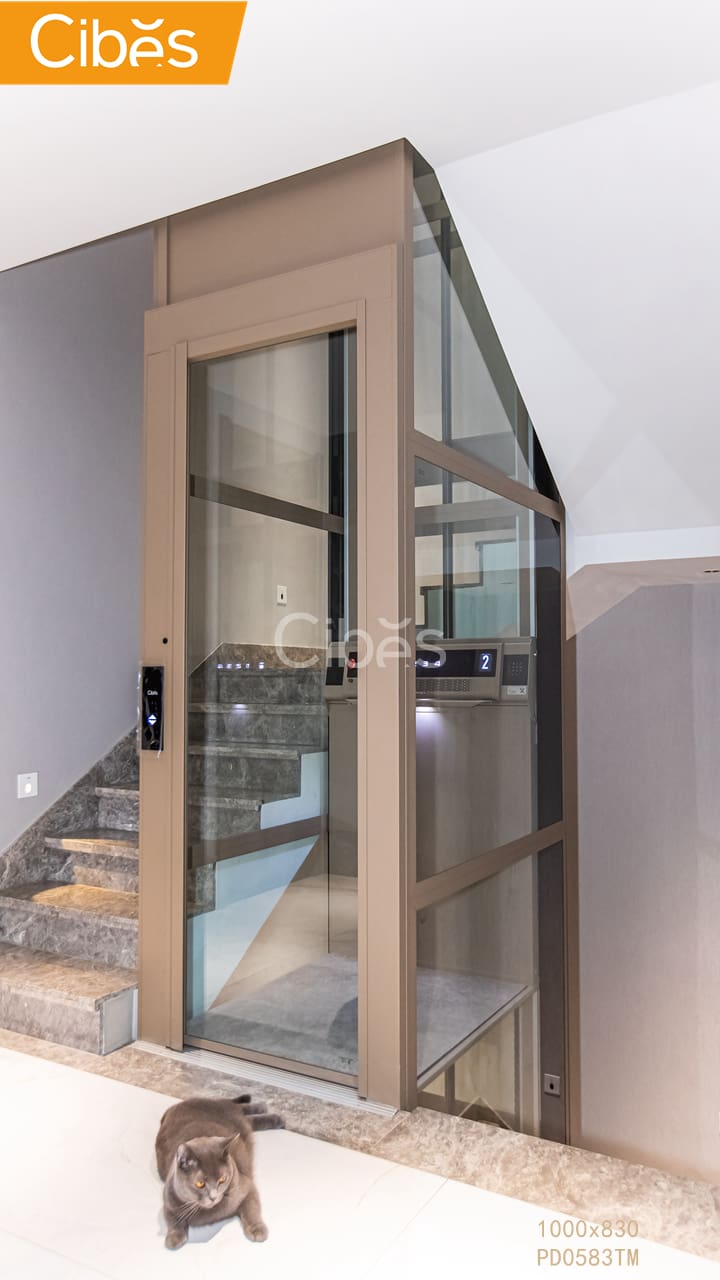
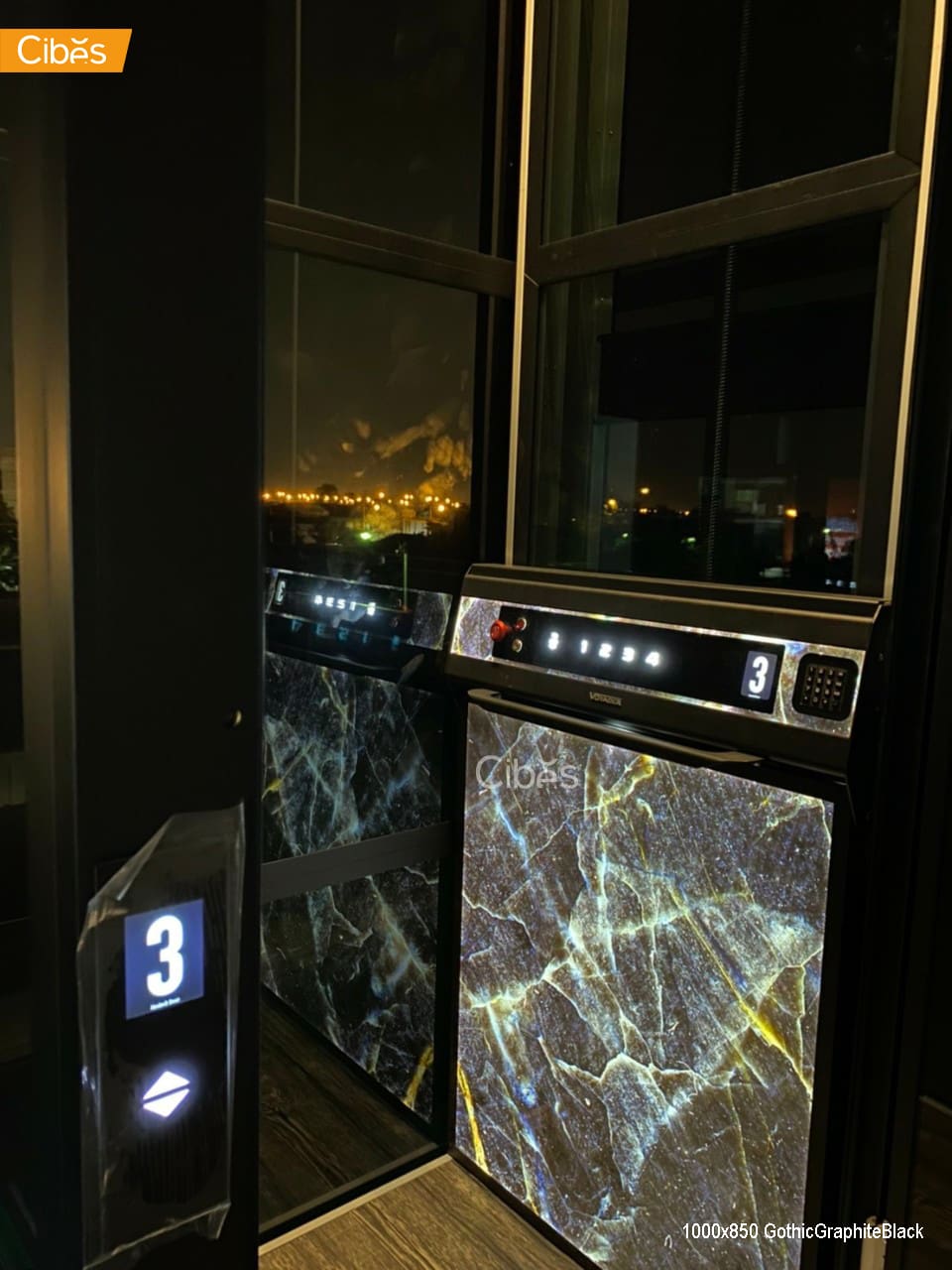
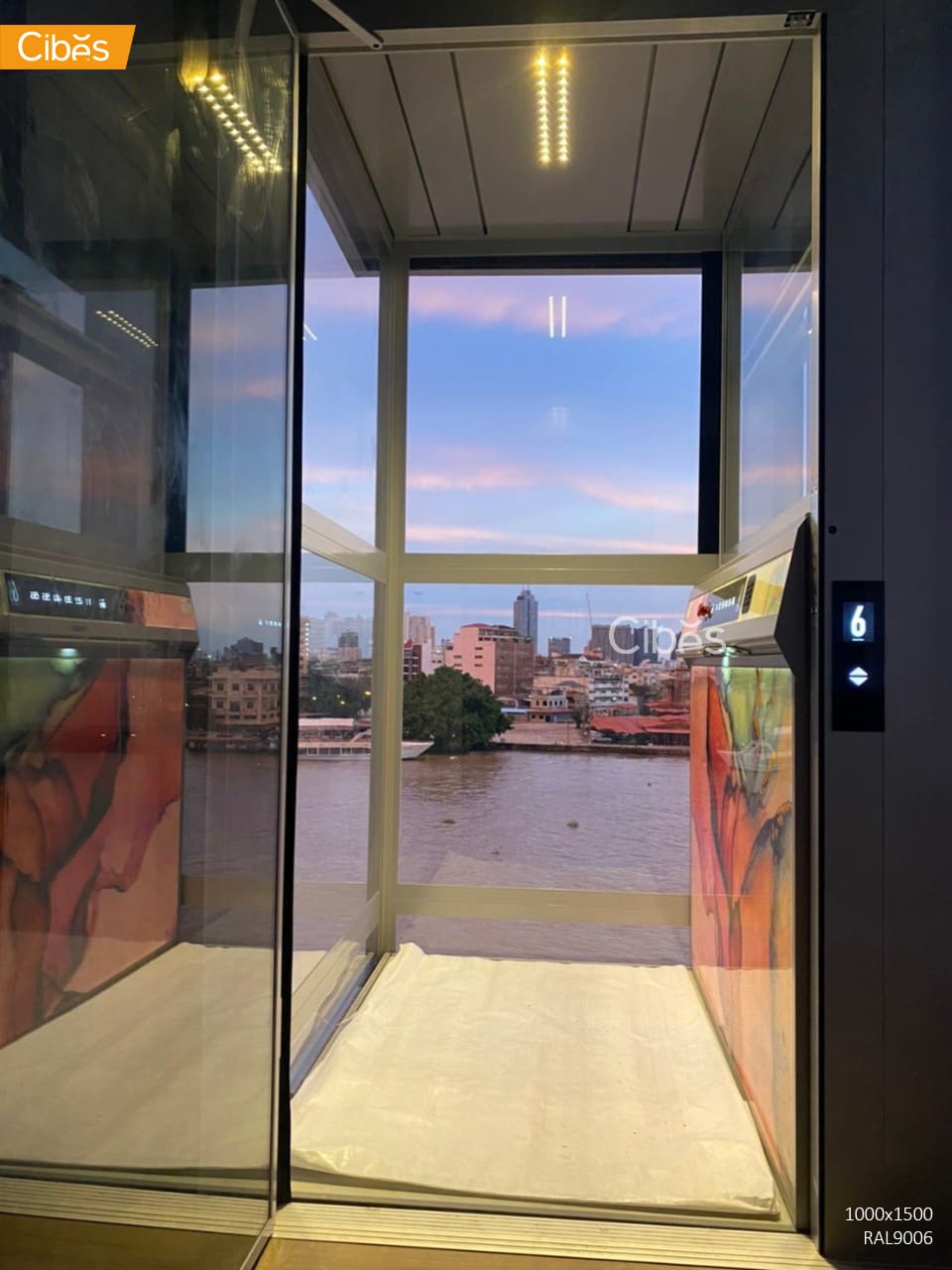
Since its establishment in Cambodia in 2022, Cibes Lift Cambodia has installed hundreds of home lift projects across the country, from villas and borey houses to shophouses and private renovation projects. Below are some typical Cibes home lift installations that show how different models can fit real Cambodian homes.
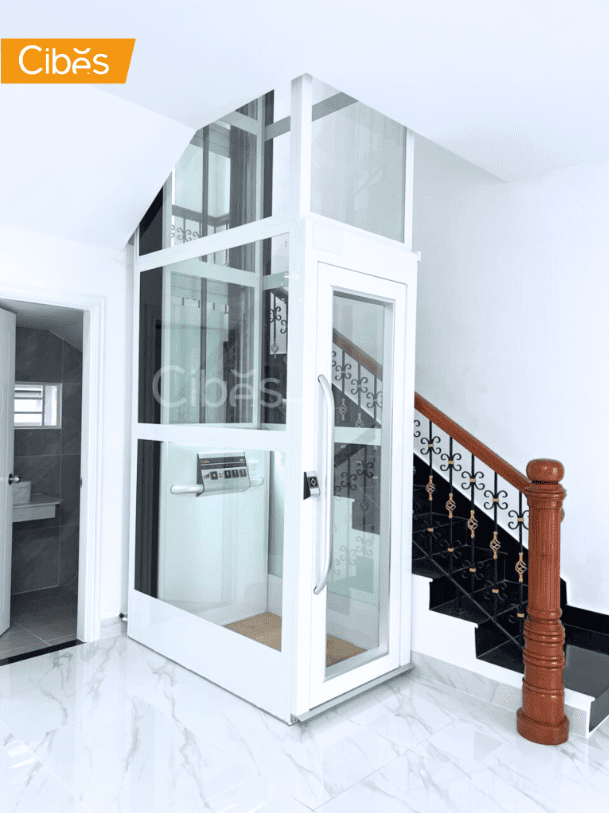
Model: Cibes Uno
Load: 400 kg
Number of stops: 3
Platform size: 1035 x 850 mm
Cut-out size: 1570 x 940 mm
This type of project shows how a compact lift can support daily home access while fitting into a planned residential space.
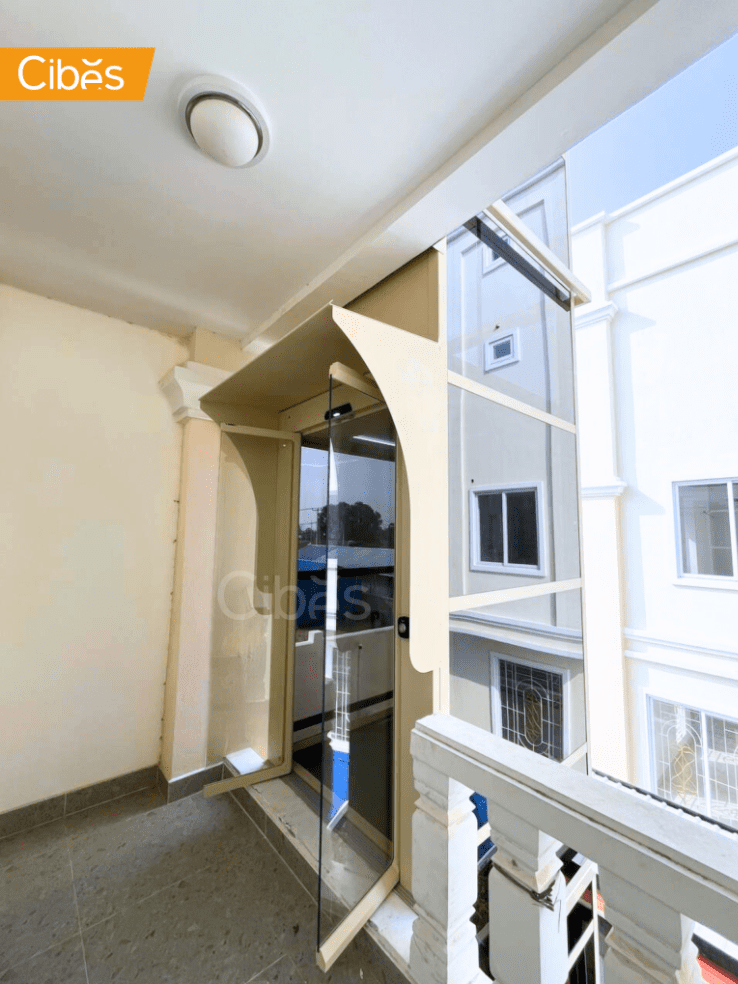
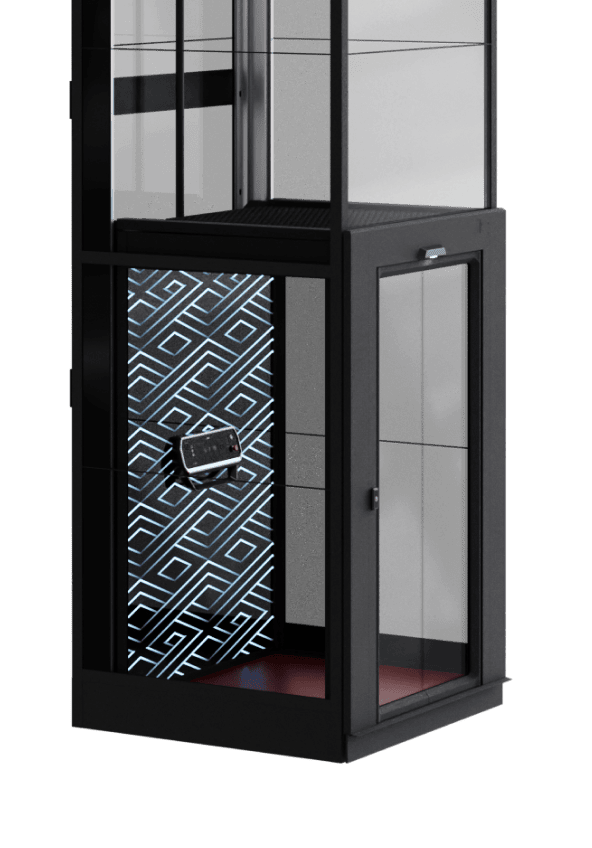
Model: V90 Galaxy
Load: 400 kg
Number of stops: 3
Cut-out size: 1440 x 1570 mm
Outdoor lift projects need careful planning for weather protection, drainage, shaft structure, and long-term maintenance. This is especially important in Cambodia’s heat and rainy season.
FAQ about home lifts
Not always. Some screw-driven home lifts can work with a low pit or ramp option, depending on the model and site condition. This can be helpful for existing homes where a deep pit is difficult.
Yes. A Cibes home lift can be suitable for renovation projects because many models are compact and can be installed with less civil work than many traditional elevator systems.
Yes, when it is properly installed and maintained. Important safety features may include door sensors, emergency stop, alarm, emergency lowering, safety edges, and regular maintenance, depending on the model and configuration.
For many Cibes home lift projects, installation can take about 10 to 15 working days after the site is ready. The full project timeline also includes site survey, drawing confirmation, production, shipping, site preparation, testing, and handover.
Conclusion
A home lift in Cambodia should be chosen based on space, safety, site condition, and long-term service, not only the starting price. Screw-driven, traction, and hydraulic lifts all have different benefits, but the best choice depends on the home and how the lift will be used.
For villas, shophouses, borey houses, and existing homes, a Cibes screw-driven home lift can be a practical choice because it can reduce the need for a deep pit, machine room, and heavy civil work.
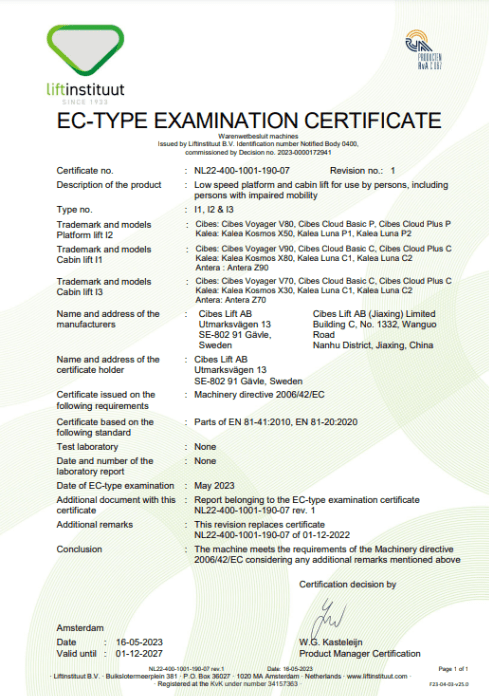
Before deciding, book a site survey, check the lift certificate, confirm the technical requirements, and visit the showroom if possible. A well-planned home lift can make daily life safer, easier, and more comfortable for the whole family.
_____________________________________
Cibes Lift Cambodia – Official subsidiary of Cibes Lift Group
Website: www.cibescambodia.com
Hotline: 011 837 183/ 093 837 183
Showroom: Near Chip Mong 271 Mega Mall, House 261, Commercial Street, Phnom Penh, Cambodia

Kahna Pov is the Country Manager of Cibes Lift Cambodia, the official subsidiary of Cibes Lift Group from Sweden. With over 4 years of experience advising on residential lift solutions and coordinating projects, she has supported homeowners, architects, and project teams across Cambodia in selecting Cibes screw-driven lifts that are safe, space-saving, and well suited for private homes.





TL;DR: An imported lift can improve access to a villa, townhouse, or renovated home. Yet the word “imported” doesn’t prove that a lift is safe or suitable. Check the manufacturer, exact model, safety documents, usable space, shaft requirements, power supply, installation scope, warranty, maintenance plan, and spare-parts support in Cambodia. Arrange a site survey and […]
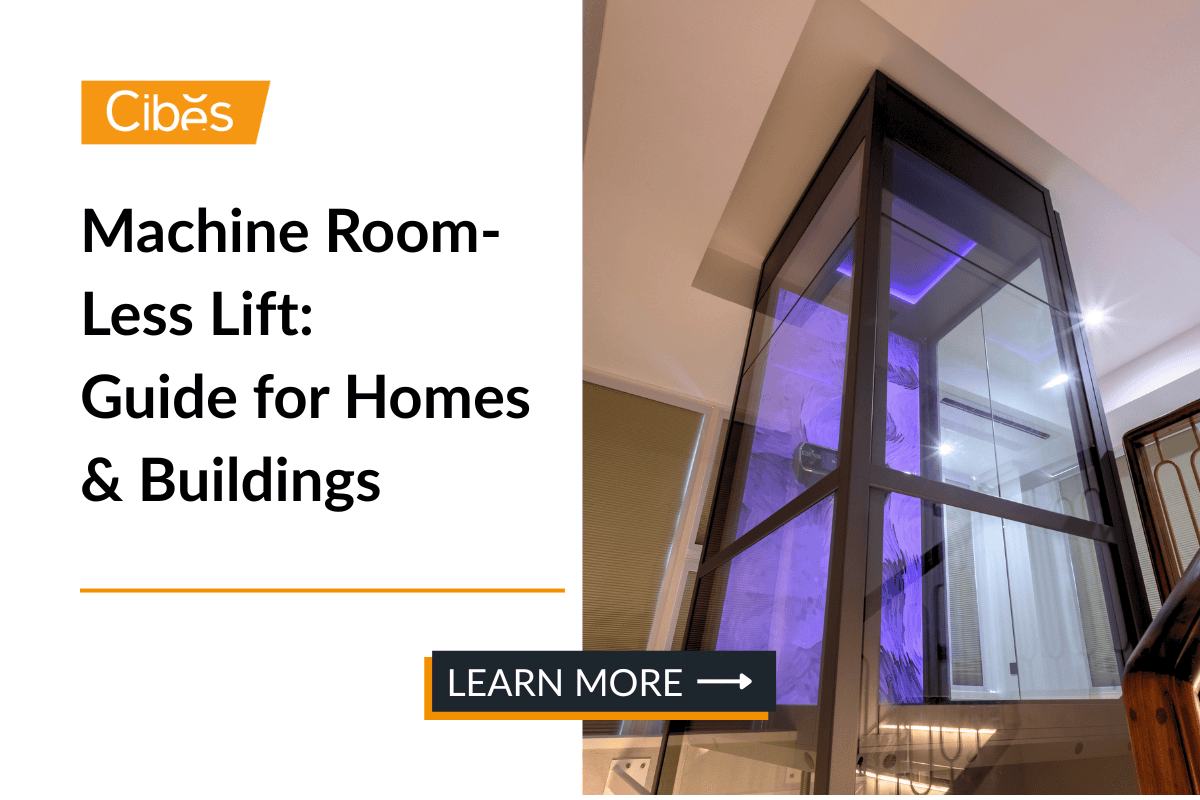
Whether you’re building a new home, renovating an ex isting property, or planning a commercial project, choosing the right elevator is an important decision. One of the most popular options today is the machine room-less lift. Unlike traditional elevators that require a separate machine room, a machine room-less lift integrates the drive equipment into the […]

In Cambodian villas, borey houses and shophouses, a home elevator can be installed in the middle of the staircase, beside the stairs, in an open stair void or outside the house. The right location depends on the available space, staircase design and structural conditions. TL;DR The best location for a home elevator depends on your […]
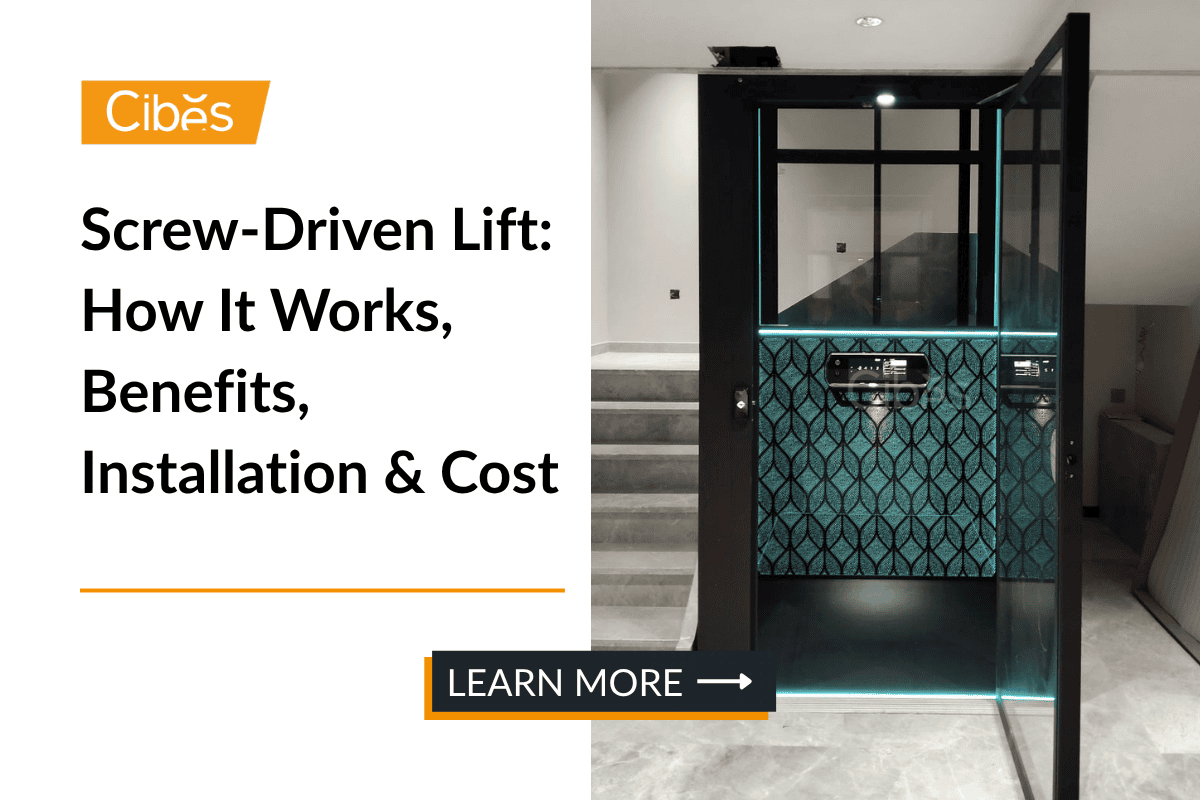
A screw-driven lift is a compact home lift that moves a lift with a motor, steel screw and drive nut. For Cambodian villas, borey houses, clinics and small buildings, it is often chosen because it can work without a machine room and with a shallow pit or ramp, depending on the model and site condition. […]
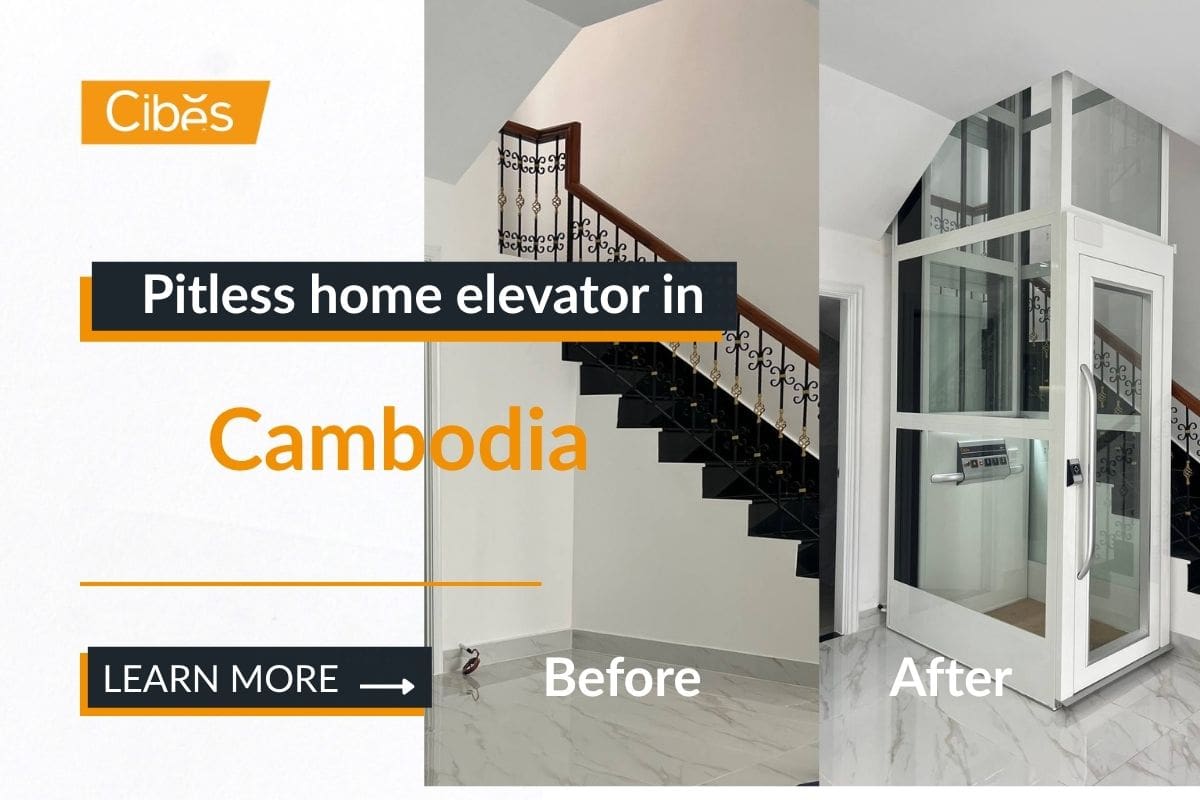
A pitless home elevator is a residential lift that operates with little or no pit below the lowest landing. A traditional home elevator needs a pit of about 600 to 1500 mm. A pitless lift works with 0 to 120 mm, so it can sit on a finished floor with minimal building work. TL;DR: This […]