

Blog - Date posted: 09/06/2026 - Date updated: 23/06/2026
Pitless Home Elevator Cambodia: Cost & Installation
A pitless home elevator is a residential lift that operates with little or no pit below the lowest landing. A traditional home elevator needs a pit of about 600 to 1500 mm. A pitless lift works with 0 to 120 mm, so it can sit on a finished floor with minimal building work.
TL;DR:
This guide explains what a pitless home elevator is, how it works, and how much it costs, helping homeowners in Cambodia choose the right lift solution for houses where a traditional elevator pit is not feasible.
Key points include:
- A clear explanation of what a pitless home elevator is and how it differs from traditional elevators
- Overview of technologies used in pitless lifts, including screw-driven systems
- Space requirements and installation conditions for existing homes and renovation projects
- Typical price range of pitless home elevators in Cambodia
- Reference pricing and real installation examples of Cibes home elevators
What Is a Pitless Home Elevator?
A pitless home elevator is a residential elevator designed to work with little or no pit depth below the lowest landing. It is also called a no-pit home lift, shallow-pit elevator, or home elevator without a pit.
Traditional elevators usually need a deep pit under the cabin for buffers and other technical parts. A pitless elevator uses a different lift design, so it can often be installed directly on the finished floor or with only a shallow recess.
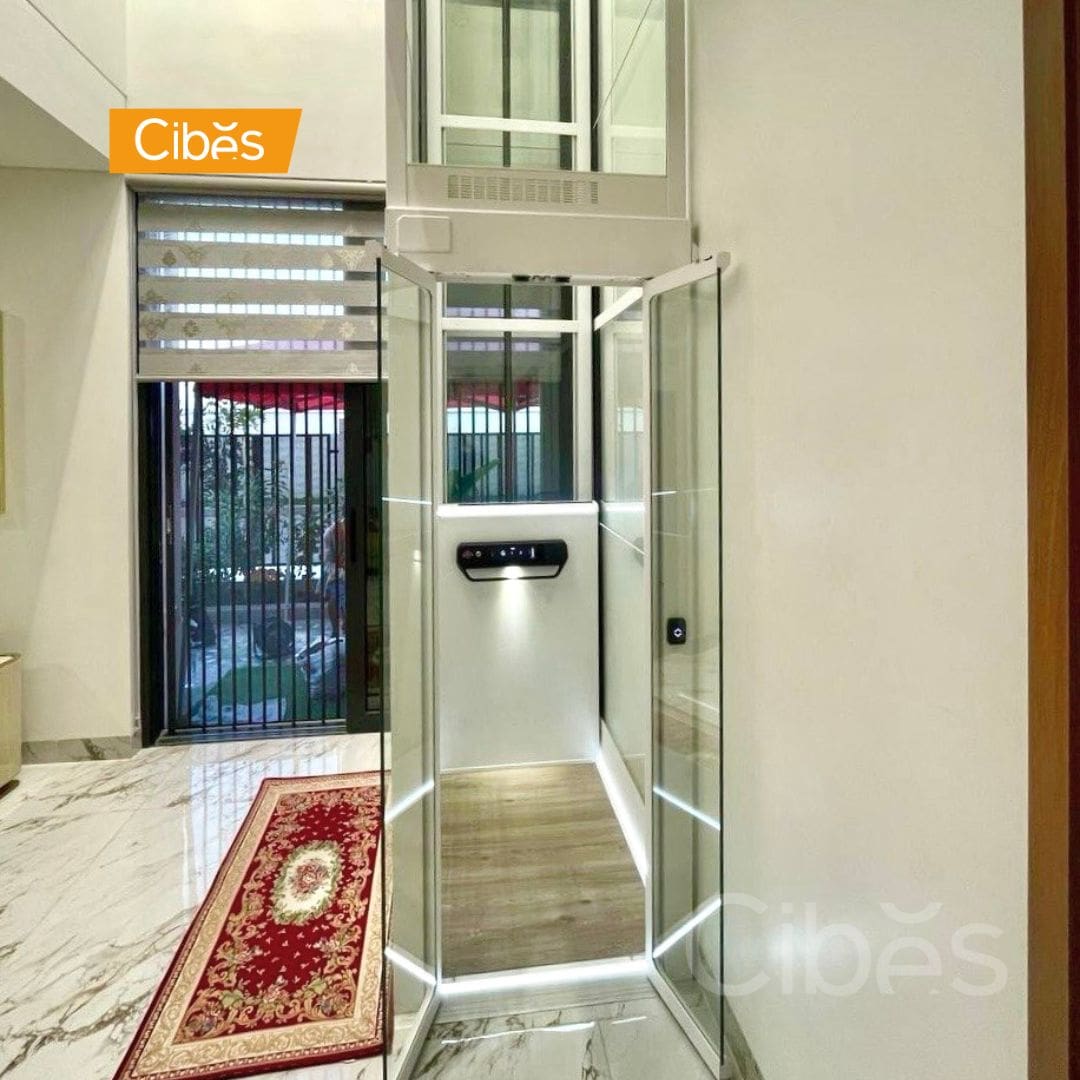
For homeowners in Cambodia, this is often the key reason to choose a pitless elevator. Many townhouses and villas have limited space, finished floors, and no planned lift pit. A pitless system can make elevator installation easier and cleaner. only a shallow recess.
How Is It Different from Traditional Home Elevators?
The main difference is the pit requirement and construction impact. Traditional home elevators typically require a pit depth of around 600-1500 mm, while a pitless home elevator can operate with 0 to 120 mm of pit depth, or no pit at all, depending on the model.
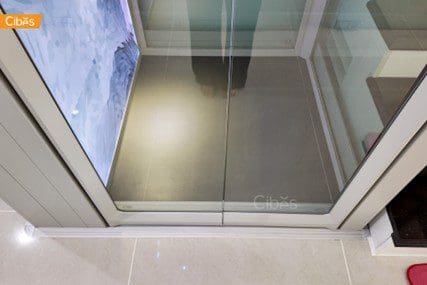
Because of this, pitless elevators require less excavation, fewer structural modifications, and faster installation, making them particularly suitable for existing homes.
| Feature | Traditional home elevator | Pitless home elevator |
| Pit depth | Often around 600 to 1500 mm | Often 0 to 120 mm, depending on model |
| Machine room | Often required for some systems | Not required for many modern home lifts |
| Construction work | More excavation and structural work | Less excavation and faster site preparation |
| Best suited for | New homes planned with a lift shaft | Existing homes, renovations, townhouses, villas |
| Structural impact | Higher | Lower |
| Installation flexibility | More limited | More flexible |

When should you choose a pitless home elevator?
Choose a pitless home elevator when avoiding civil work matters more than maximum cabin size. The trade-off is straightforward. A traditional pit allows a larger, deeper cabin base but requires excavation that can disturb a finished floor, basement, or waterproofing. A pitless lift accepts a slightly different base design in exchange for installing on the existing floor with little or no digging.
It is commonly the right choice for:
- Existing homes or renovation projects
- Townhouses with limited space
- Homes with basements or underground utilities
- Families planning accessibility for elderly residents
It is less ideal when the home is still at the structural design stage and a full pit can be planned from the start.
How Does a Pitless Home Elevator Work?
A pitless home elevator works by using lift technology designed to reduce the need for a deep pit, large machine room, or major structural changes. Common technologies include screw drive, hydraulic drive, and vacuum systems. For residential projects, screw-driven lifts are often a strong choice because they are compact, stable, and well suited to low-rise homes.
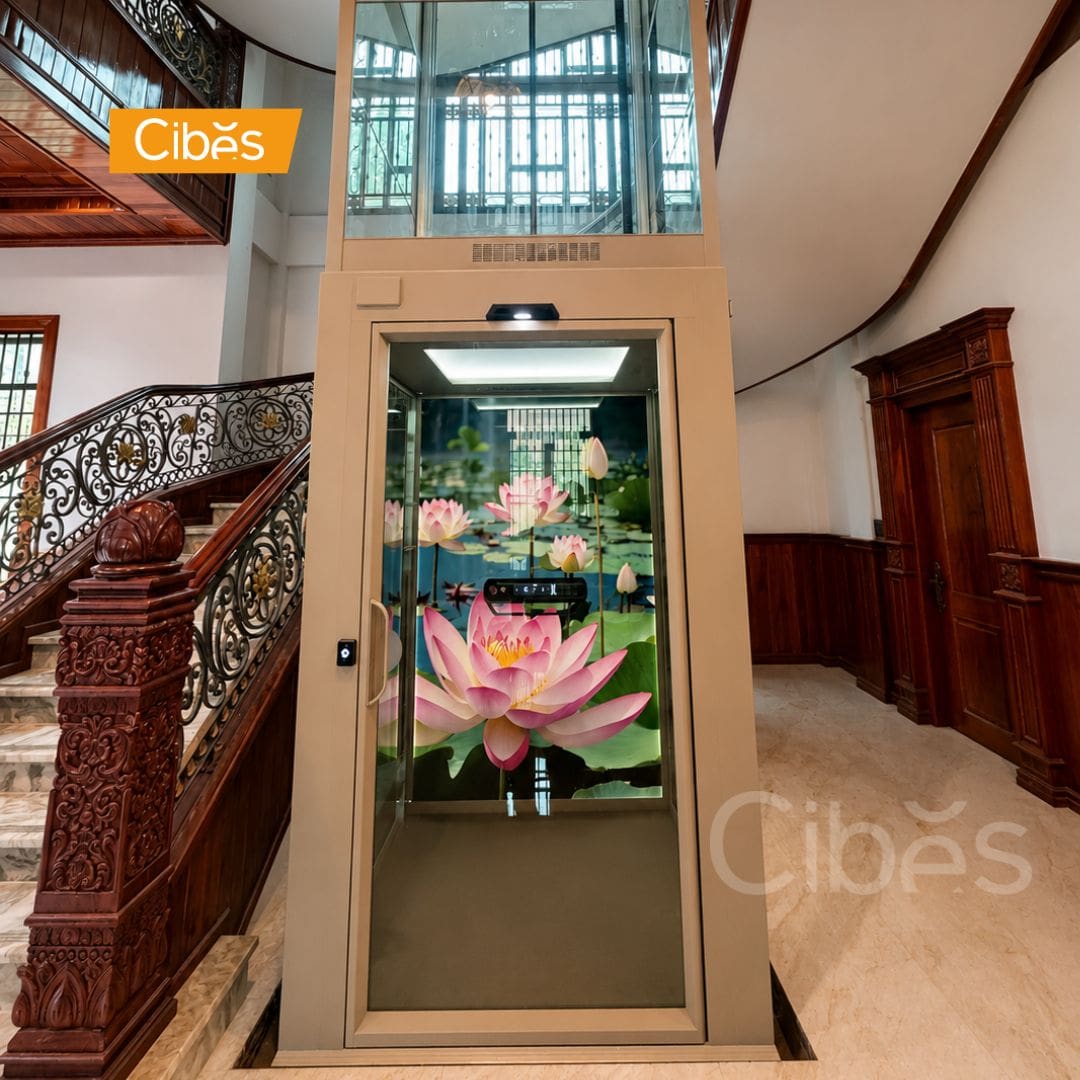
A typical pitless home elevator includes:
- A drive system
- A platform or cabin
- Guide rails or a support frame
- A control system
- Landing doors or shaft doors
- Safety sensors and emergency functions
- A self-supporting shaft or enclosure in many models
In a screw-driven lift, the platform moves along a steel screw through a motor and nut system. This creates controlled vertical movement in a compact structure. Many Cibes home lift models use screw-drive technology, with pit depth options such as 0 mm, 70 mm, or 120 mm depending on the model and configuration.
What Are the Key Benefits of Installing a Pitless Home Elevator?
A pitless home elevator helps homeowners add comfort, accessibility, and long-term value without major construction work.
Less construction work
Because the lift needs little or no pit, there is less digging, cutting, and floor modification. This is especially useful in completed homes where the flooring, waterproofing, or basement structure should not be disturbed.
Easier installation in existing homes
Many homes in Cambodia were not planned with a lift from the start. A pitless elevator can often be installed in suitable available spaces after a site survey.
No machine room for many modern systems
Many pitless home lifts, including Cibes screw-driven models, do not need a separate machine room. This saves space and helps protect the roof or top floor from extra construction.
Better access for elderly family members
A home elevator can make daily life easier for elderly parents, wheelchair users, people with knee pain, or anyone who finds stairs tiring.
Compact design for townhouses and villas
Pitless elevators can fit in stairwells, lightwells, small corners, or other spaces that may not work for a traditional elevator.
Cleaner interior design
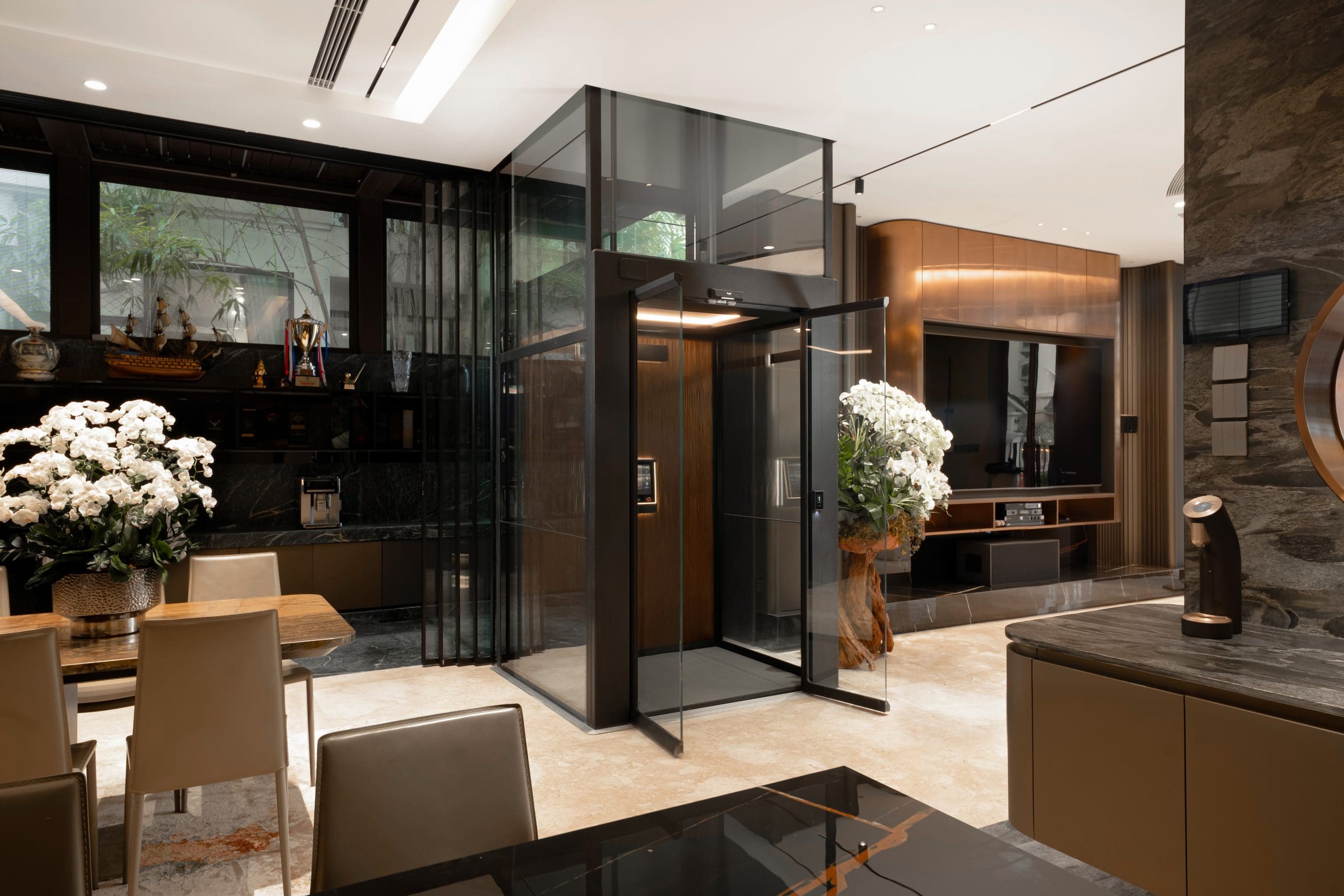
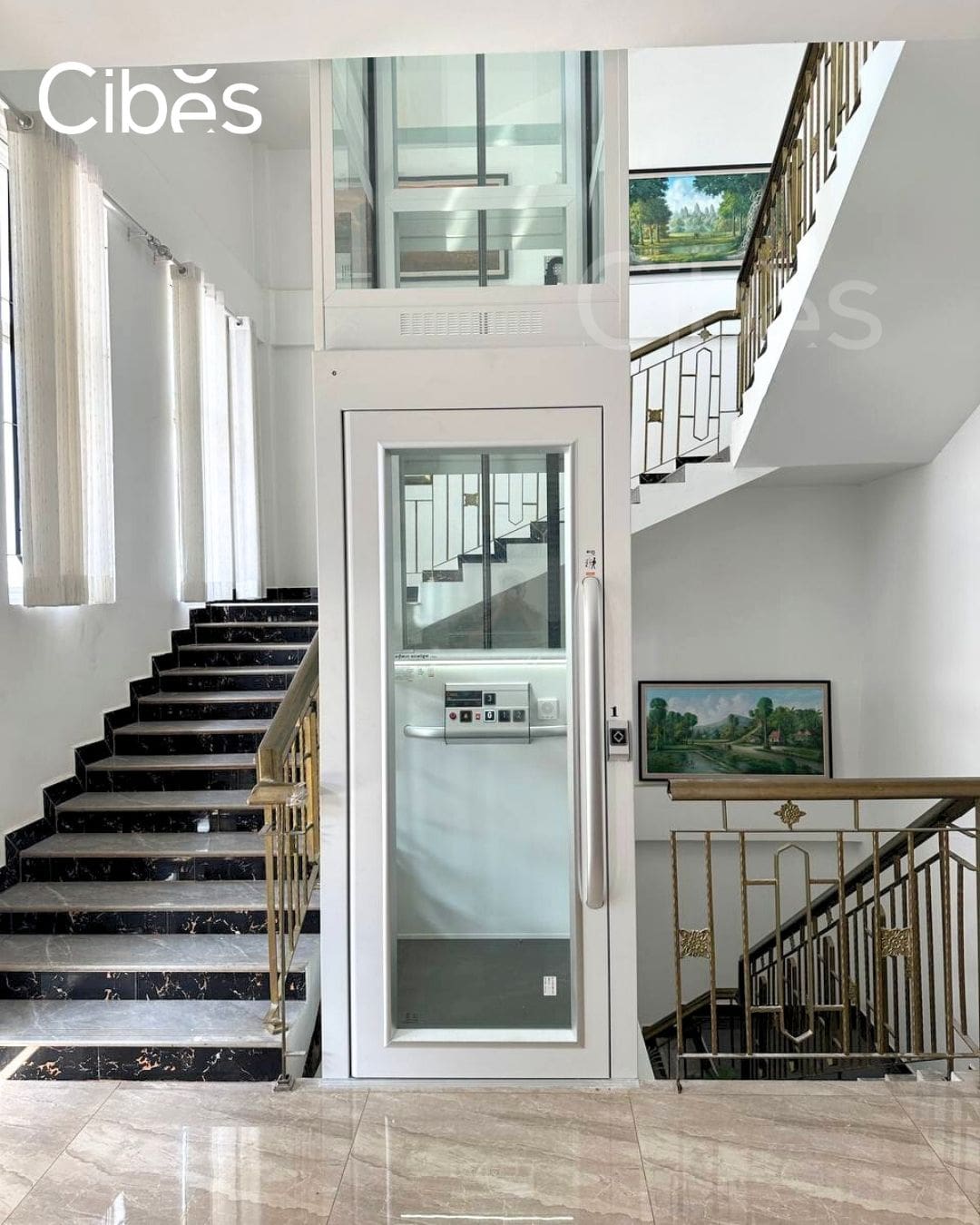
A modern pitless home elevator can blend with the home. Glass shafts, compact doors, and simple finishes help the lift feel like part of the interior, not an afterthought.
How much does a pitless home elevator cost in Cambodia?
A pitless home elevator in Cambodia typically starts from around USD 37,700 for a 3-stop Cibes home lift. The final price depends on the lift model, number of stops, platform size, travel height, finish, installation location, and site conditions.
Imported screw-driven pitless home elevators are usually positioned in the premium segment. The price reflects not only the lift itself, but also the drive system, certified safety features, imported components, glass shaft package, transportation, installation, testing, commissioning, handover, and after-sales support.
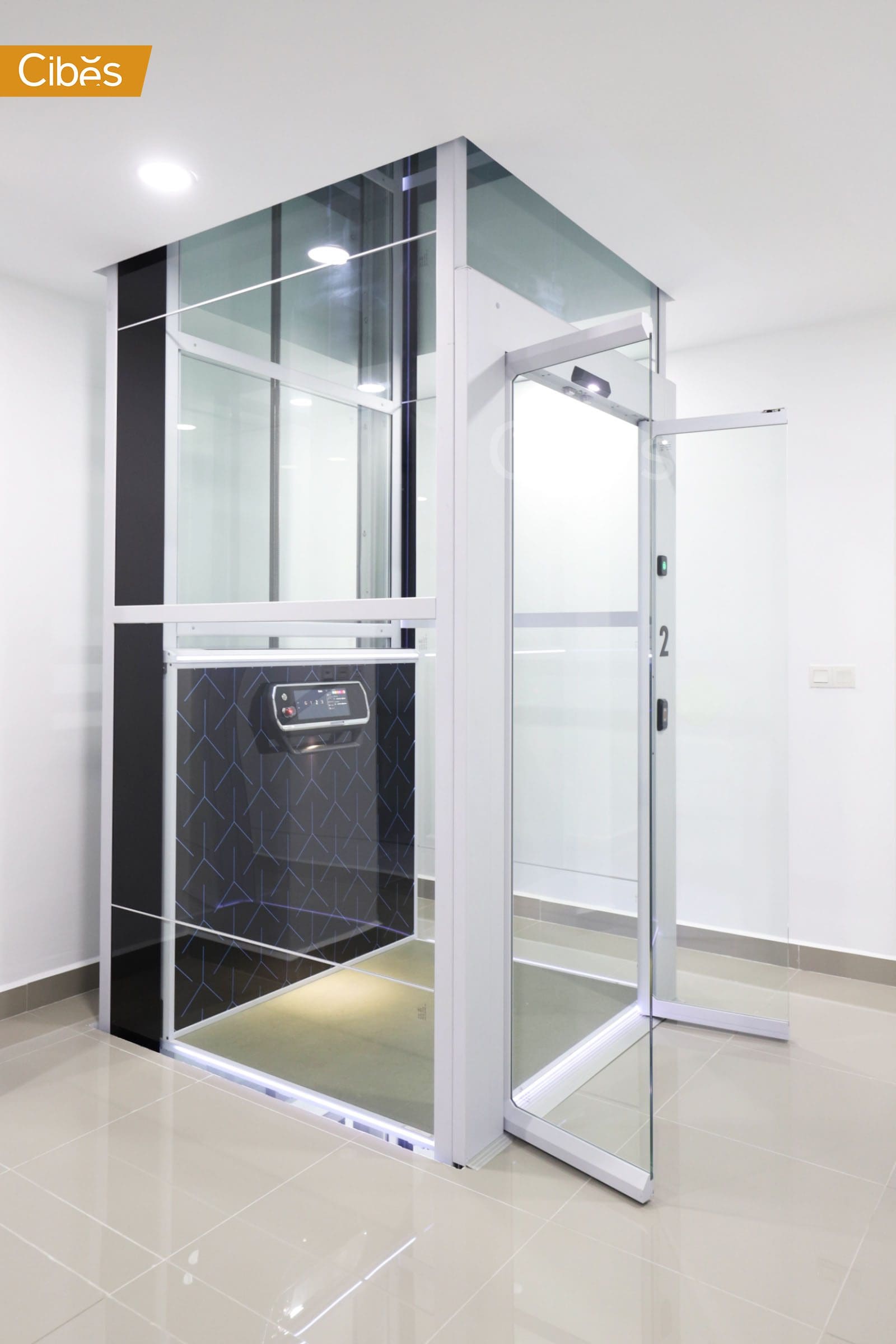
Cibes is a Swedish lift manufacturer founded in 1947, specializing in residential platform lifts. Its screw-driven home lifts are designed for private homes, townhouses, villas, and renovation projects where building a traditional elevator pit may be difficult. Cibes lifts are installed in more than 80 countries and comply with European safety and manufacturing standards, including Machinery Directive 2006/42/EC and relevant EN 81-41 standards for platform lifts.
To better understand how Cibes home lifts work and why they are suitable for residential use, you can watch the video below:
Below is a reference of Cibes pitless home elevators price in Cambodia, based on the number of stops.
| Number of Stops | Reference Price Range (USD) |
| 3 stops | From USD 37,700 to USD 83,800 |
| 4 stops | From USD 41,600 to USD 89,700 |
| 5 stops | From USD 47,700 to USD 95,300 |
Notes
- Prices above are for reference (updated Sep 2025). The final cost of a pitless home elevator may vary depending on lift size, travel height, installation location (indoor or outdoor), and project location (Phnom Penh or remote provinces such as mountainous areas or islands).
Please contact hotline 011 837 183 for a detailed consultation
- The above prices include VAT, import costs, transportation, installation, and handover/commissioning of the lift.
- The above prices include an imported glass shaft, supplied as a complete set matched to the lift.
- The above prices DO NOT include: Costs for site preparation/repair at the installation area, pit modification, and permit application fees (if any).
Real Cibes pitless home elevator installations in Cambodia
The following Cibes project examples show how a no-pit or shallow-pit lift can fit into real Cambodian homes where a traditional elevator pit is difficult to build.
Case 1: Can you install a home elevator from the ground floor without affecting the basement?
Yes, in some homes this is possible with a shallow-pit lift design.
Project background
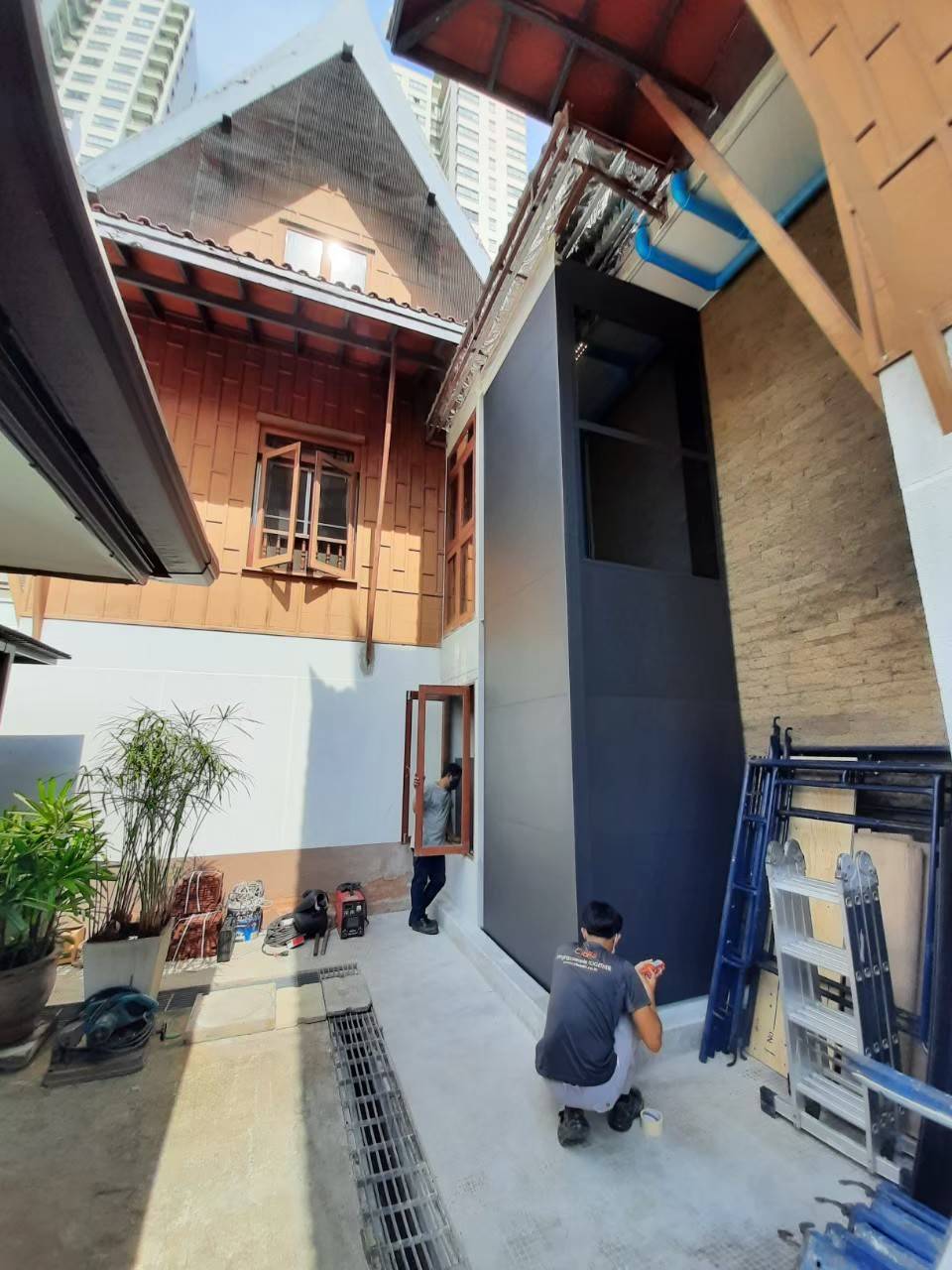
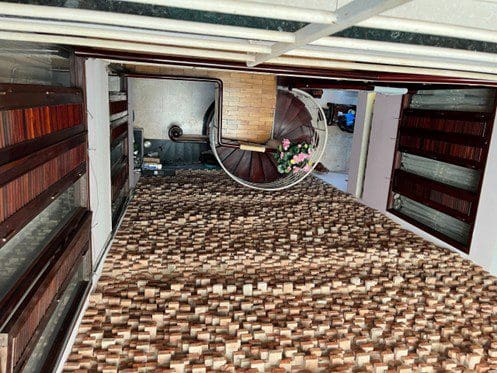
- The homeowner wanted to add a lift to a townhouse built in 2010. The house had a basement used as a parking area and a spacious lightwell that could be used for the lift.
- The main request was clear: install the elevator from the ground floor upward without affecting the basement.
- This meant the lift needed a shallow pit and minimal structural impact.
Cibes solution
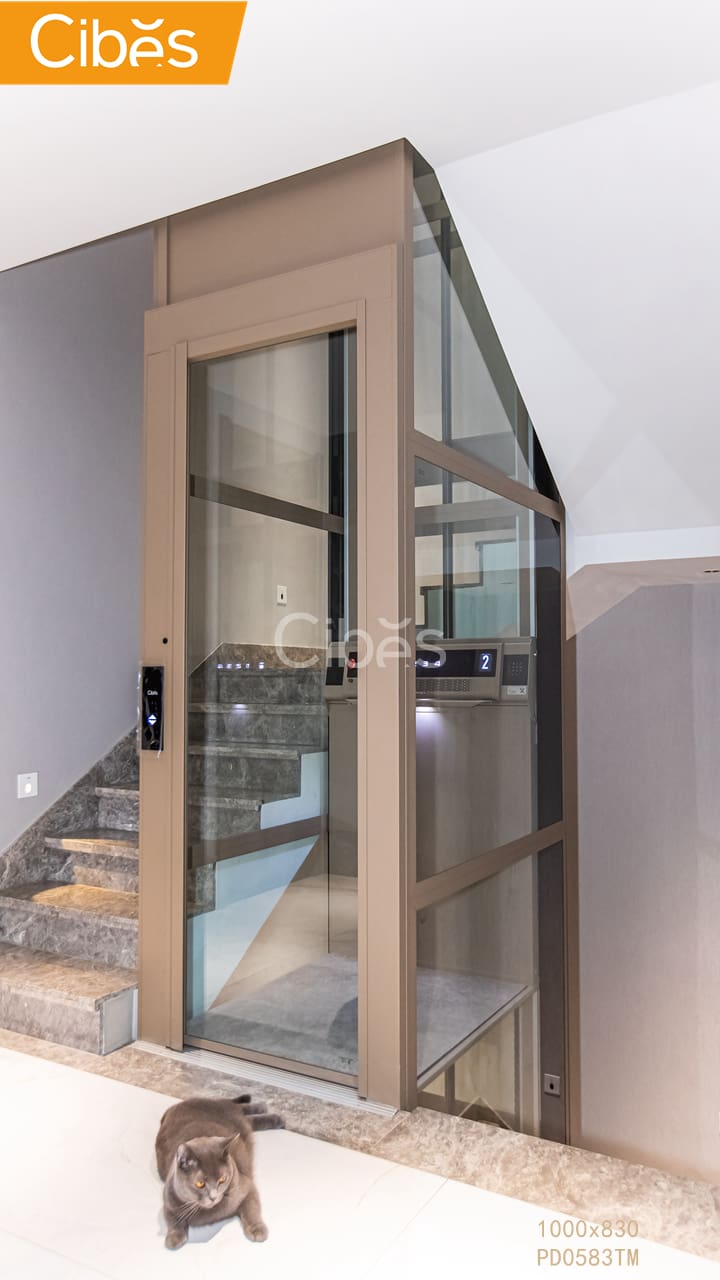
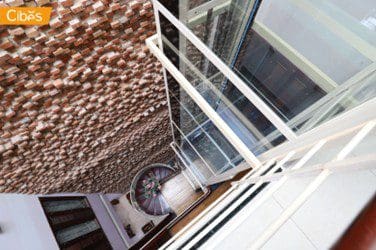
After the site survey, the Cibes engineering team proposed installing the lift inside the existing lightwell. The selected model was Cibes Voyager V80, which could fit the available space and reduce civil work.
With a pit depth of only 70 mm, the elevator could start from the ground floor while keeping the basement and parking area unaffected.
The compact design also allowed the lift to operate with single-phase electricity, depending on final configuration and site conditions.
Lift specifications
| Item | Specification |
| Model | Cibes Voyager V80i |
| Pit depth | 70 mm |
| Clear shaft size | 1360 × 960 mm |
| Platform size | 935 × 850 mm |
| Load capacity | 400 kg |
Case 2: Can you install a pitless elevator directly on the existing floor?
Yes. Some screw-driven home lifts can be installed directly on the finished floor with no pit, depending on the model and site condition.
Project Background
The house had already been fully completed and was in stable use when the homeowner decided to install a home elevator to improve vertical mobility from the basement to the upper floors.
The homeowner requested a solution that would:
- Avoid digging an elevator pit
- Prevent any structural impact on the existing floor
During the technical survey, several constraints were identified:
- The basement floor was already fully finished, making structural modification impossible
- The homeowner wanted to avoid construction work that might affect the basement waterproofing system or staircase structure
Cibes Solutions
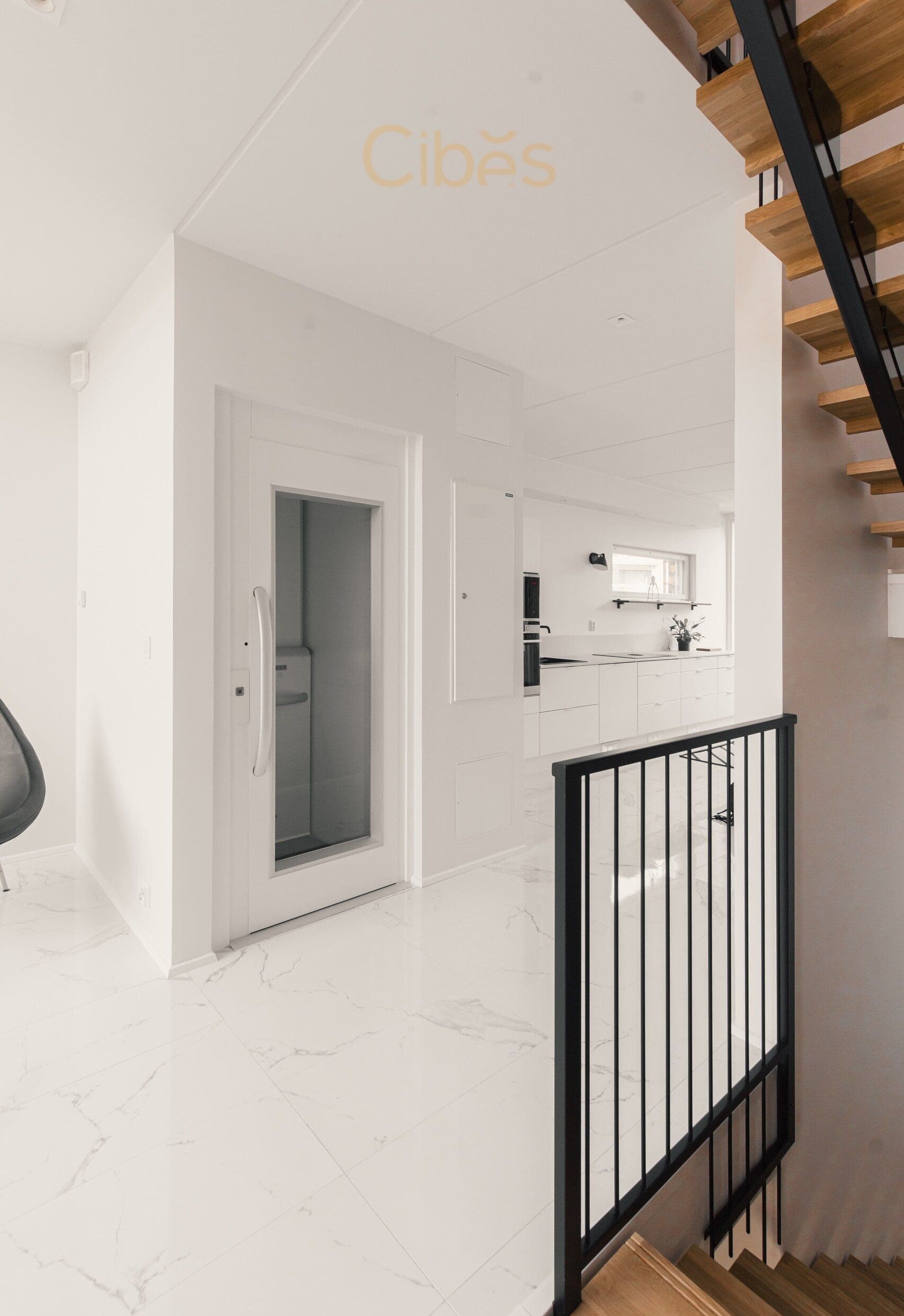
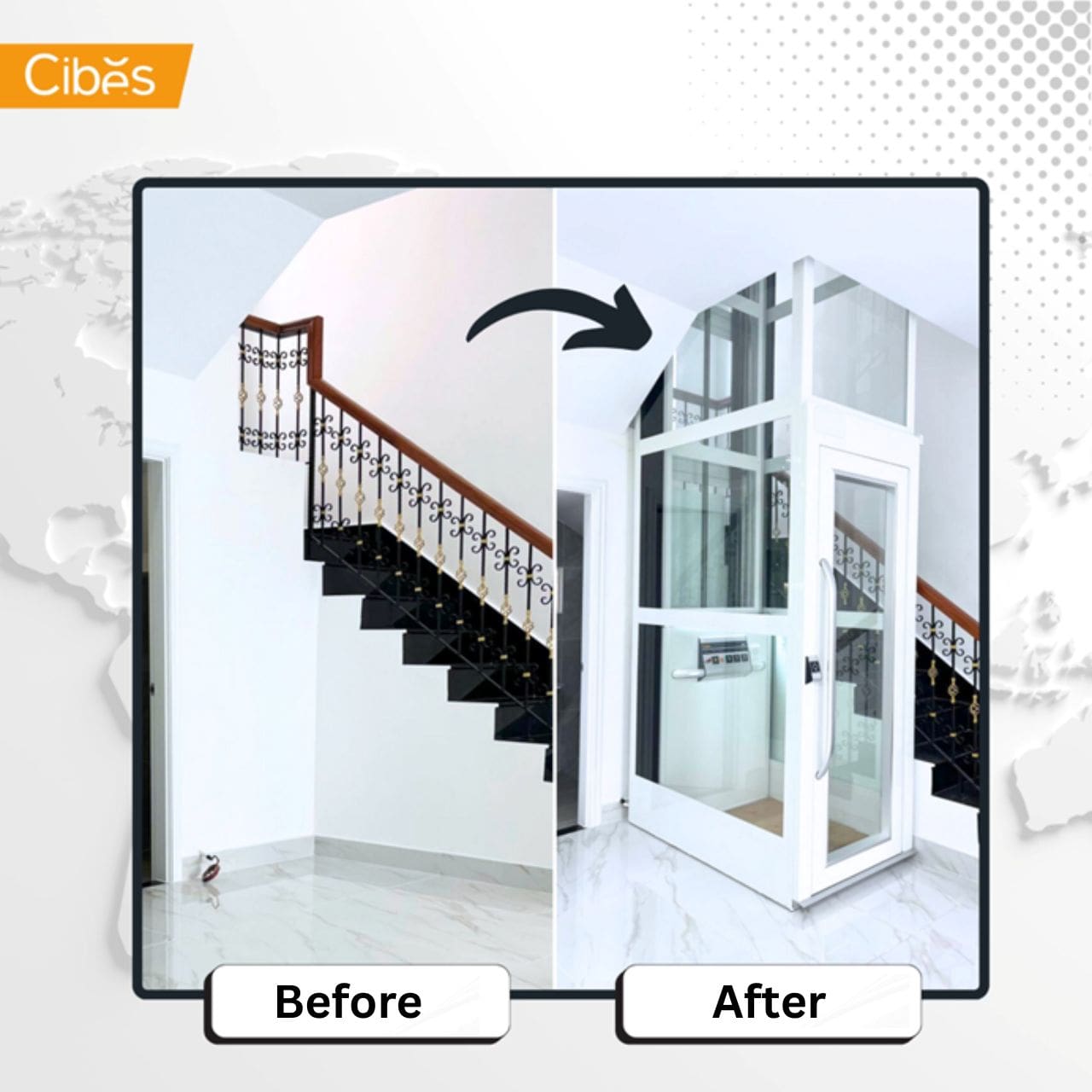
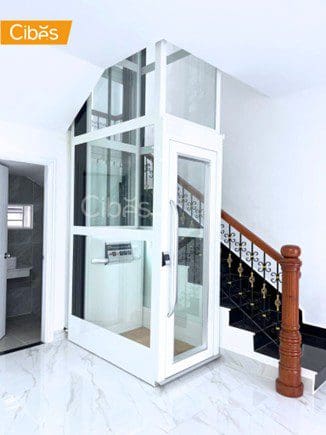
Cibes proposed a screw-driven pitless home elevator that could be installed directly on the existing floor.
The solution included:
- Installing the lift without pit excavation
- Adding a small entrance ramp for safe access
- Avoiding impact on the basement floor and waterproofing system
- Selecting lift dimensions that fit the staircase area
This allowed the home to gain vertical mobility without major changes to the completed structure.
Lift specifications
| Item | Specification |
| Model | Cibes Uno |
| Pit depth | 0 mm |
| Load capacity | 400 kg |
| Number of stops | 3 |
| Platform size | 1035 × 850 mm |
| Shaft size | 1570 × 940 mm |
Conclusion: Is a Pitless Home Elevator the Right Solution for Your Home?
A pitless home elevator is a practical solution for homeowners who want to install a residential lift without major construction work. With minimal pit depth, compact design, and flexible installation, it is especially suitable for existing homes, renovation projects, townhouses, and villas.
Among available options, Cibes pitless home elevators use screw-drive technology and comply with European safety standards, offering a reliable and space-efficient mobility solution for modern homes.
If you are planning to install a pitless home elevator in Cambodia, the Cibes team can provide a free consultation and site survey to determine the most suitable lift solution for your home.
Frequently Asked Questions About Pitless Home Elevator (FAQs)
Yes. A pitless home elevator can often be installed in an existing home because it needs little or no pit depth. A technical survey is still required to confirm space, structure, power supply, and lift position.
Yes. Some pitless home elevators can be installed with 0 mm pit depth, while others need only a shallow pit of around 70 to 120 mm. The exact requirement depends on the lift model and site condition.
Cibes home lift reference prices in Cambodia start from around USD 37,700 for a 3-stop lift. The final price depends on lift model, size, travel height, number of stops, site condition, and project location.
Installation usually takes about 10 to 15 days, depending on site conditions and the lift configuration.
_____________________________________________
Cibes Lift Cambodia – Official subsidiary of Cibes Lift Group
Website: www.cibescambodia.com
Hotline: 011 837 183/
Showroom: Near Chip Mong 271 Mega Mall, House 261, Commercial Street, Phnom Penh, Cambodia

Kahna Pov is the Country Manager of Cibes Lift Cambodia, the official subsidiary of Cibes Lift Group from Sweden. With over 4 years of experience advising on residential lift solutions and coordinating projects, she has supported homeowners, architects, and project teams across Cambodia in selecting Cibes screw-driven lifts that are safe, space-saving, and well suited for private homes.





TL;DR: An imported lift can improve access to a villa, townhouse, or renovated home. Yet the word “imported” doesn’t prove that a lift is safe or suitable. Check the manufacturer, exact model, safety documents, usable space, shaft requirements, power supply, installation scope, warranty, maintenance plan, and spare-parts support in Cambodia. Arrange a site survey and […]
Whether you’re building a new home, renovating an ex isting property, or planning a commercial project, choosing the right elevator is an important decision. One of the most popular options today is the machine room-less lift. Unlike traditional elevators that require a separate machine room, a machine room-less lift integrates the drive equipment into the […]

In Cambodian villas, borey houses and shophouses, a home elevator can be installed in the middle of the staircase, beside the stairs, in an open stair void or outside the house. The right location depends on the available space, staircase design and structural conditions. TL;DR The best location for a home elevator depends on your […]
A screw-driven lift is a compact home lift that moves a lift with a motor, steel screw and drive nut. For Cambodian villas, borey houses, clinics and small buildings, it is often chosen because it can work without a machine room and with a shallow pit or ramp, depending on the model and site condition. […]
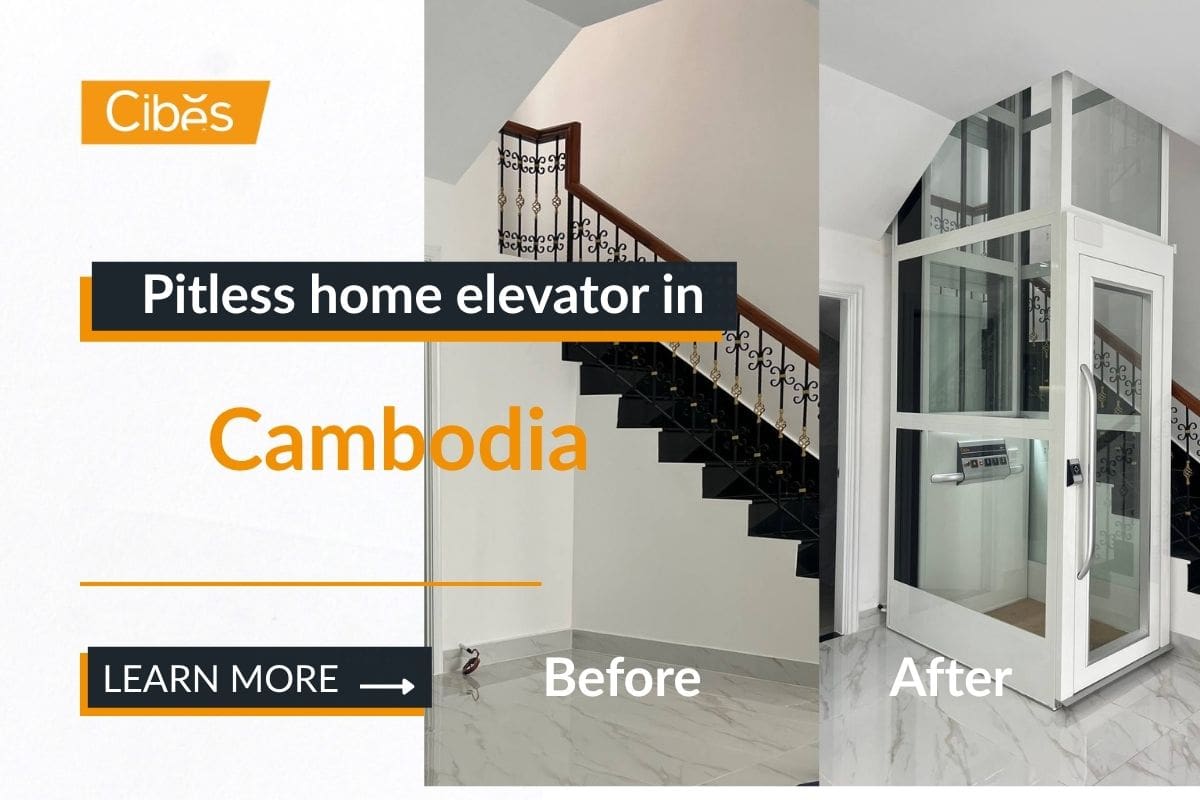
A pitless home elevator is a residential lift that operates with little or no pit below the lowest landing. A traditional home elevator needs a pit of about 600 to 1500 mm. A pitless lift works with 0 to 120 mm, so it can sit on a finished floor with minimal building work. TL;DR: This […]