

Blog - Date posted: 27/02/2026 - Date updated: 17/06/2026
Mini Lift for Home from 1m²: Compare Types & Prices in 2026
Explore mini lift for home options starting from 1m² – compare hydraulic, traction & screw-driven small elevators, 2026 Cambodia prices (USD 15,000 – 95,300).
TL;DR:
- Mini home lifts are compact elevators for small or renovated houses, installable from around 1m² with minimal construction.
- Main types: hydraulic, traction, screw-driven. Screw-driven is usually best for tight space with ultra-shallow pit (0 to 120 mm) and low maintenance.
- In Cambodia (2026), home lift reference prices typically range from USD 15,000 to USD 95,300 (for reference).
1. What Is a Mini Lift for Home?
A mini lift for home is a compact residential elevator designed specifically for private houses with limited space. Unlike conventional elevators, these systems focus on:
- Small footprint installation
- Minimal construction work
- Quiet, smooth operation
- User-friendly controls for all ages
Often referred to as a mini elevator for home, small elevator, or small lift in house, this type of lift is ideal for townhouses, narrow homes, and renovation projects where traditional elevator shafts are not feasible.
2. Why Mini Lifts Are the Home Elevator Trend of 2026?
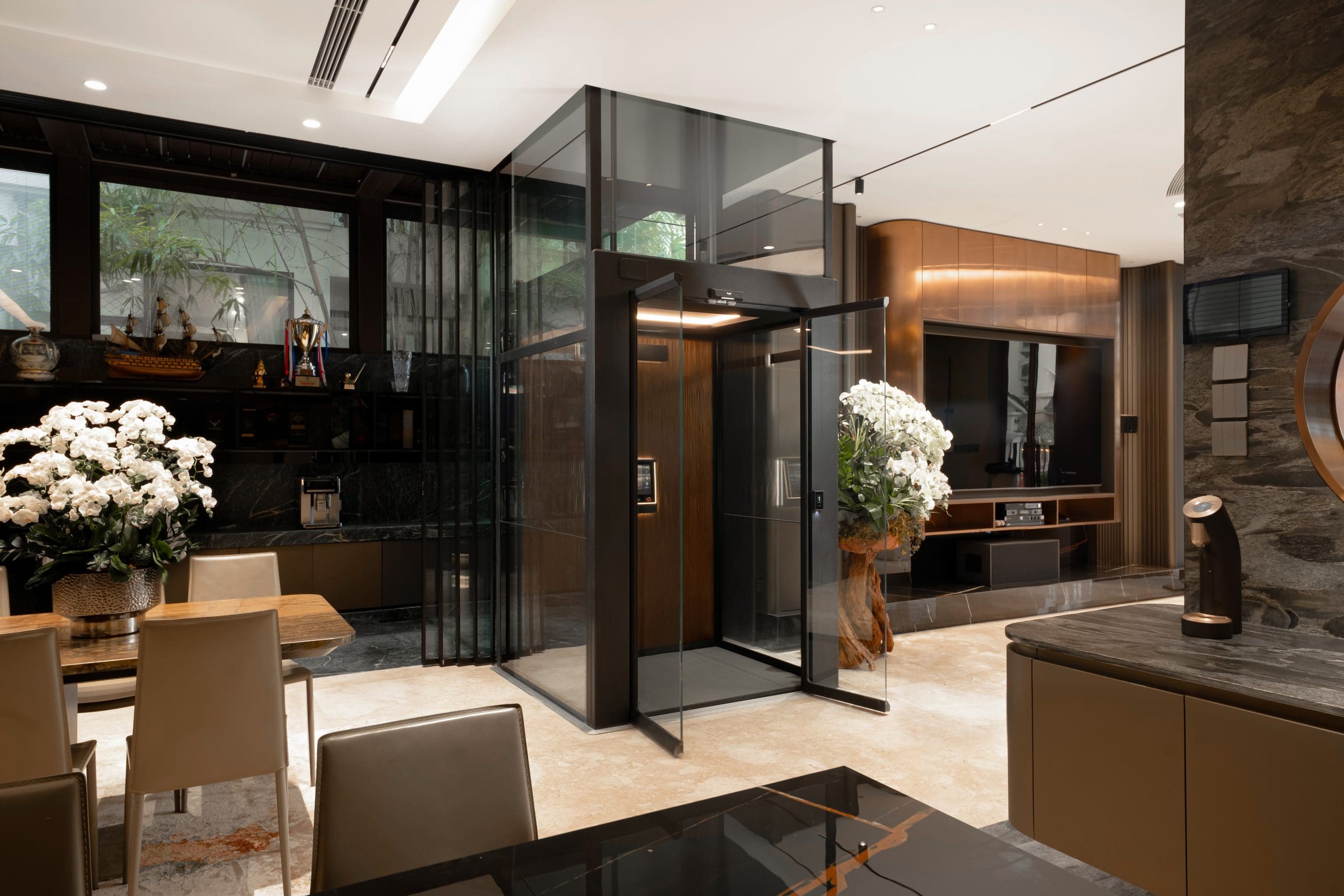
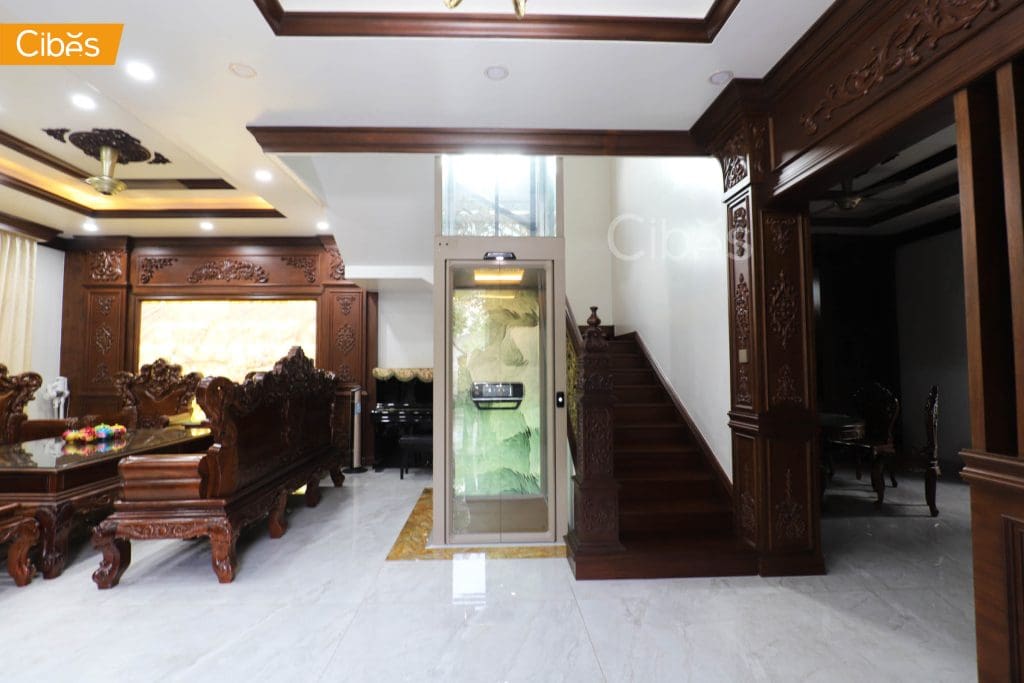
Mini lifts are the home elevator trend of 2026 because they are designed to work perfectly in limited spaces while requiring minimal structural changes. With installation starting from around 1m², mini home lifts offer a compact, modern, and practical solution for today’s space-conscious homes.
Designed for Homes with Limited Space
One of the biggest reasons behind the popularity of mini lifts for home is their ability to fit into extremely tight spaces. With installation starting from approximately 1m², homeowners can add vertical mobility without sacrificing usable living area.
Mini lifts can be installed:
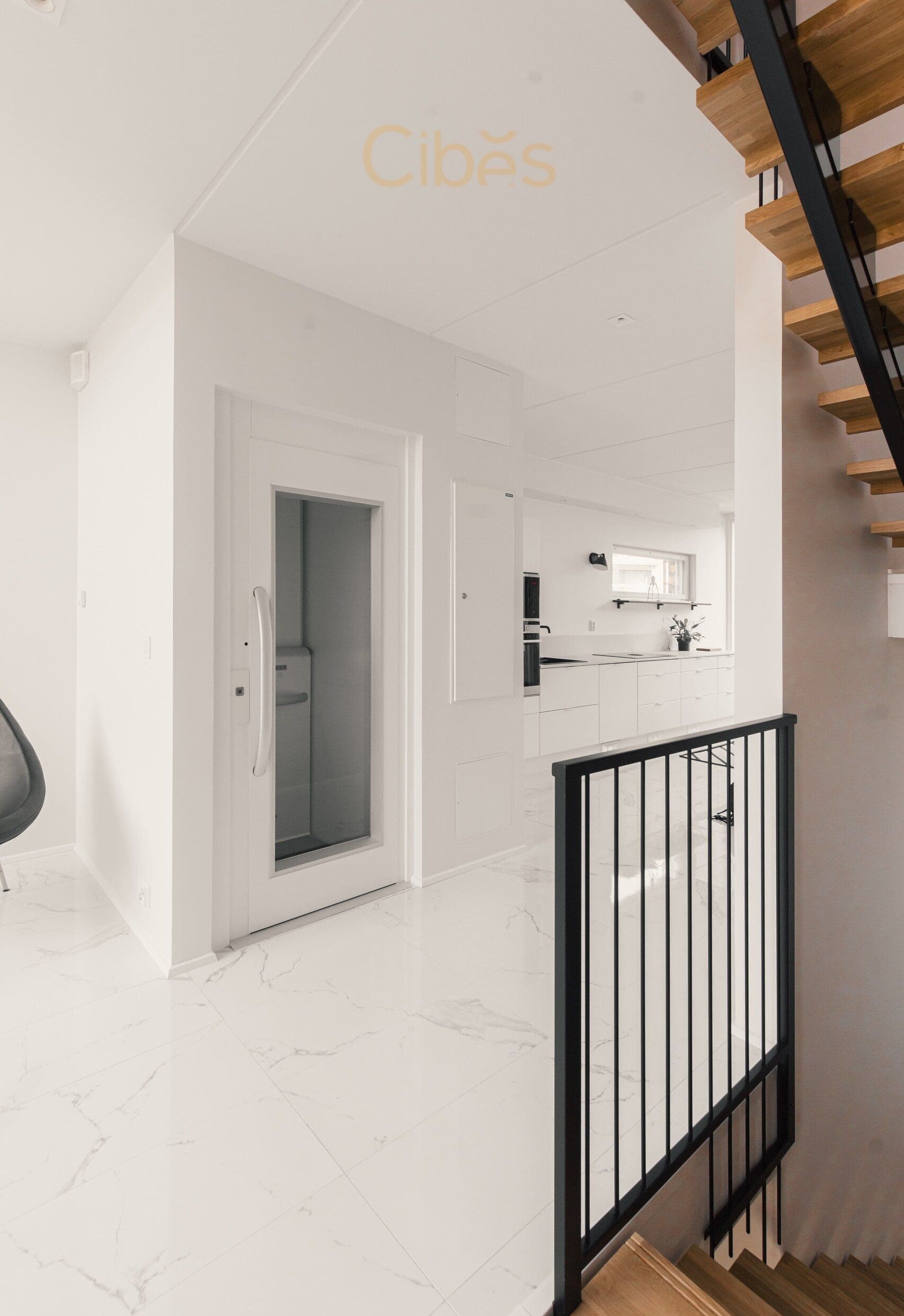
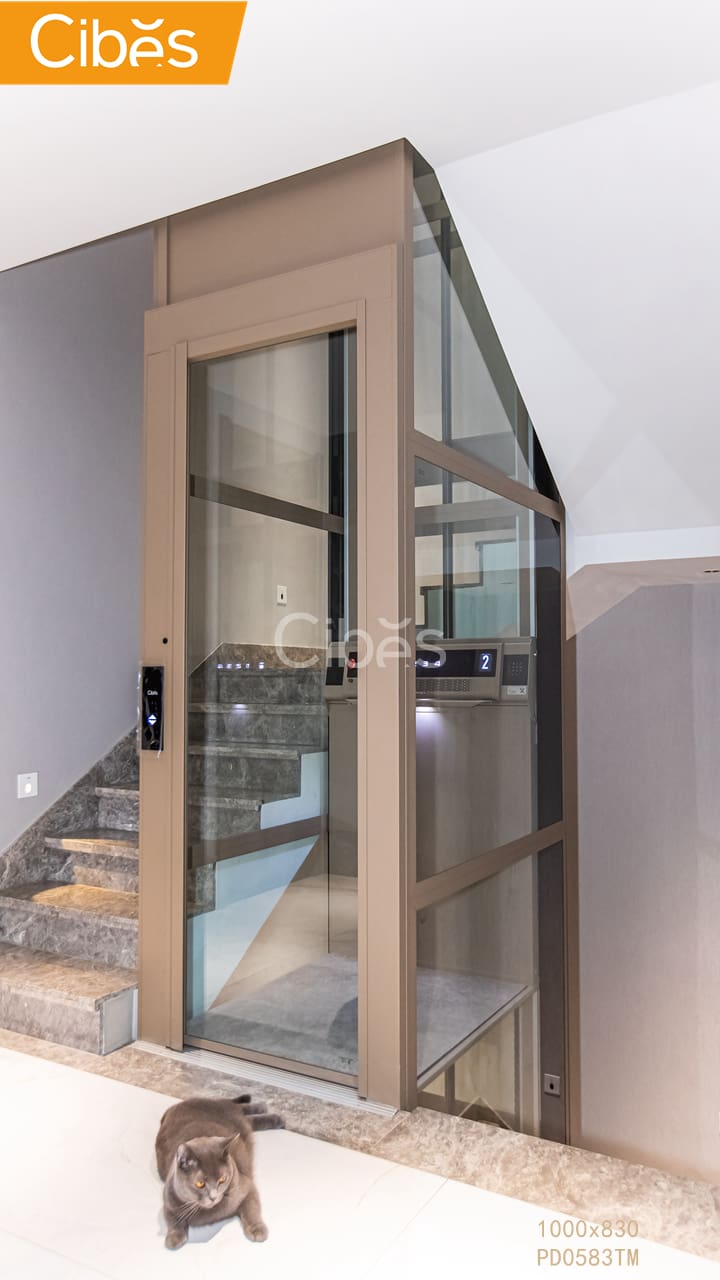
- Beside staircases
- In stair voids
- Near balconies or corridors
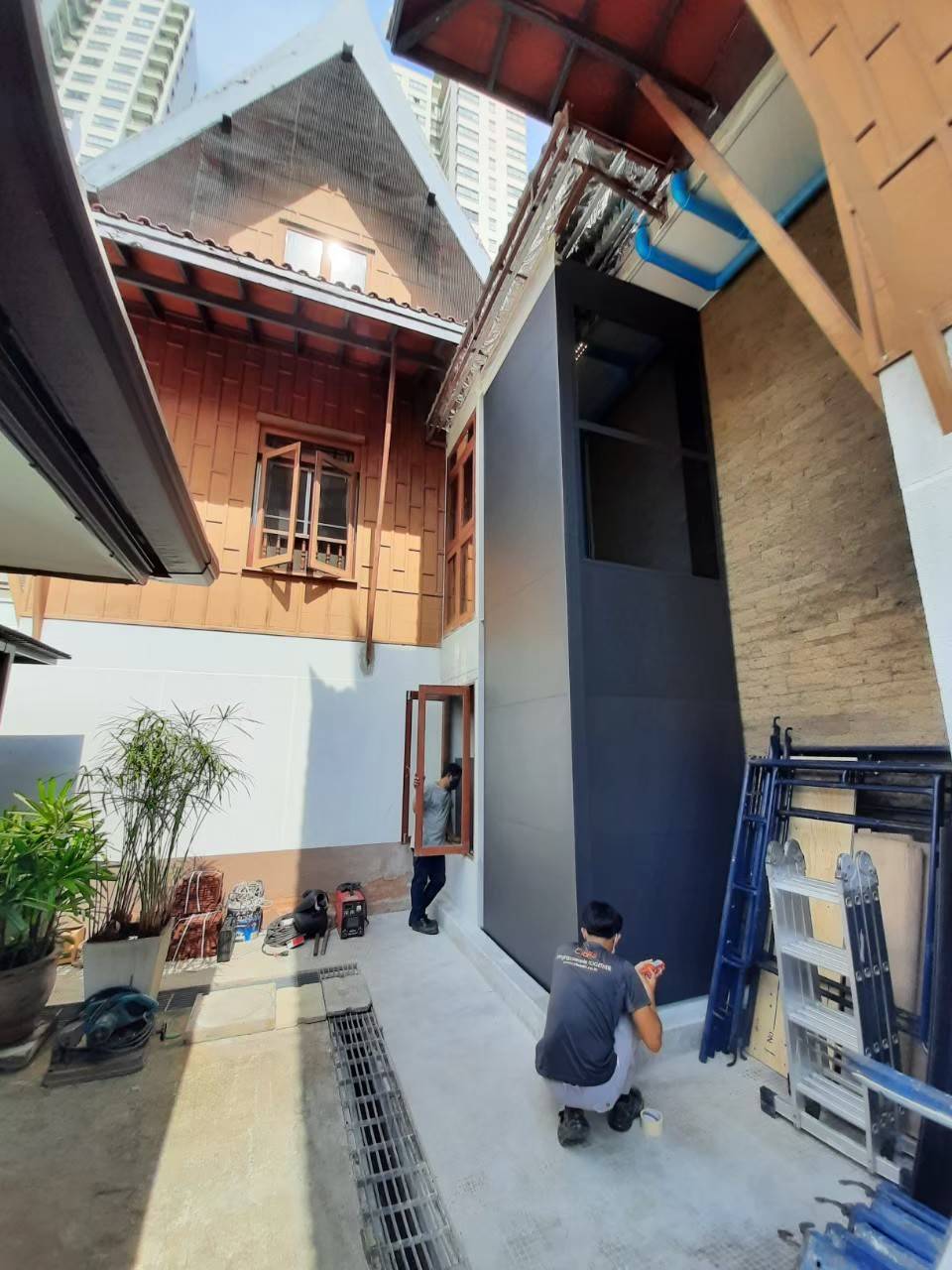
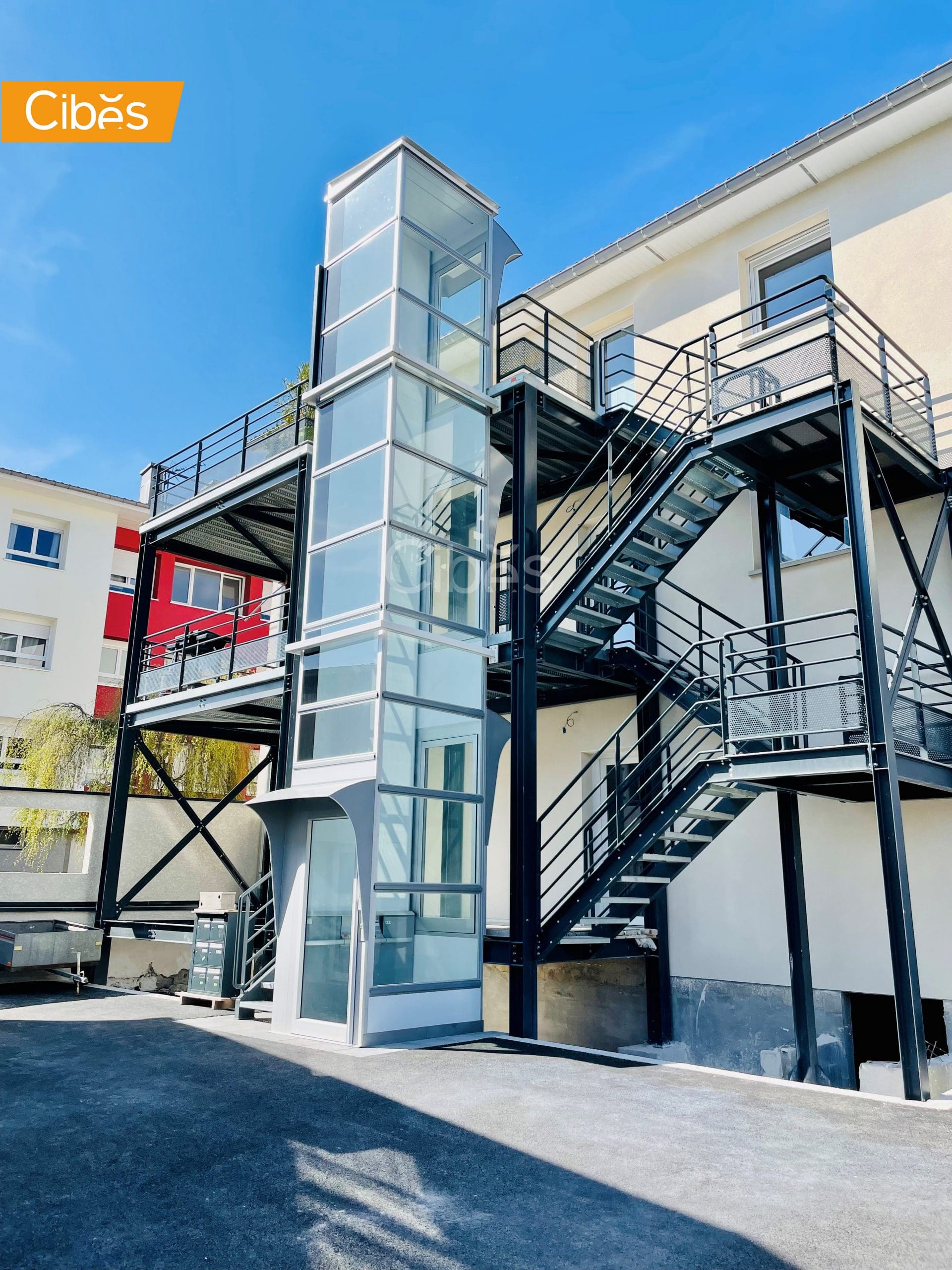
- As external glass lifts attached to the facade
This flexibility makes small elevators a perfect solution for modern urban housing.
Enhanced Accessibility for All Ages
As families plan for long-term living, accessibility has become a key design consideration. A small lift in the house ensures that:
- Elderly family members can move safely between floors
- Children and adults reduce the risk of stair accidents
- Daily activities such as carrying groceries or laundry become easier
Rather than being installed only when mobility becomes an issue, mini lifts are now planned proactively as part of future-ready home design.
Faster Installation with Minimal Structural Impact
Compared to traditional elevators, a mini elevator for home requires significantly less construction work. Many systems are:
- Self-supporting
- Shaft-less or modular
- Installed without major structural reinforcement
As a result, installation time is typically measured in weeks instead of months, making mini lifts ideal for renovation projects or homes already in use.
Modern Design That Enhances Interior Aesthetics
Today’s mini lifts for home are not just functional, they are also design elements. Homeowners can choose from:
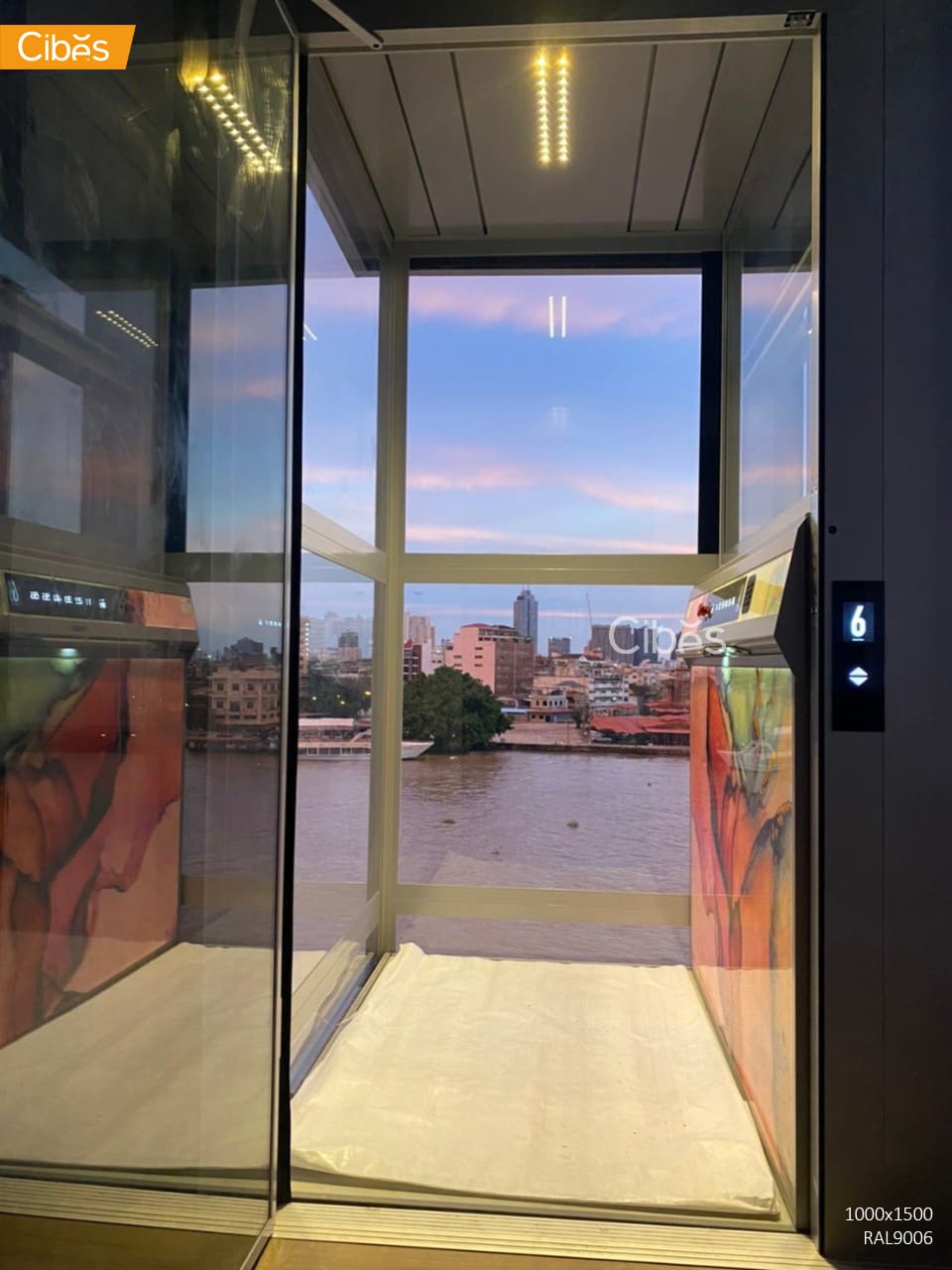
- Glass panels for an open, modern feel
- Minimalist steel or aluminum finishes
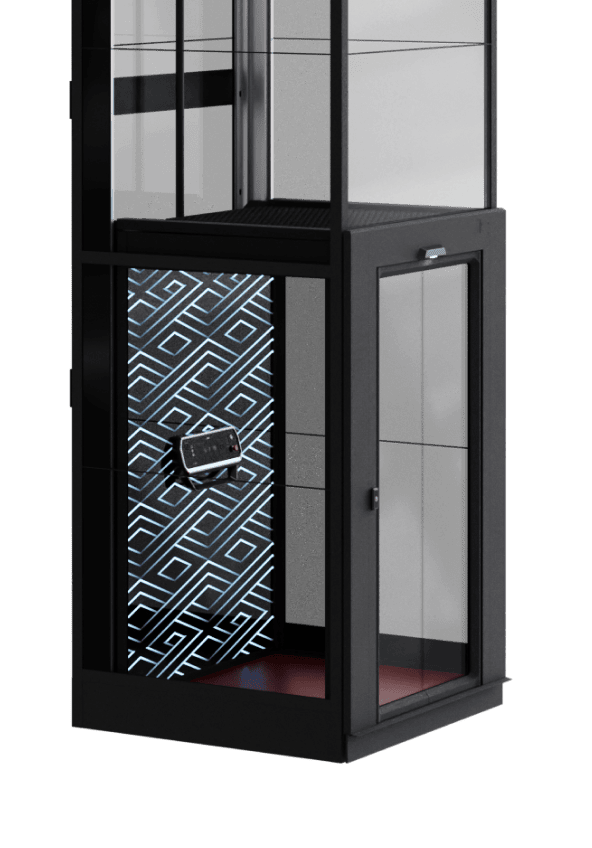
- Custom interior colors and flooring
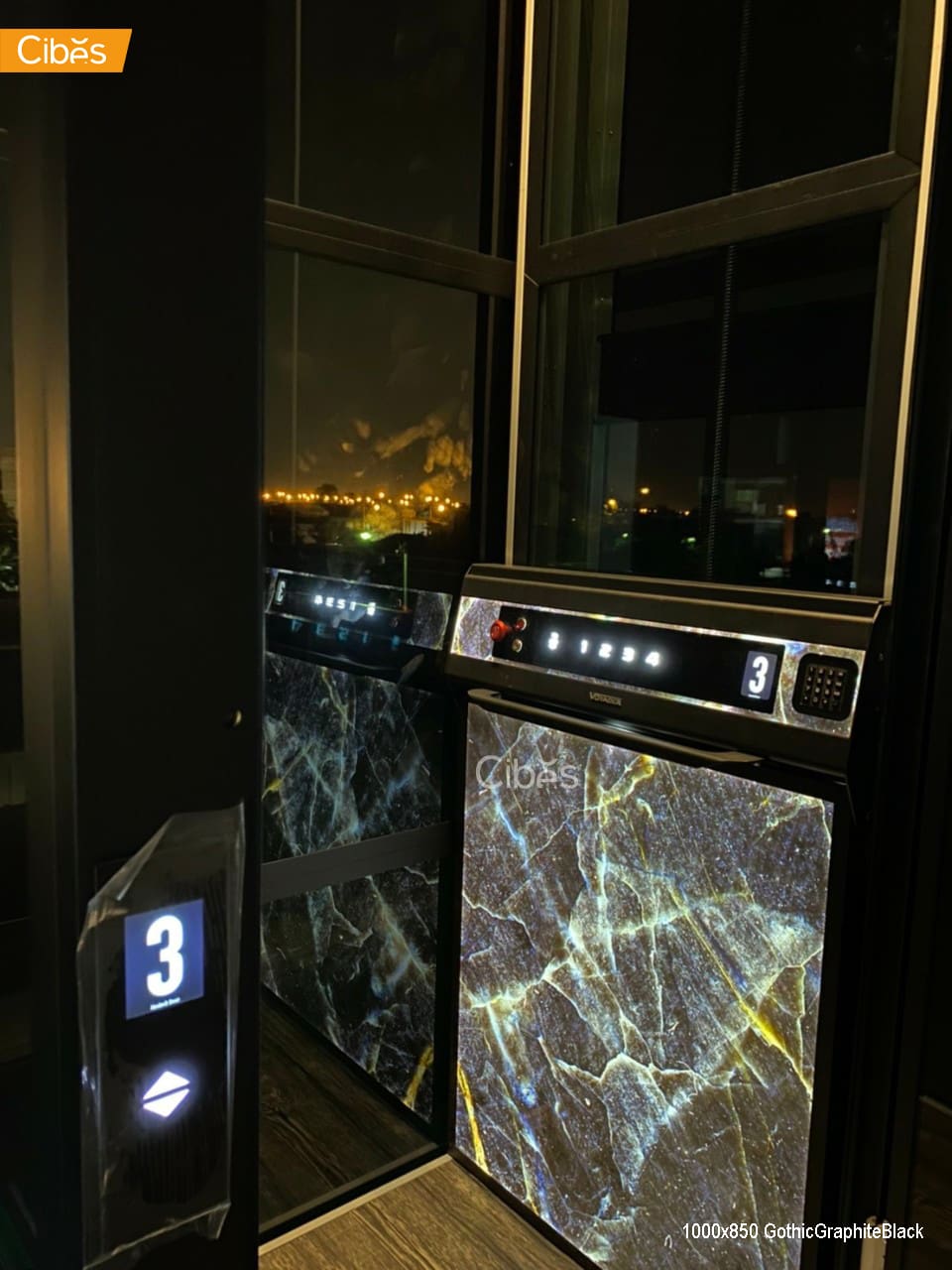
- Integrated LED lighting
Instead of hiding the lift, many architects now showcase it as a visual highlight within the home.
Energy-Efficient and Cost-Effective Operation
Another reason mini lifts are trending in 2026 is their efficiency. Most small elevators are designed for residential use, meaning:
- Low power consumption
- Operation on standard household electricity
- Reduced maintenance requirements
This makes the mini lift for home a cost-effective long-term investment rather than a high-maintenance luxury system.
3. Types of Mini Home Lifts
Currently, there are three main technologies used in mini lifts for home: hydraulic, traction and screw-driven systems.
How Do Hydraulic, Traction, and Screw-Driven Mini Home Lifts Compare?
The table below compares the advantages and disadvantages of each mini home lift type, helping homeowners easily identify the most suitable elevator solution for their space, budget, and installation requirements.
| Criteria | Hydraulic | Traction | Screw-Driven |
| Operating principle / Structure | Operates using a hydraulic piston system. Hydraulic oil acts both as a power transmission medium and as a lubricant for contact surfaces. | Uses steel cables and a motor-driven pulley system. The motor and traction cables carry the entire load during operation. | Powered by an electric motor and screw-drive system. The cabin moves up and down along the screw via a gear mechanism. |
| Key advantages | • No machine room required, suitable for townhouses and villas • Compact and visually appealing design • Low noise level | • Lower initial cost • Flexible number of floors and stops • Multiple load capacity options • Wide range of designs and finishes • Easy maintenance, relatively low servicing cost | • Smart, modern, compact design ideal for small houses • Wide range of load capacities, sizes, and finishes • Up to 70% space utilization efficiency • High safety level • No machine room required • No pit or only ultra-shallow pit (as low as 60 mm) • Fast delivery and installation • Low maintenance |
| Disadvantages | • Risk of oil leakage, which may contaminate groundwater • High power consumption • High operating and maintenance costs • Replacement parts can be difficult to source | • Requires additional space for a machine room • Occupies more installation area compared to compact systems • Noise may occur during operation | • Relatively slow travel speed (around 0.15 m/s) • Higher upfront cost compared to some traditional systems |
Technical Specifications & Space Requirements of Mini Home Lifts
The table below compares the technical specifications and space requirements of the three main mini home lift types (screw-driven, traction, and hydraulic), highlighting that screw-driven systems are the most space-efficient with ultra-shallow pit depth (0 – 120 mm) and lower headroom, while traction and hydraulic elevators offer higher speeds but require deeper pits and greater structural space.
| Screw-Driven Elevator | Traction Elevator | Hydraulic Elevator | |
| Maximum Speed | 0.15 – 0.25 m/s | 0.4 – 0.6 m/s | 0.3 – 0.4 m/s |
| Number of Stops | 8 | 10 | 6 |
| Maximum Travel Height | 20 m | 30 m | 15 m |
| Pit Depth | 0 – 120 mm | 600 – 1500 mm | 150 – 180 mm |
| Top headroom | 2350 – 2600mm | 2800 – 3500 mm | 2800 – 3500 mm |
| Power Supply | Single-phase or three-phase with 16A | Three-phase with 25 – 40A | Single-phase or three-phase with 25 – 40A |
How much does a home lift cost in Cambodia (2026)?
The table below shows the 2026 home lift cost comparison in Cambodia by elevator type, including starting prices, number of stops, and key notes to help homeowners choose the right option.
| ELEVATOR TYPE | STARTING PRICE | STOPS | SPECIAL NOTES |
| Screw-Driven | 30,000 – 40,000 USD | 2 | Space-saving, no machine room or deep pit required, ideal for existing homes, penthouses, and villas. |
| Traction | 18,000 – 25,000 USD | 2 | Smooth ride, supports higher travel, requires deep pit and machine room. |
| Hydraulic | 15,000 – 20,000 USD | 2 | Smooth ride, needs space for hydraulic oil on the ground floor and regular oil maintenance |
4. 3 Essential Tips for Choosing the Right Mini Lift for Home
To choose the right mini lift for home, homeowners should compare lift technologies, select a suitable load capacity for daily family use, and work with a reputable supplier that provides clear certification and warranty coverage.
Understand different types of mini home lifts
Before making a decision, it is essential to research and compare available mini lift for home technologies. Each type comes with distinct characteristics in terms of structure, operation, safety features, and space requirements. Understanding how each system works will help you identify the most efficient and practical solution for your home layout.
Choose the right load capacity for your household
Load capacity should be selected based on two main factors: the size of the house and the number of family members. Different load capacities result in different cabin sizes and structural requirements. Consulting with experienced technical specialists is highly recommended to ensure the chosen small elevator for the home provides sufficient comfort, safety, and long-term usability
Work with a reputable supplier and ensure proper warranty coverage
Selecting a trusted elevator provider is crucial when installing a mini lift for home. Homeowners should prioritize suppliers with legal certifications, proven experience, and positive customer feedback. In addition, the lift should come with clear documentation regarding origin, quality standards, and warranty policies to ensure reliable operation and peace of mind after installation.
5. Cibes mini lift for home: Key advantages for space-limited houses
Designed for modern houses where every square meter matters, Cibes mini lift for home uses screw-driven technology – a space-efficient home lift system known for minimal construction requirements, no machine room, and ultra-shallow pit options. This allows Cibes to deliver maximum usability in minimum space, while still meeting the comfort and safety expectations of a premium European home elevator.
1) True space-saving from ~1m², ideal for tight layouts
Cibes is engineered specifically as a small lift in house solution for space-limited homes. With a minimum clear internal size of 960 × 1060 mm, Cibes mini lifts can be planned from around ~1m², making them suitable for layouts where only stair voids, corridors, or compact corners are available. This is why many homeowners searching for a mini elevator for home choose Cibes: it prioritizes fit-first design and efficient space use – without forcing the home into major structural changes.
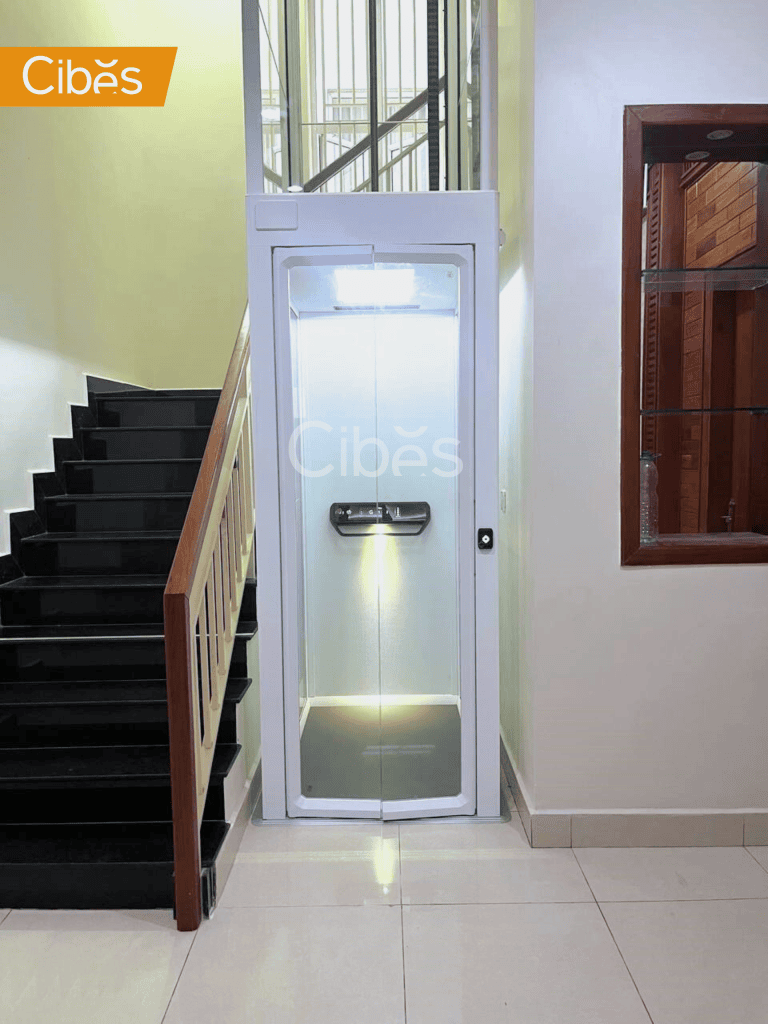
2) Ultra-shallow pit (0 – 120 mm) – less construction, easier renovation
Compared to conventional systems that often require deep pits and heavy civil work, Cibes screw-driven technology supports no pit or an ultra-shallow pit (depending on model and site conditions). This helps homeowners avoid expensive structural modifications – especially in renovation projects where a deep pit is not feasible.
3) No machine room – better space utilization
Cibes home lifts are designed without a separate machine room, reducing complexity and freeing up valuable space. For homeowners comparing small elevators, this is a major advantage because it simplifies both layout planning and the overall construction scope.
4) Safety and daily comfort for multi-generational living
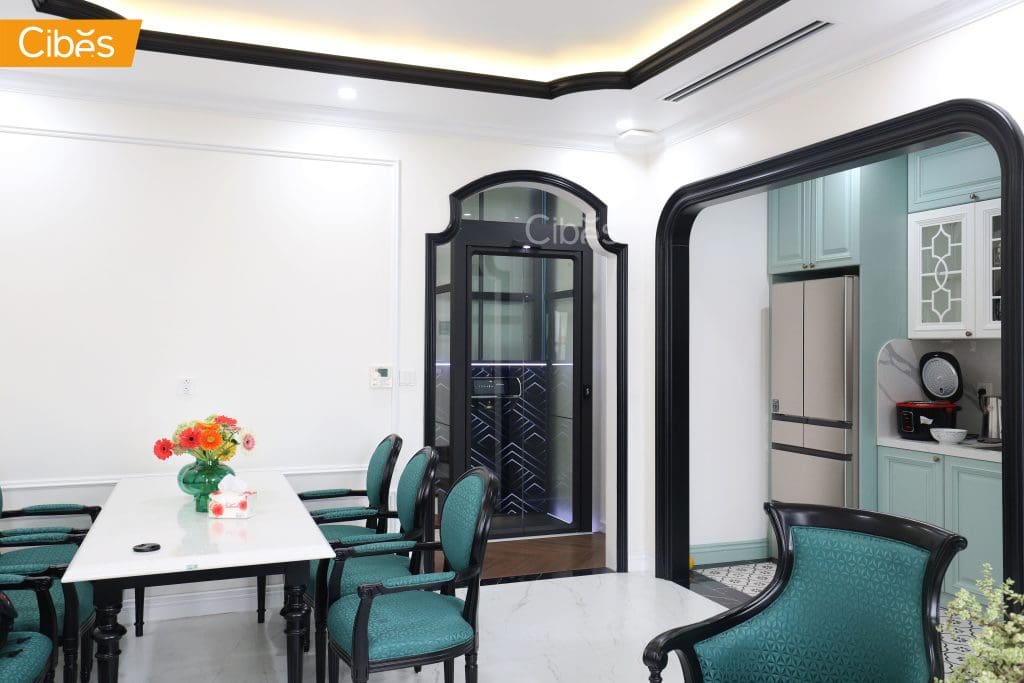
A mini lift for home is usually purchased for long-term living. Cibes is built around everyday usability: smooth start/stop behavior, intuitive controls, and multiple safety functions (safety edges, sensors, emergency functions – depending on configuration). This makes it a strong choice for families with elderly parents, children, and frequent daily movement between floors.
All Cibes elevator models are EC certified and comply with the Machinery Directive 2006/42/EC, in accordance with the European Union standards EN 81-41:2010 and EN 81-20:2020.

5) Predictable maintenance with screw-driven technology
In residential use, homeowners typically prioritize reliability and manageable upkeep. Screw-driven systems are widely valued for straightforward maintenance planning and long-term usability – especially compared to technologies that require oil-related servicing.
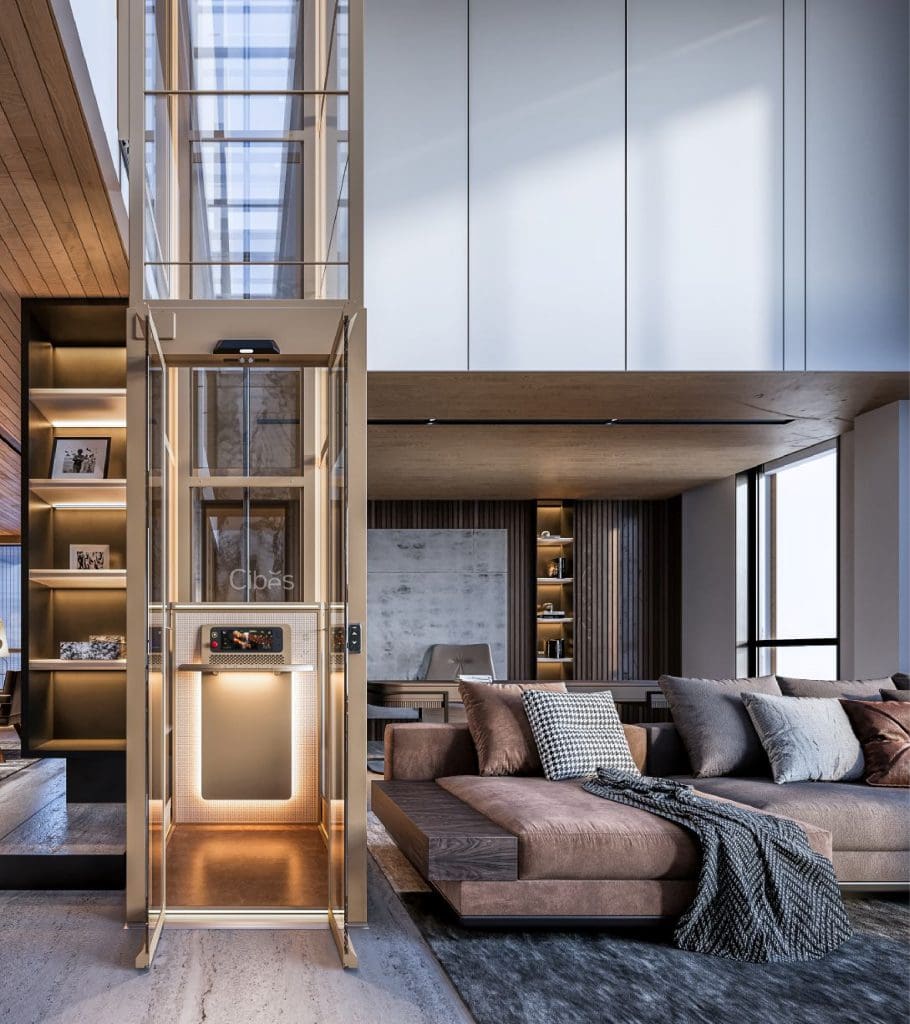
6. How much does a Cibes home lift cost in Cambodia in 2026?
In 2026, the price of a Cibes home lift in Cambodia typically ranges from about USD 37,700 to USD 95,300. See the detailed reference price table below.
| Number of Stops | Reference Price Range (USD) |
| 3 stops | From USD 37,700 to USD 83,800 |
| 4 stop | From USD 41,600 to USD 89,700 |
| 5 stop | From USD 47,700 to USD 95,300 |
Notes:
- The above prices are for reference (last updated Sep 2025). The final price may vary depending on the following factors: lift size, travel height, installation location (indoor/outdoor), and installation area (Phnom Penh or remote provinces/regions such as mountainous areas, islands, etc.).* Please contact hotline 011 837 183 for a detailed consultation.
- The above prices include VAT, import costs, transportation, installation, and handover/commissioning of the lift.
- The above prices include an imported glass shaft, supplied as a complete set matched to the lift.
The above prices DO NOT include:
- Costs for site preparation/repair at the installation area, pit modification, and permit application fees (if any).
Conclusion
In 2026, the mini lift for home has become a smart, future-ready solution for houses with limited space. With installation possible from just 1m², mini home lifts deliver full vertical mobility while preserving usable living areas and minimizing structural impact.
Among available options, Cibes mini home lifts stand out thanks to their elegant modern design, compact dimensions, safe screw-drive technology, fast and flexible installation, and wide applicability from standard homes to high-end residential projects. This makes them a long-term investment that enhances both everyday comfort and property value.
Frequently Asked Questions (FAQs)
- www.cibescambodia.com
- Hotline: 011/093 837183
- Showroom: Near Chipmong 271 Mega Mall, House 261, Commercial Street, Phnom Penh, Cambodia
About the Author


Kahna Pov is the Country Manager of Cibes Lift Cambodia, the official subsidiary of Cibes Lift Group from Sweden. With over 4 years of experience advising on residential lift solutions and coordinating projects, she has supported homeowners, architects, and project teams across Cambodia in selecting Cibes screw-driven lifts that are safe, space-saving, and well suited for private homes.





TL;DR: An imported lift can improve access to a villa, townhouse, or renovated home. Yet the word “imported” doesn’t prove that a lift is safe or suitable. Check the manufacturer, exact model, safety documents, usable space, shaft requirements, power supply, installation scope, warranty, maintenance plan, and spare-parts support in Cambodia. Arrange a site survey and […]
Whether you’re building a new home, renovating an ex isting property, or planning a commercial project, choosing the right elevator is an important decision. One of the most popular options today is the machine room-less lift. Unlike traditional elevators that require a separate machine room, a machine room-less lift integrates the drive equipment into the […]

In Cambodian villas, borey houses and shophouses, a home elevator can be installed in the middle of the staircase, beside the stairs, in an open stair void or outside the house. The right location depends on the available space, staircase design and structural conditions. TL;DR The best location for a home elevator depends on your […]
A screw-driven lift is a compact home lift that moves a lift with a motor, steel screw and drive nut. For Cambodian villas, borey houses, clinics and small buildings, it is often chosen because it can work without a machine room and with a shallow pit or ramp, depending on the model and site condition. […]
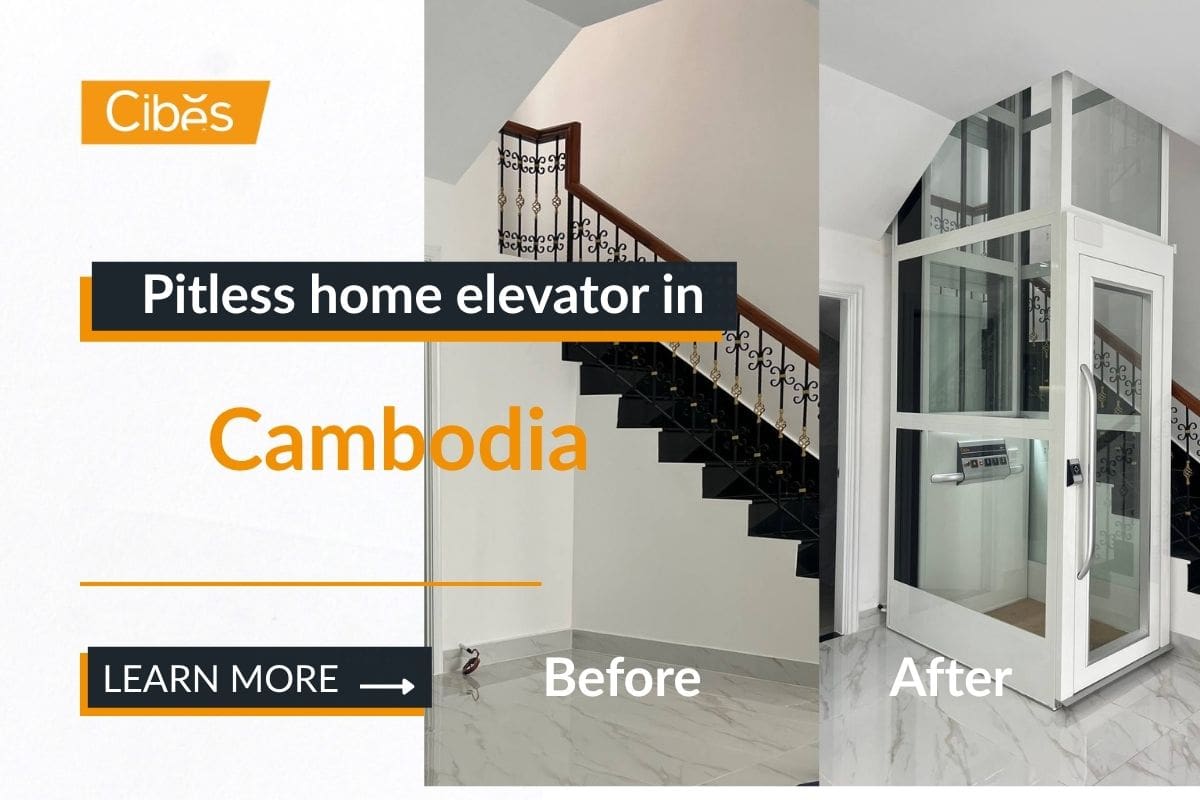
A pitless home elevator is a residential lift that operates with little or no pit below the lowest landing. A traditional home elevator needs a pit of about 600 to 1500 mm. A pitless lift works with 0 to 120 mm, so it can sit on a finished floor with minimal building work. TL;DR: This […]