

Blog - Date posted: 19/08/2026 - Date updated: 01/09/2026
How to Choose an Imported Lift in Cambodia?
TL;DR:
An imported lift can improve access to a villa, townhouse, or renovated home. Yet the word “imported” doesn’t prove that a lift is safe or suitable. Check the manufacturer, exact model, safety documents, usable space, shaft requirements, power supply, installation scope, warranty, maintenance plan, and spare-parts support in Cambodia.
Arrange a site survey and approve the project drawing before structural work starts. The right imported lift should fit the building, suit the people who’ll use it, and come with dependable local service after handover.
What is an imported lift?
An imported lift is a complete lift system manufactured outside Cambodia and supplied for local installation. It may arrive as a packaged unit or as factory-prepared components that trained technicians assemble on site.
Imported lifts include home lifts, platform lifts, cabin lifts, passenger lifts, and other systems for low-rise buildings. In homes, they may serve villas, townhouses, or renovation projects. Some models use an integrated shaft, a shallow pit, limited headroom, or no separate machine room. These features vary by model, so the approved technical drawing matters more than a general product name.
“Imported” describes the product’s origin. It doesn’t confirm safety, quality, or service life. Two imported lifts can differ greatly in design, testing, production control, installation requirements, and access to spare parts.
| What should you verify? | Why does it matter? |
| Manufacturer and exact model | Confirms the identity of the complete lift being supplied |
| Product specification | Shows capacity, dimensions, power needs, and site requirements |
| Safety documents | Shows which standard and assessment apply to the model |
| Approved project drawing | Guides site preparation and helps prevent costly changes |
| Local installation team | Affects alignment, door operation, testing, and final quality |
| Warranty and spare-parts plan | Explains the support available after handover |

What Types of Imported Lifts Are Available in Cambodia?
The three common drive systems are screw-driven, traction, and hydraulic. Each works differently and creates different requirements for the building. The best choice depends on the available space, number of stops, travel height, users, power supply, and service support.
Screw-Driven Lifts
A screw-driven lift uses a motor and screw-and-nut drive system to move the platform. It can be a practical choice for a low-rise home where space and civil work are key concerns. Depending on the exact model, the drive machinery may sit within the lift structure, so a separate machine room isn’t required. Some models can use a shallow pit or sit on the finished floor with a small access ramp.
Check the size, travel speed, sound level, pit, top-floor headroom, lubrication needs, door layout, and service schedule. Do not assume that all screw-driven lifts share the same building requirements.
Traction Lifts
A traction lift uses a motor with ropes or belts to move the lift. It often provides the enclosed cabin experience people know from commercial buildings. Residential traction models are available, but they may need different pit, shaft, overhead, and power conditions.
Ask where the machine sits, how the suspension system is inspected, and how passengers are rescued during a power cut or fault. The shaft design and structural supports should be confirmed before construction begins.
Hydraulic Lifts
A hydraulic lift uses a pump to send fluid to a cylinder, which raises the lift. This system can provide smooth travel and may suit certain residential layouts. Its space and maintenance needs depend on the cylinder and pump arrangement.
Confirm the equipment location, pit requirements, oil inspection plan, operating temperature range, emergency-lowering process, and local access to suitable service parts.
| Lift type | Common reason to consider it | Key details to confirm |
| Screw-driven | Compact low-rise projects with limited civil work | Pit, headroom, platform size, speed, sound, and lubrication |
| Traction | A familiar enclosed cabin and wider travel applications | Pit, overhead, shaft, ropes or belts, rescue system, and machine location |
| Hydraulic | Smooth travel for a suitable building layout | Pump space, cylinder layout, oil checks, heat limits, and emergency lowering |

What Should You Check Before Buying an Imported Lift?
A brochure and price aren’t enough for a sound decision. Ask the supplier for written technical information and make sure every document refers to the same manufacturer and model.
Manufacturer and Exact Lift Model
Confirm who designed and manufactured the complete lift, where it was produced, and the exact model stated in the quotation. Be careful when a proposal lists only component brands. A motor or control brand doesn’t identify the full lift system.
The manufacturer name, model name, specification, drawing, and safety documents should match. This makes it easier to verify what you’re buying and which instructions the installation team must follow.
Product Specifications and Safety Documents
Review the rated capacity, clear platform or cabin size, door opening, number of stops, maximum travel, speed, drive system, intended environment, and operating limits. For wheelchair use, capacity alone isn’t enough. Check the clear floor area, door width, entry direction, landing space, control height, and room for the wheelchair user and any companion.
Ask which safety standard applies to the exact lift model and request the related documents. Safety features may include door locks, sensors or light curtains, emergency stop, alarm, overload protection, backup power, and emergency lowering. The installer should test the functions required for that model before handover.
Space, Shaft, Pit and Headroom Requirements
The outer shaft size is not the usable lift size. Frames, guide rails, doors, drive equipment, panels, and safety clearances all take up space. Work from a project drawing prepared after a site survey.
- External shaft width and depth
- Clear platform or cabin width and depth
- Clear door opening and door direction on each floor
- Pit depth or access-ramp requirement
- Top-floor headroom and floor-to-floor heights
- Landing space, support beams, fixing points, and delivery route
For an existing home, the survey should also identify slabs, columns, pipes, cables, windows, ceilings, drainage, and finished floor levels. A qualified building professional should review structural work.
Power Supply and Electrical Requirements
Some imported home lifts can use a single-phase residential supply, while other models need three-phase power. Confirm the voltage, current, breaker, cable size, earthing, isolator position, and cable route for the selected model.
The electrical work should be ready before installation and checked against the supplier’s drawing. Ask what the lift does during a power cut and whether a battery supports emergency lowering, alarm, lighting, or communication.
Installation Scope and Site Preparation
A clear quotation should separate lift supply, delivery, site preparation, installation, testing, training, and handover. It should also state which work belongs to the homeowner or builder.
| Cost area | Questions to ask |
| Lift equipment | Which model, size, doors, finishes, and accessories are included? |
| Shaft and building work | Who provides the shaft, pit, slab openings, beams, waterproofing, and finish repairs? |
| Logistics | Are freight, import charges, unloading, storage, and local delivery included? |
| Electrical work | Who provides the cable, breaker, isolator, earthing, and final connection? |
| Installation | Are assembly, testing, user training, and handover included? |
| Taxes and exclusions | Is tax included, and which items are specifically excluded? |
Before delivery, the supplier should recheck site measurements, access, storage, electrical readiness, and structural supports. Small site differences can affect doors, shaft panels, and landing levels.
Warranty, Maintenance and Spare Parts
Read the warranty before paying a deposit. Check when it starts, which parts are covered, whether different components have different periods, and whether labour, travel, freight, or replacement parts are included. Also check the exclusions and maintenance conditions.
Ask who provides service in Cambodia, how often maintenance is required, how emergency support works, which common parts are kept locally, and how special-order parts are supplied. Written answers make quotations easier to compare and reduce confusion later.
Which Types of Homes Can Use an Imported Lift?
Imported lifts can suit both new and existing homes. The right arrangement depends on the structure, available space, number of floors, user needs, and whether the lift sits indoors or outdoors.
New-Build Villas and Townhouses
Choose the lift while the building is still being planned. Early selection lets the architect and builder include the correct shaft, pit, headroom, door openings, structural supports, and power supply. It can prevent later work such as cutting a finished slab, moving a beam, or rebuilding a doorway.
Existing Homes and Renovation Projects
An imported home lift can often be added during renovation, but the site needs a careful survey. The work may include a slab opening, support beams, landing-door openings, a shallow pit, waterproofing, electrical preparation, and repairs to finishes. Plan protection for tiles, walls, ceilings, and furniture during installation.
Homes With Open Stairwells or Internal Voids
An open stairwell or internal void may provide a useful lift location without taking over a separate room. A glass shaft can help retain light and views. Still, the design must allow safe landing access, structural fixing points, enough headroom, and a clear route for bringing lift parts into the home.
Homes With Limited Indoor Space
Where indoor space is tight, a compact platform lift or a model with an integrated shaft may reduce the amount of building work. Door type and direction matter. Swing doors need clear opening space, while sliding doors can affect the shaft dimensions. Compare usable lift space, not only the outer footprint.
Houses With an Outdoor Installation Area
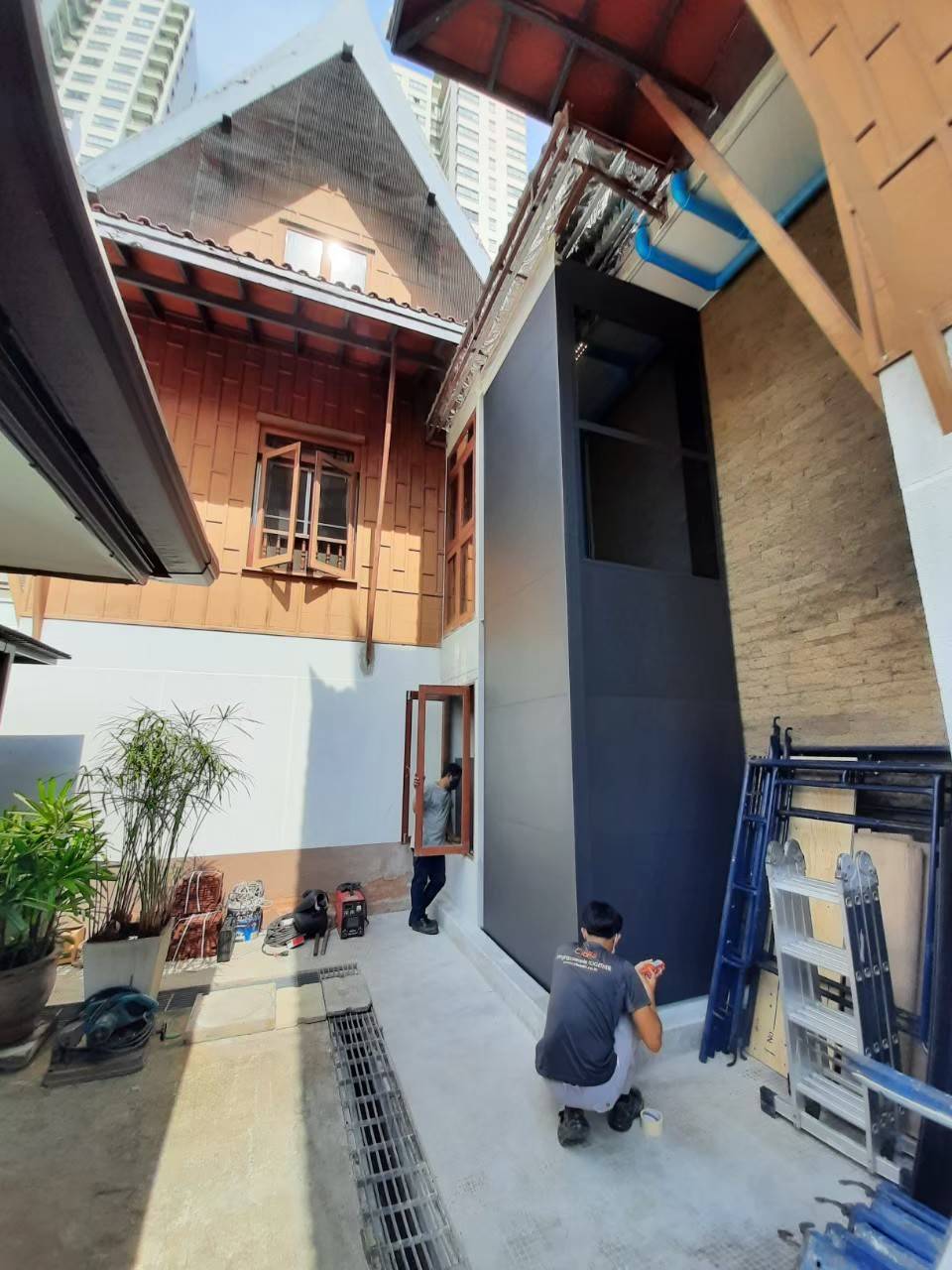
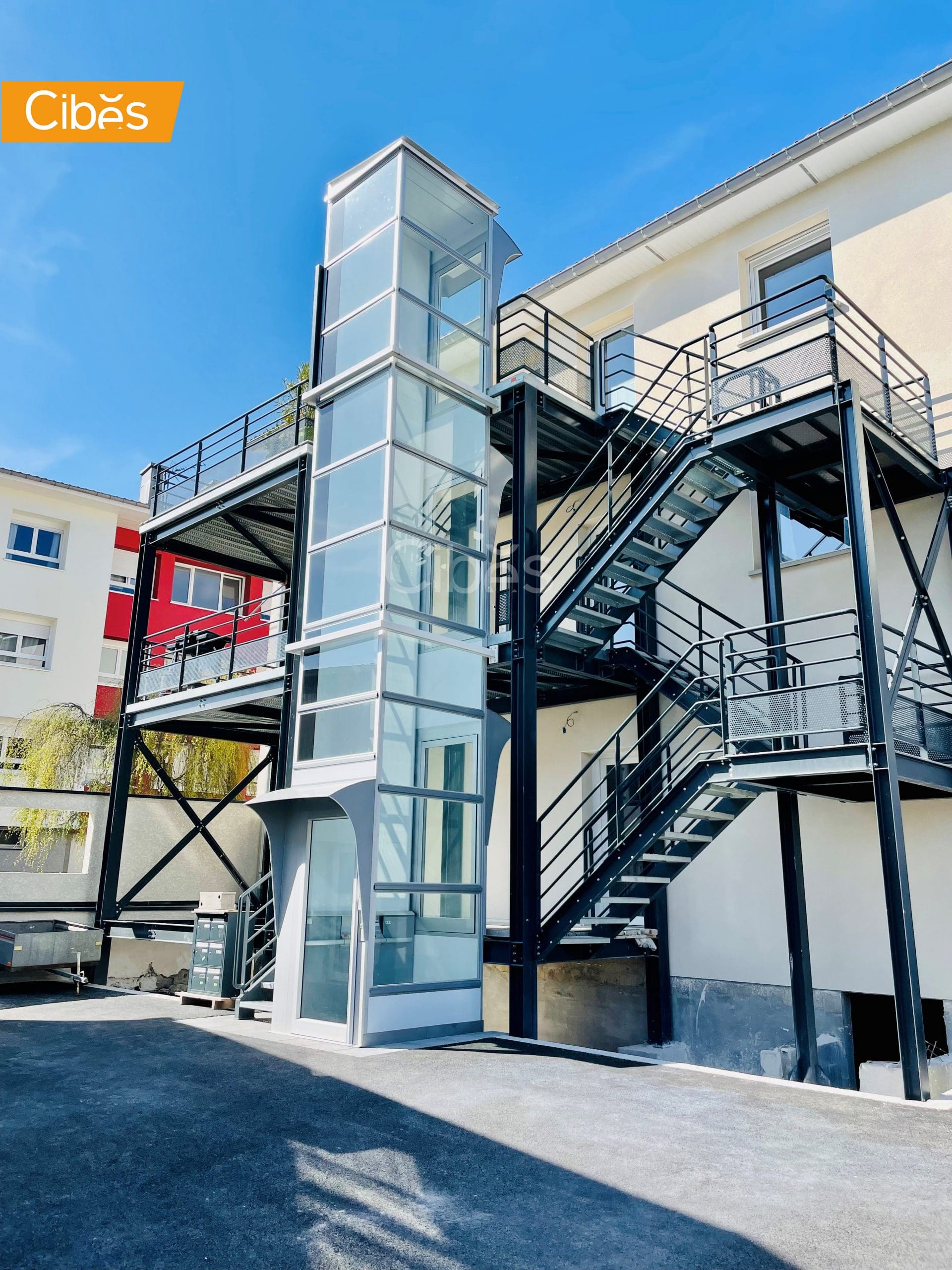
An outdoor imported lift must be approved for exterior use. The project should address the roof, rain protection, drainage, water entry at landing connections, corrosion protection, seals, cable routes, ventilation, direct sunlight, and the manufacturer’s permitted temperature range.
A glass shaft in strong Cambodian sunlight can become much hotter than the surrounding air. Shade, ventilation, and heat control should be discussed early. Ask the supplier to identify which lift and shaft components are suitable for outdoor exposure.
Why Choose a Cibes Imported Lift in Cambodia?
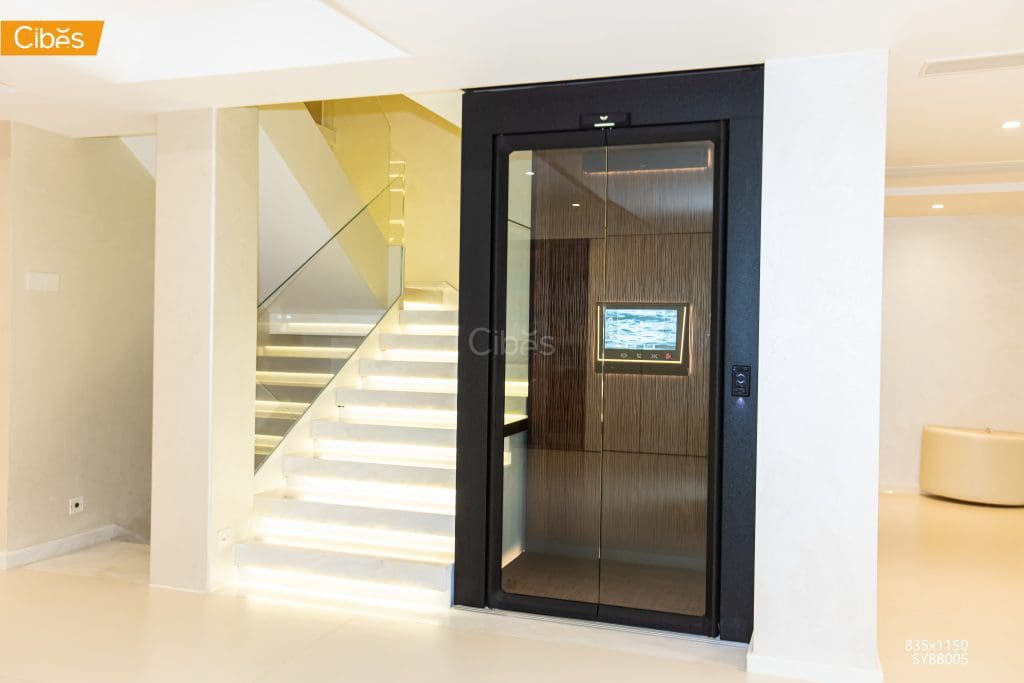
Cibes supplies screw-driven platform and cabin lifts for homes and other low-rise buildings. Depending on the selected model and site conditions, a Cibes lift may use an integrated shaft, require only a limited pit, and operate without a separate machine room. The approved model drawing confirms the exact requirements.
Cibes Lift Cambodia supports product selection, site checks, project drawings, installation, handover, maintenance, and technical service. This gives homeowners one local contact from early planning through after-sales care.
Before confirming an order, arrange a site survey and review the model-specific specification, safety documents, project drawing, warranty, maintenance plan, and installation scope. This keeps the decision clear and helps the lift fit naturally into the finished home.

Imported Lift Installation Project in Cambodia
Location: Borey Vimean Phnom Penh
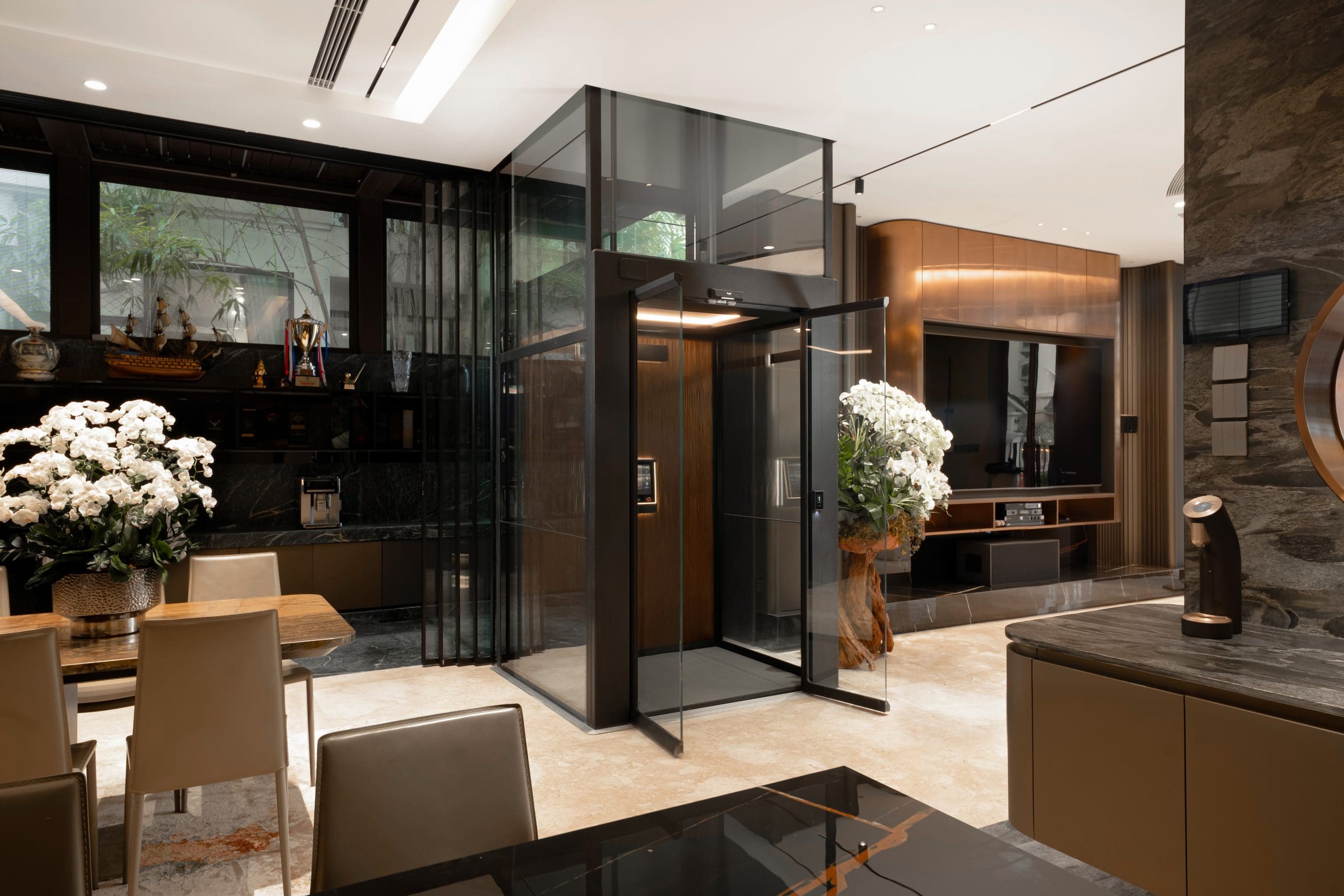
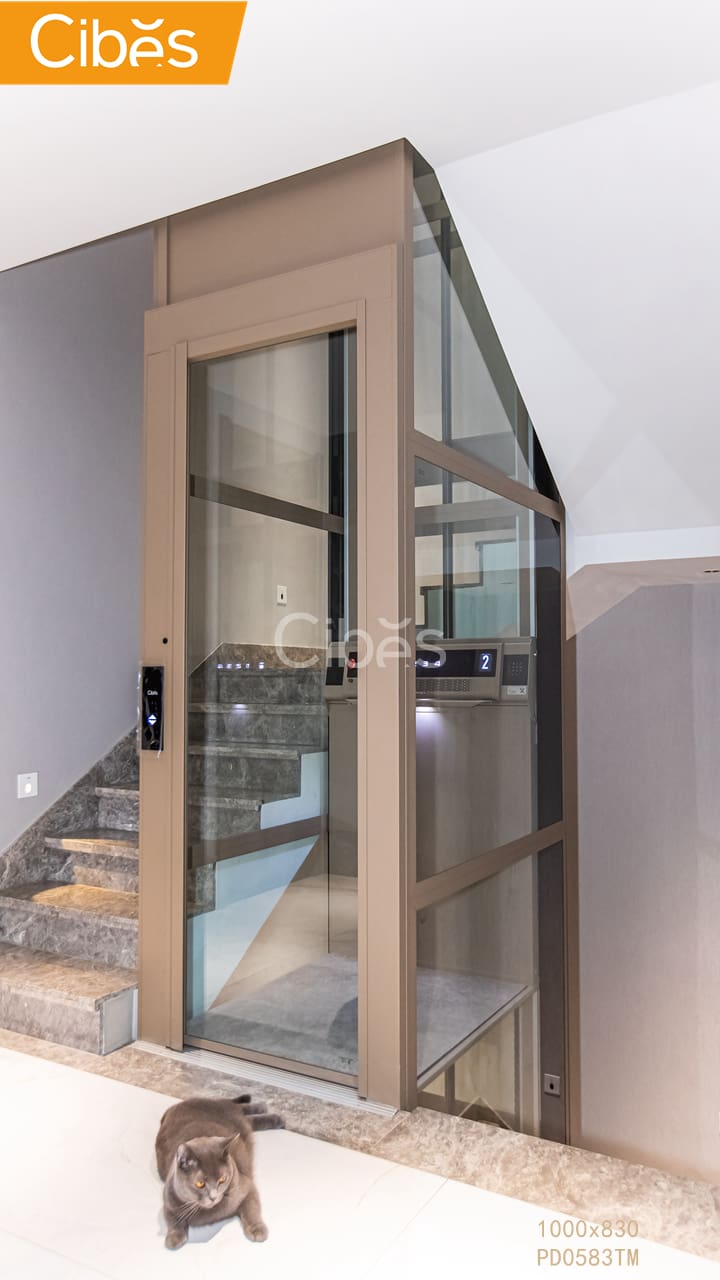
This Cibes villa lift was installed inside a private home at Borey Vimean Phnom Penh. Its compact glass shaft fits neatly beside the living area, while the warm frame colour complements the home’s bright, classic interior. The installation provides convenient access between floors without taking away from the room’s open and elegant feel.

Location: Borey Chip Mong 598
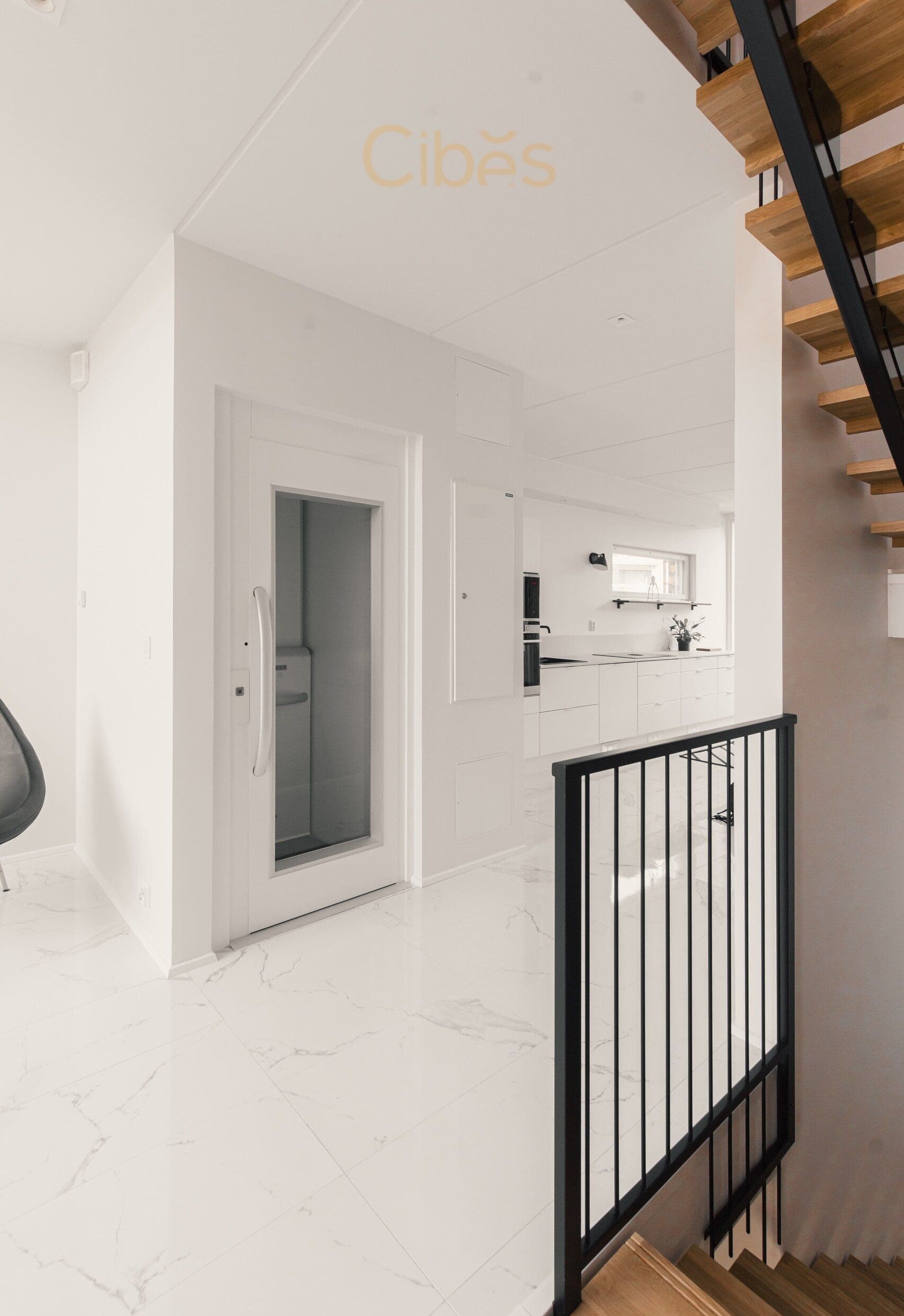
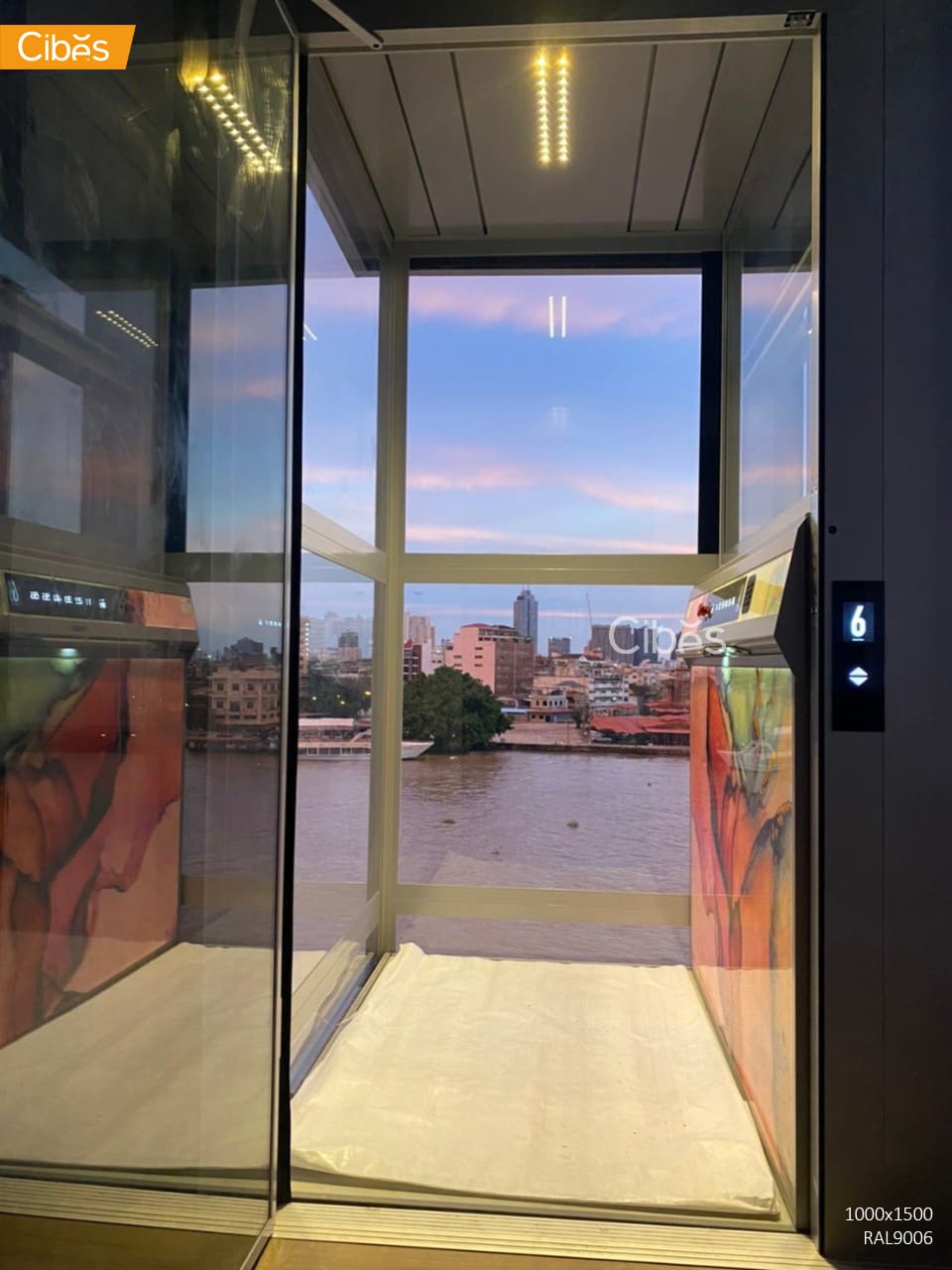
This Cibes V80 Galaxy platform lift was installed inside at a Psychological Medicine Clinic at Borey Chip Mong 598. The lift provides comfortable access between floors while preserving the room’s open and elegant feel.

FAQs About Imported Lifts in Cambodia
Can an imported lift use single-phase electricity?
Some models can use single-phase electricity, while others need a three-phase supply. The required voltage, current, breaker, cable, earthing, and isolator must be confirmed for the selected model and travel height.
Does an imported lift need a concrete shaft?
Not always. Some models include a steel or aluminium shaft with glass or solid panels. Other lifts go inside a concrete shaft prepared by the owner. Follow the approved drawing for the exact model.
Does an imported lift need a machine room?
Many compact home lifts don’t need a separate machine room because the drive equipment is built into the lift or shaft. Other systems may need dedicated equipment space. Confirm this before the building design is fixed.
How deep must the lift pit be?
Pit depth varies by type and model. Some residential lifts use a shallow pit, and certain models can sit on the finished floor with a ramp. Other systems need a deeper pit. Never start pit work from a general brochure.
How much does an imported lift cost in Cambodia?
The price depends on the lift type, model, number of stops, travel height, capacity, platform or cabin size, doors, finishes, shaft, logistics, installation location, and building work. Compare full project quotations, not equipment prices alone.
How long does imported lift installation take?
The schedule depends on the lift type, number of floors, site access, indoor or outdoor location, and site readiness. Ask for a programme that separates site preparation, delivery, installation, testing, and handover.
Can an imported lift be installed outdoors?
Yes, when the model and shaft arrangement are approved for outdoor use. The design must address rain, drainage, sunlight, heat, corrosion, electrical protection, seals, and connections to the building.
How often does an imported lift need maintenance?
Service frequency depends on the manufacturer’s instructions, model, usage, and environment. Outdoor or frequently used lifts may need more attention. Follow the model-specific plan and keep a record of every visit.
Which documents should you receive?
Project documents may include the quotation, contract, product specification, safety documents, approved drawing, site-preparation instructions, electrical requirements, installation schedule, warranty terms, maintenance plan, testing record, and handover record.
Does “imported” always mean better quality?
No. “Imported” tells you where the lift was manufactured. It doesn’t guarantee better safety, quality, or reliability. Before choosing an imported lift, check out the manufacturer, exact model, safety certification, product specifications, warranty, local installation team, maintenance service, and spare-parts availability. A quality lift should have clear technical documents and reliable local support after installation.
_____________________________________
Cibes Lift Cambodia – Official subsidiary of Cibes Lift Group
Website: www.cibescambodia.com
Hotline: 011 837 183/ 093 837 183/017 837 183
Showroom: Near Chip Mong 271 Mega Mall, House 261, Commercial Street, Phnom Penh, Cambodia

Kahna Pov is the Country Manager of Cibes Lift Cambodia, the official subsidiary of Cibes Lift Group from Sweden. With over 4 years of experience advising on residential lift solutions and coordinating projects, she has supported homeowners, architects, and project teams across Cambodia in selecting Cibes screw-driven lifts that are safe, space-saving, and well suited for private homes.





TL;DR: A villa lift makes a multi-storey home easier to use for older adults, wheelchair users, children, and anyone carrying heavy items. When choosing a villa lift in Cambodia, compare the available space, stops, travel height, door layout, safety standard, complete installed price, warranty, and local service. What is a villa lift? A villa lift […]

Choosing the right commercial lift for a low-rise building depends on how the property is used, who needs access, and how much space is available. A shop, clinic, office or boutique hotel may not require the same elevator system as a busy high-rise. For many projects in Cambodia, a scew driven lift can provide practical […]

TL;DR: An imported lift can improve access to a villa, townhouse, or renovated home. Yet the word “imported” doesn’t prove that a lift is safe or suitable. Check the manufacturer, exact model, safety documents, usable space, shaft requirements, power supply, installation scope, warranty, maintenance plan, and spare-parts support in Cambodia. Arrange a site survey and […]
Whether you’re building a new home, renovating an ex isting property, or planning a commercial project, choosing the right elevator is an important decision. One of the most popular options today is the machine room-less lift. Unlike traditional elevators that require a separate machine room, a machine room-less lift integrates the drive equipment into the […]

In Cambodian villas, borey houses and shophouses, a home elevator can be installed in the middle of the staircase, beside the stairs, in an open stair void or outside the house. The right location depends on the available space, staircase design and structural conditions. TL;DR The best location for a home elevator depends on your […]