

Blog - Date posted: 23/09/2025 - Date updated: 09/09/2026
How Can You Choose the Right Home Lift in Cambodia?
TL;DR:
Choose a home lift by checking these four points first:
- Measure the available width, depth, pit, and top-floor headroom.
- Confirm the number of stops, travel height, users, and wheelchair needs.
- Compare the full installed cost, safety standard, warranty, and maintenance plan.
- Use a Cambodia-based technical team to survey the site and prepare an approved drawing.
What is a home lift?
A home lift is designed to help people move safely and comfortably between floors in a private house. It can support older family members, wheelchair users, people with limited mobility, and anyone who finds stairs difficult.
Home lifts are usually more compact than commercial elevators. Depending on the technology and model, they may also require less space, a shallower pit, and less building work.
However, not every home lift fits every property. The right choice depends on the building layout, travel height, number of stops, available power, and how the lift will be used.

What should you check before choosing a home lift in Cambodia?
Start with the house, not the brochure.
A supplier should inspect the property and confirm the following details:
- Available width and depth
- Number of floors and stops
- Total travel height
- Pit depth
- Top-floor headroom
- Door position on each floor
- Indoor or outdoor installation
- Power supply
- Intended users
- Wheelchair access requirements
- Delivery access
- Required building work
The final lift dimensions and entrance arrangement should be confirmed in an approved technical drawing. Brochure dimensions alone aren’t enough for construction work.
Which home lift technologies are available?
Three common technologies available are screw-driven, hydraulic, and traction systems. Each has different space, installation, speed, and maintenance requirements.
| Lift technology | Common advantages | Points to check |
| Screw-driven lift | Compact design, no separate machine room on applicable models, and a shallow-pit or ramp installation option. | Travel speed, platform or cabin type, lubrication, pit requirement, headroom, and maximum travel height |
| Hydraulic lift | Strong lifting capacity and flexible design options on some models | Pit depth, space for hydraulic equipment, oil system, power use, and maintenance requirements |
| Traction lift | Smooth travel, higher speed options, and a wide range of cabin designs | Shaft size, pit depth, overhead space, power supply, and maintenance requirements |
No single lift technology is suitable for every building. The right choice depends on the approved layout, available space, number of floors, intended users, project scope, budget, and local maintenance support.

When is a screw-driven home lift a suitable choice?
A screw-driven home lift can suit a low-rise home where space is limited or where the owner wants to reduce major building work.
The drive system moves the platform or cabin along a vertical screw. On applicable models, the main drive components are integrated into the lift structure. This means a separate machine room isn’t required.
A screw-driven lift may be suitable when:
- The house has limited space
- A deep pit isn’t possible
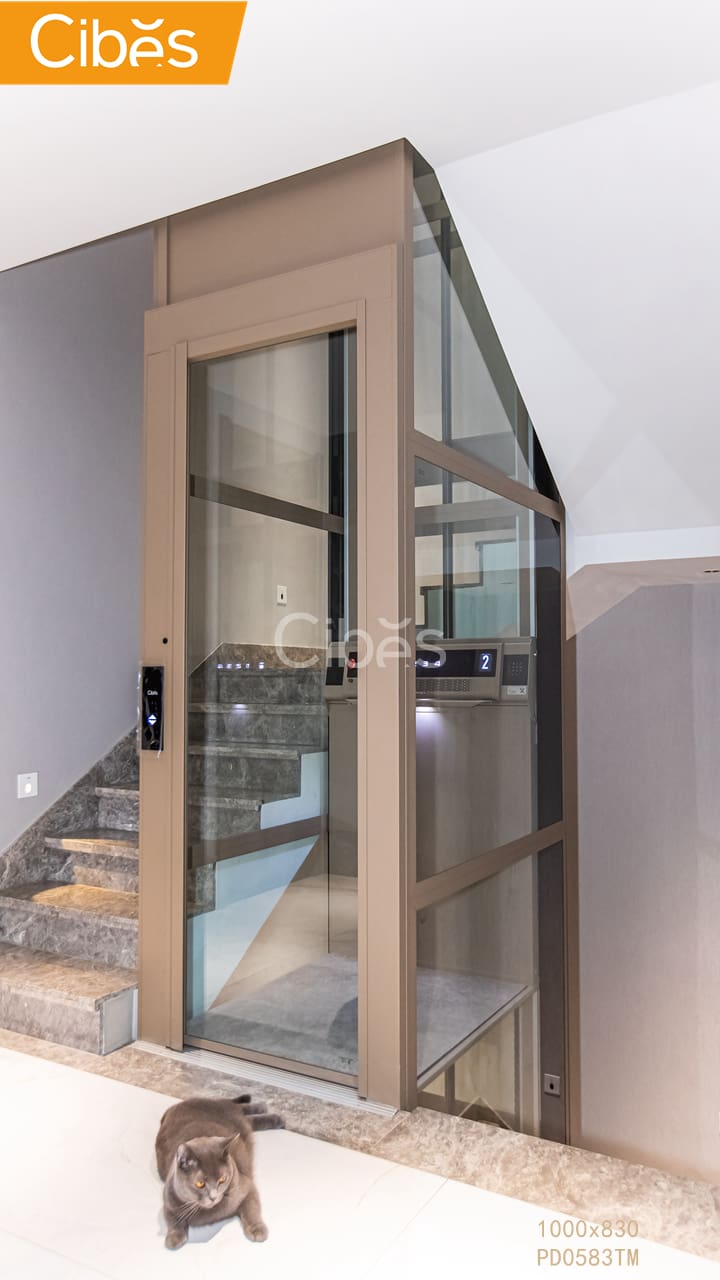
- The lift needs to fit beside or within a staircase
- The property is being renovated
- A prefabricated shaft is preferred
- The homeowner wants to reduce structural changes
Exact pit, headroom, power, and space requirements still depend on the selected model.
How much space does a home lift need?
There is no single minimum size for every home lift. Space requirements depend on the platform or cabin size, shaft structure, door arrangement, and building conditions.
A home lift may be installed:
- Inside a stair void
- Beside a staircase
- In a corner of a room
- Against an external wall
- Inside a prepared concrete shaft
- Inside a prefabricated glass or metal shaft
Cibes offers up to 41 size configurations to suit different home layouts. Some compact models require an installation space starting from just 940 × 1,000 mm, with either a shallow pit or a ramp. The required headroom can start from 2,050mm, depending on the model.
The exact space required depends on the lift model, door configuration, and user needs. A site survey is therefore required before construction begins.
This is especially important for Cambodian borey houses, shophouses, and villas, where stair openings and room dimensions can vary. Walls, stairs, beams, windows, and doors must all be checked carefully. Even a small difference in the available space can
Does a home lift need a pit and machine room?
Not always.
Some home lifts require a conventional pit and separate machine space. Other models can use a shallow pit or an access ramp.
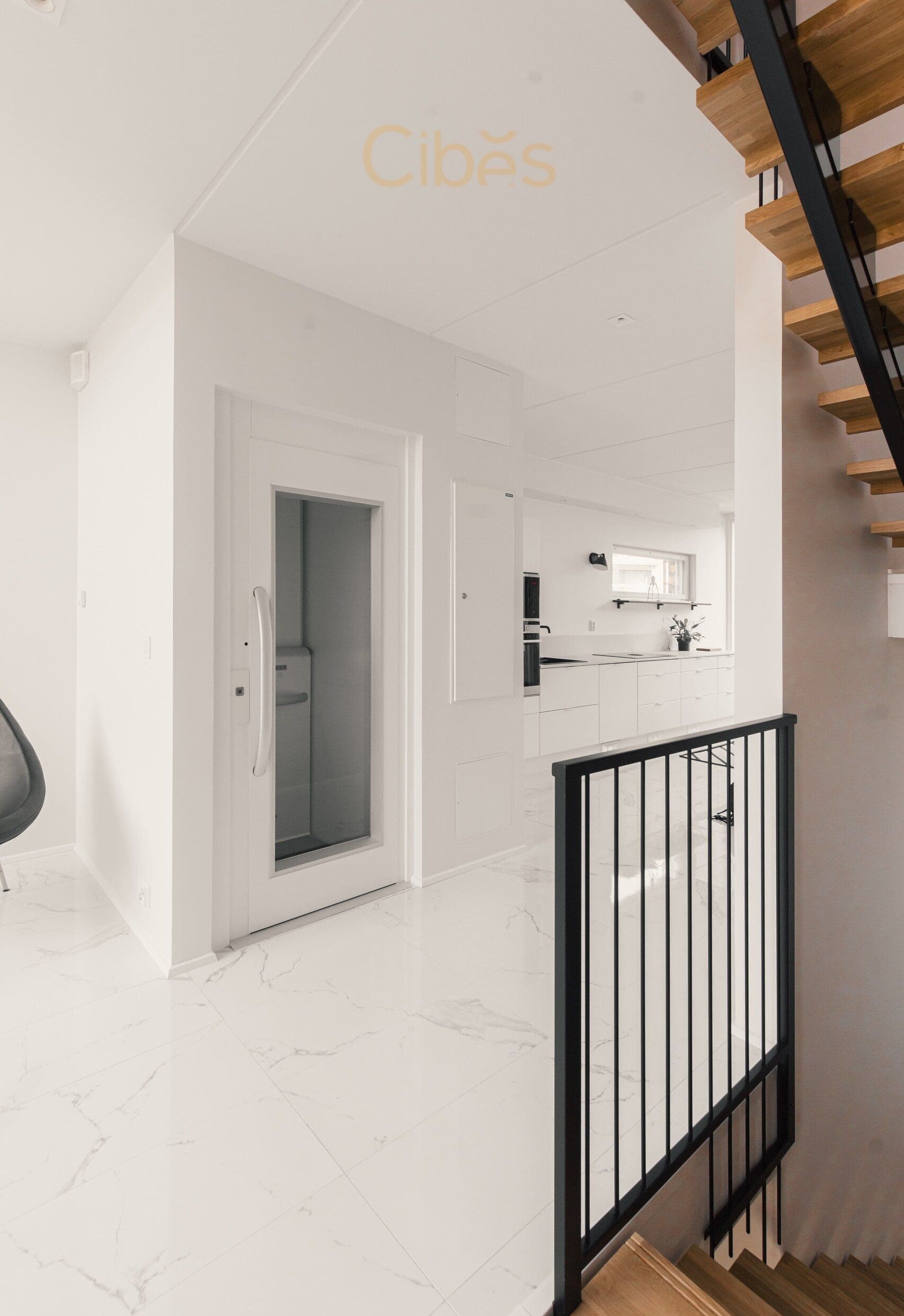
Many screw-driven Cibes home lifts don’t need a separate machine room because the drive system is integrated into the lift structure. Depending on the model and site, the lift may use a shallow pit or a ramp when excavation isn’t possible.
These details must be confirmed before construction starts. The approved technical drawing should show the required pit, shaft, door openings, headroom, and fixing points.

Which safety features should homeowners compare?
Safety should be checked against the exact lift model and technical specification. Don’t rely only on general statements such as “European quality” or “advanced safety.”
Ask the supplier to explain:
- Applicable safety standard
- Door interlocks
- Emergency stop
- Obstruction protection
- Overload protection
- Emergency lowering during a power cut
- Alarm or communication system
- Backup battery
- Landing accuracy
- Manual rescue procedure
- Safety inspection before handover
Cibes platform lifts are designed according to EN 81-41 where applicable. The relevant standard and certification should be confirmed for the selected model.
Families with children, older people, or wheelchair users should also review the door arrangement, controls, available platform space, handrails, and emergency procedure.

How should you compare home lift prices?
The lift price alone doesn’t show the total project cost.
Ask each supplier to provide a clear written scope covering:
- Lift equipment
- Lift shaft
- Shipping and taxes
- Civil work
- Electrical work
- Installation
- Testing and handover
- Permits or inspections where required
- Warranty
- Maintenance
- Emergency support
- Spare parts
- Additional outdoor protection where required
A lower equipment price may lead to a higher total project cost if the shaft, construction work, installation, or service is excluded.
It’s also worth asking what happens after the warranty ends. Maintenance frequency, labour charges, spare-parts availability, and emergency support can affect the long-term cost of owning the lift.
How long does home lift installation take?
Installation time depends on several factors:
- Lift model
- Number of stops
- Travel height
- Shaft type
- Indoor or outdoor location
- Site readiness
- Delivery access
- Required building work
- Testing and adjustment
Once the site is ready, a typical indoor Cibes home lift installation may take about 7 to 14 working days, depending on the model and number of stops. A multi-floor or outdoor project can take longer because it may need extra shaft work, weather protection, sealing, and finishing.
For reference, applicable Cibes screw-driven models can serve up to 8 stops and 20 m of travel. The final schedule should state whether shaft work, electrical preparation, finishing, testing, and handover are included.
What local service should a home lift supplier provide?
Local service matters just as much as the lift itself. A home lift may be used every day, so the owner needs to know who will respond if a problem occurs.
Before signing a contract, ask:
- Who will install the lift?
- Are the technicians employed locally?
- Who handles emergency calls?
- How often is maintenance required?
- What does the warranty cover?
- Are labour and spare parts included?
- How quickly can spare parts arrive?
- Will the family receive user and rescue training?
- Will the supplier provide maintenance records?
Written answers are more useful than broad promises about fast service or low maintenance.
Why consider Cibes Lift Cambodia?
Cibes Lift Cambodia is part of Cibes Lift Group, a Swedish lift manufacturer. Cibes home lifts are supplied through the Group and installed by the local Cibes technical team in Cambodia.
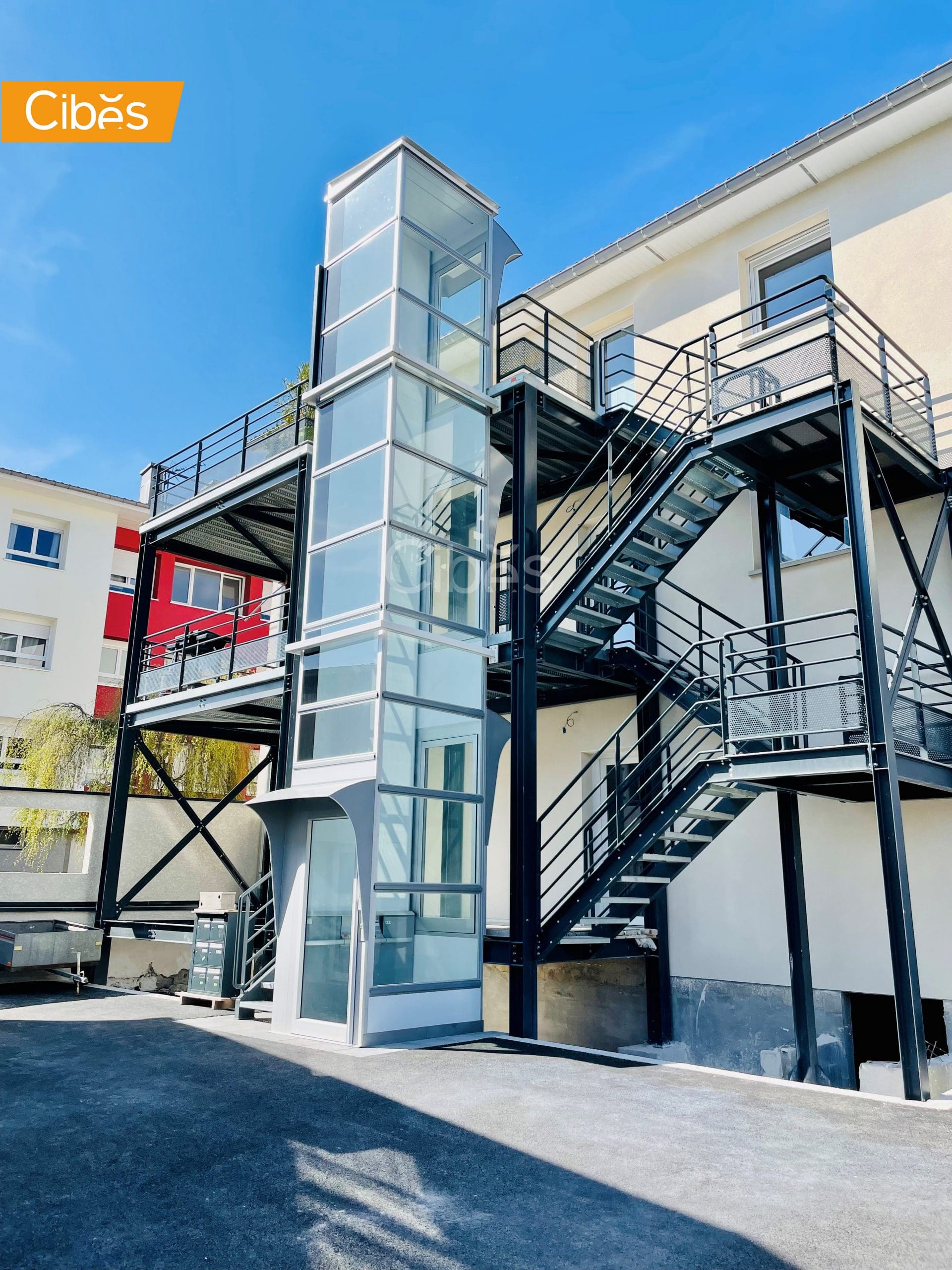
Cibes screw-driven home lifts suit private houses, villas, borey homes, shophouses, and renovation projects. Depending on the model, they can use a shallow pit or access ramp and don’t need a separate machine room. For outdoor projects in Cambodia, the site plan should also cover rain, heat, humidity, drainage, roof protection, and sealing.
Key reasons to consider Cibes include:
- Swedish screw-driven lift technology
- Certified according to European safety standard EN 81-41 on applicable models
- Up to 41 size configurations for different home layouts
- Platform lift and cabin lift options
- Prefabricated shaft or installation inside a prepared building shaft
- Single-phase 220 to 230 V power options on applicable models
- Emergency lowering during a power cut
- Local installation and maintenance team
- 24/7 emergency phone support
- One-year spare-parts warranty
- Five-year motor warranty
- Ten-year screw and nut warranty
- Two free maintenance visits during the first year
Before recommending a model, the Cibes Lift Cambodia team can inspect the property and confirm:
- Suitable lift model
- Platform or cabin size
- Shaft arrangement
- Door position on each floor
- Pit and headroom requirements
- Power supply
- Required building work
- Installation scope
This gives the homeowner a clearer view of the complete project before approving the technical drawing and order.

Watch this video to see how a Cibes screw-driven home lift works and how its compact design fits into a private home without a separate machine room.
Real Home Lift Installations in Cambodia
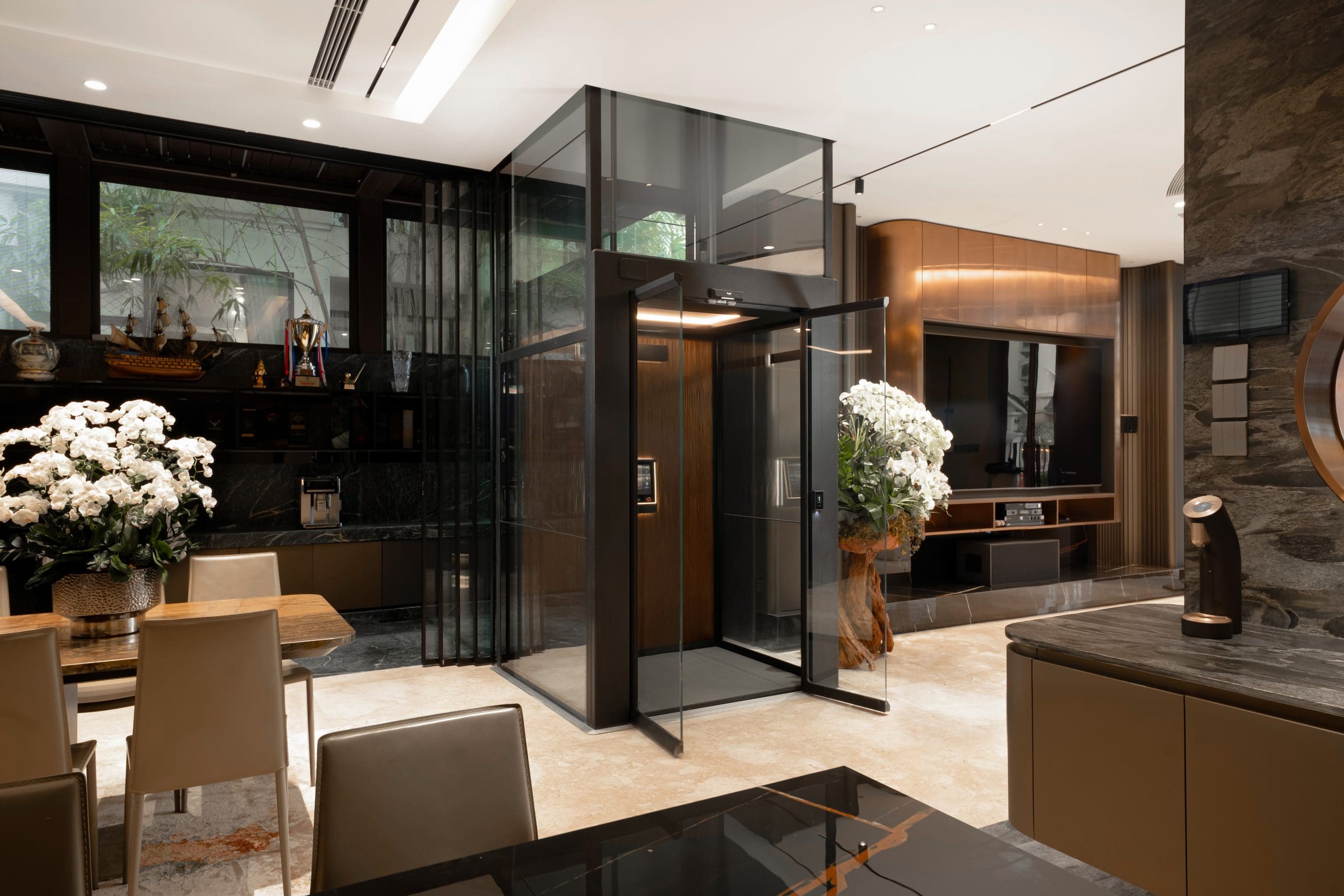
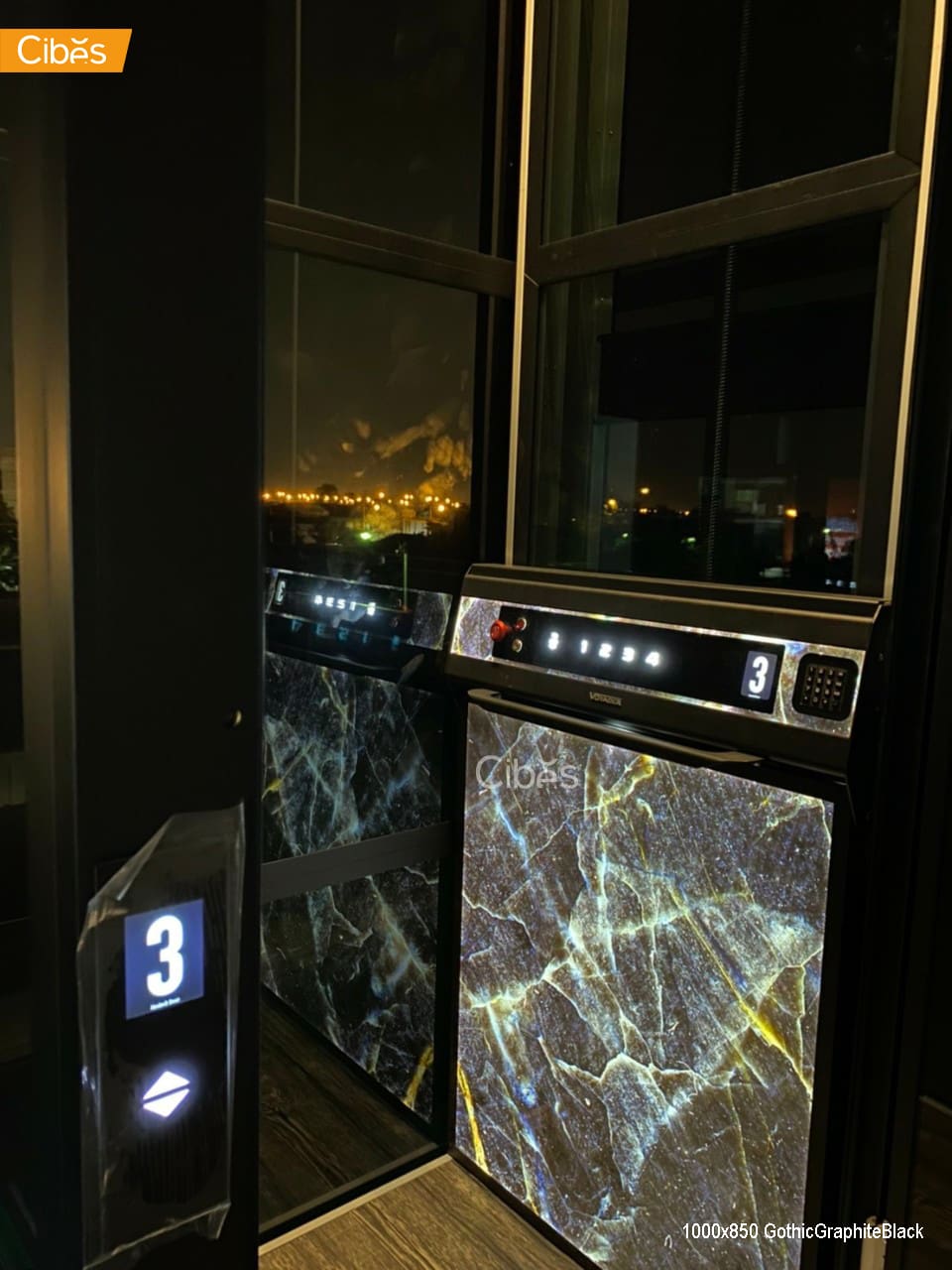
Cibes V90 Galaxy
Location: Private house beside Olympic Market.
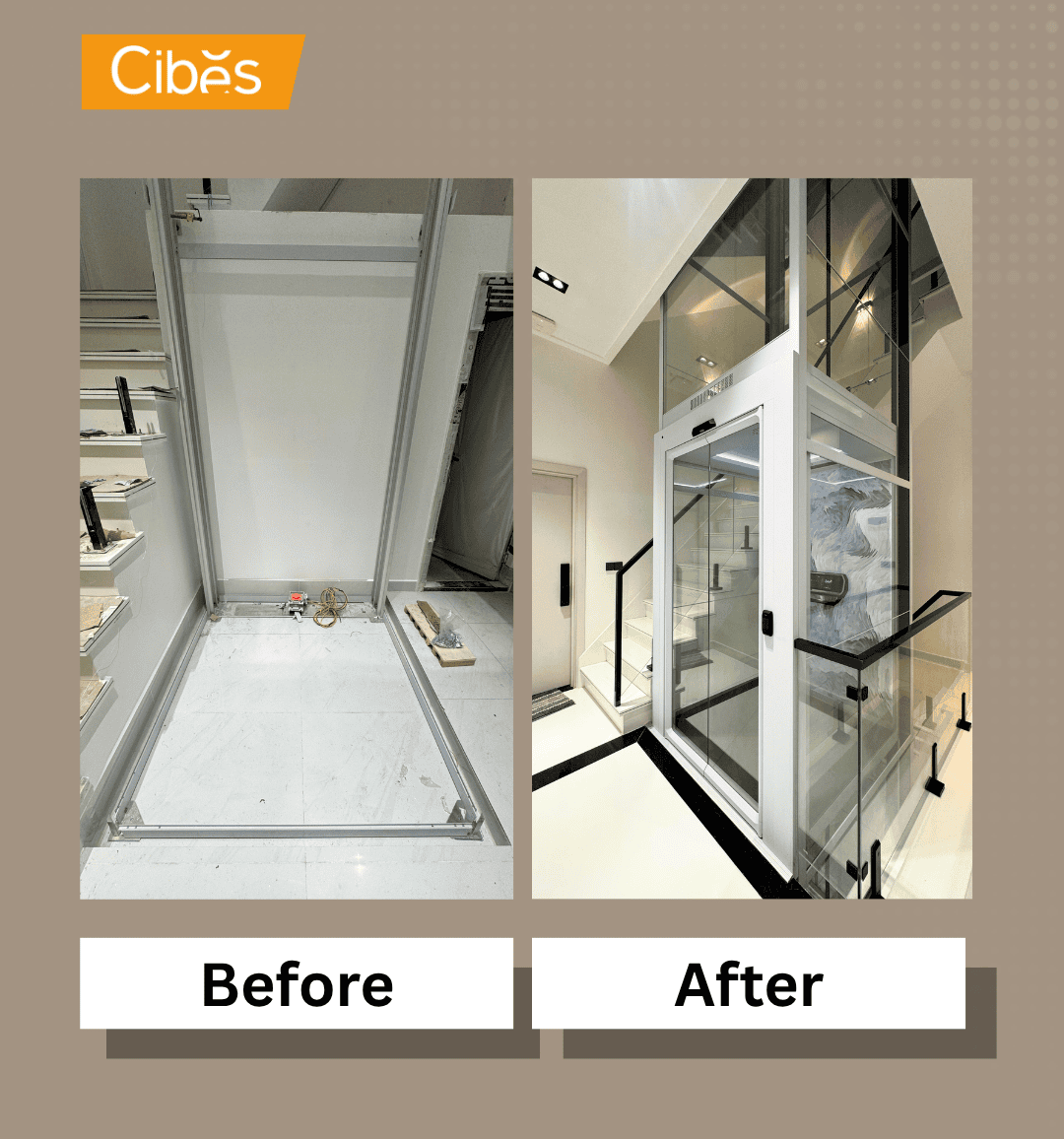
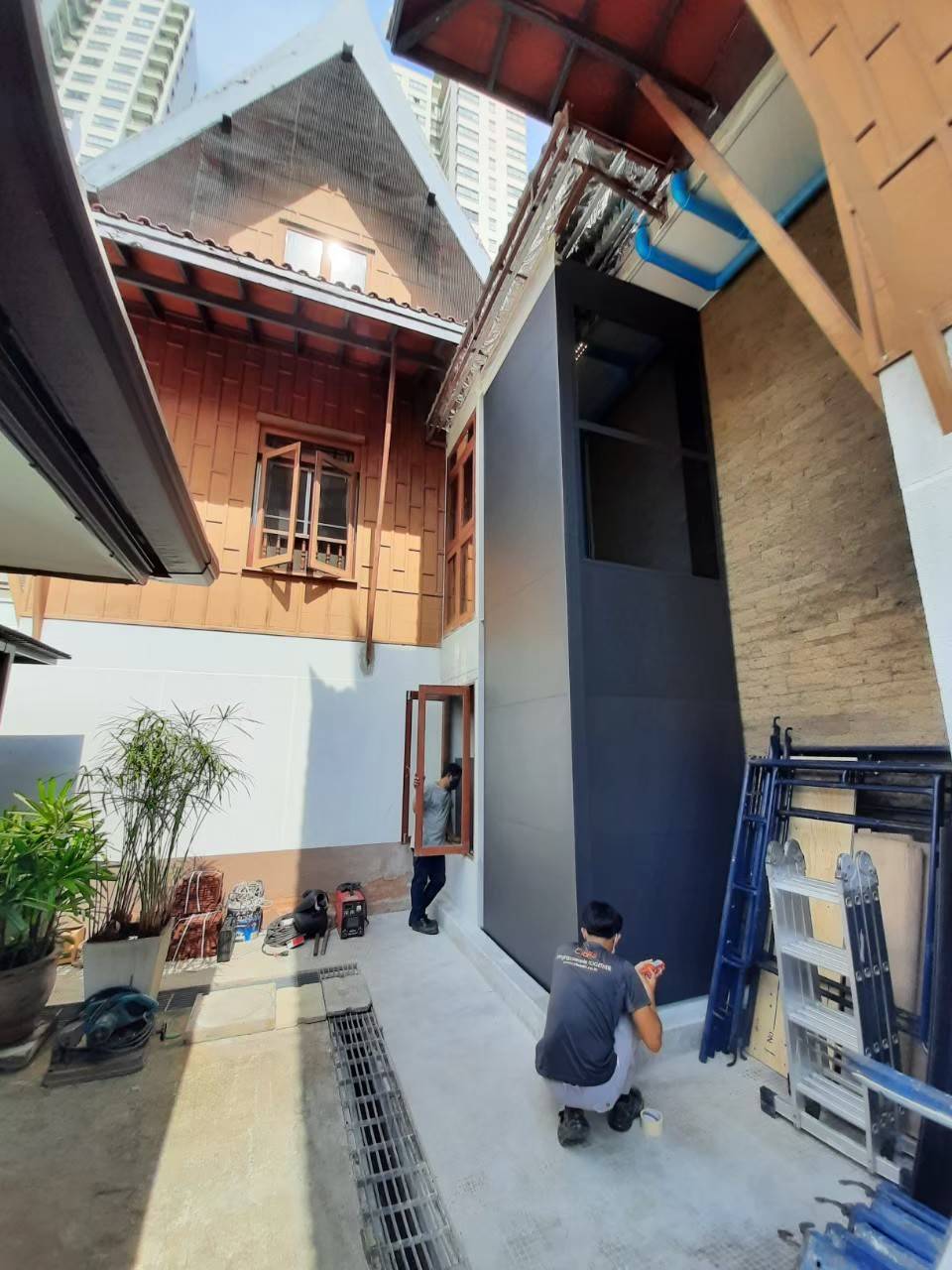
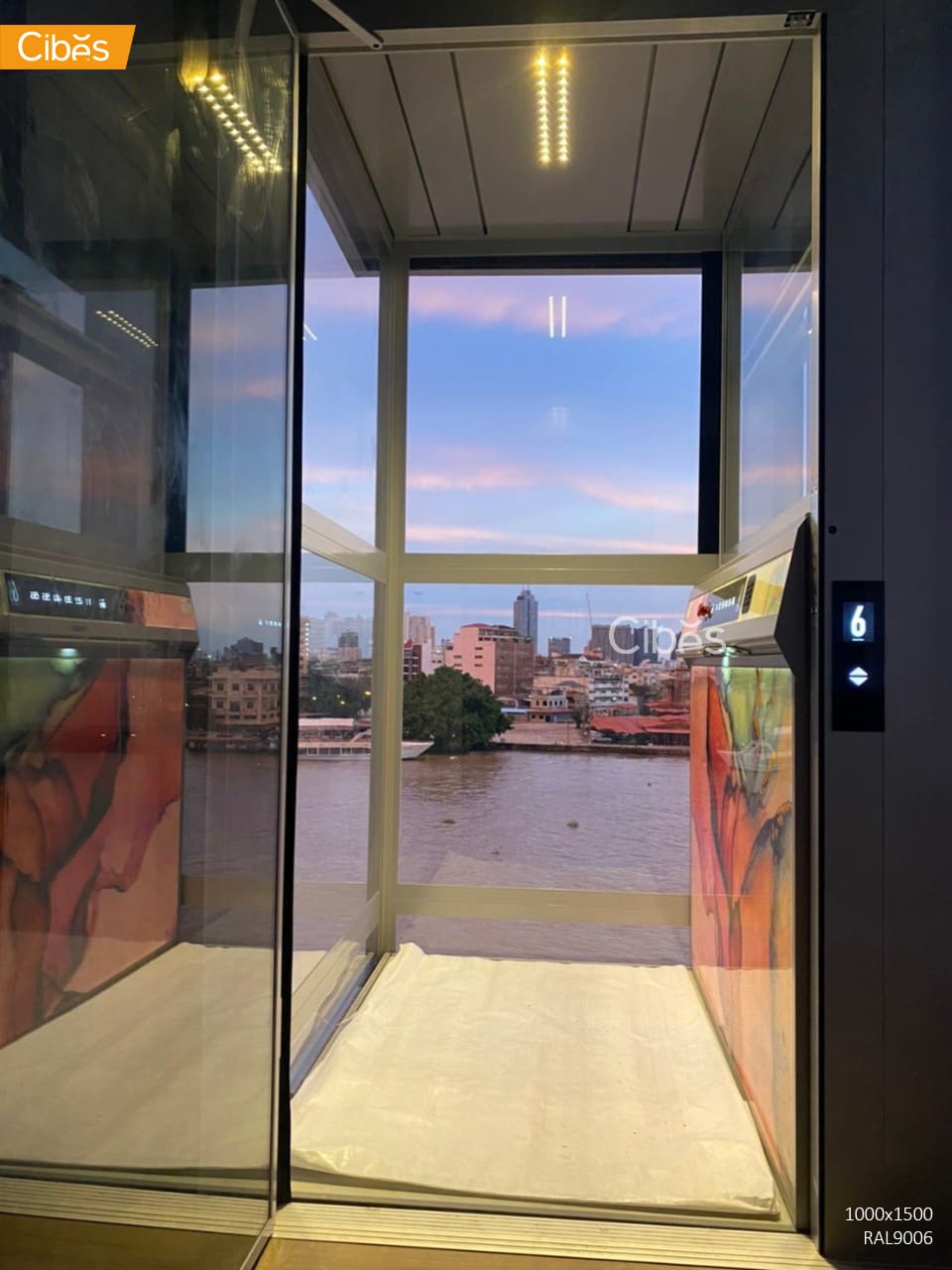
Cibes V90 Elegance
Location: Private Villa at Kampong Saom Province

Learn more about home lift costs, installation requirements, and the factors that affect the final price in our guide: Home Lift Prices in Cambodia.
Frequently asked questions about home lifts in Cambodia
Yes, in many cases. Installation depends on available space, structure, floor openings, travel height, and delivery access. A site survey is needed before confirming the design.
It may be possible when the stair void has enough width and depth. The supplier must also check stair clearance, beams, floor openings, door access, and structural fixing points.
No. Some home lifts use a shallow pit, while certain models can be installed with an access ramp. The requirement depends on the lift technology and model.
Not always. Some home lifts can operate with a single-phase household power supply. The required voltage and electrical capacity must be confirmed for the selected model.
Yes, if the model and shaft are designed for outdoor use. The project may require weather protection, sealing, drainage, roof protection, and suitable outdoor materials.
Some models use battery-powered emergency lowering so users can reach a landing during a power failure. Ask the supplier to demonstrate the exact emergency procedure during handover.
The maintenance schedule depends on the model, usage, and installation environment. Outdoor lifts may require more frequent checks than indoor lifts. The schedule should be written in the service agreement.
A suitable lift is one that fits the property, users, safety requirements, budget, and service needs. For a narrow borey house or renovation, a compact screw-driven model may reduce structural work. A larger villa may allow a bigger platform or cabin. A site survey and approved technical drawing are needed before the model is confirmed.
Choosing a home lift is a technical decision, but it doesn’t need to feel complicated. Begin with a site survey. Then compare the available space, lift technology, building work, safety features, complete cost, warranty, and local support.
Contact Cibes Lift Cambodia, a subsidiary of Cibes Lift Group.
Website: www.cibescambodia.com
Hotline: 081 811 184/ 011 837 183
Showroom: House 261, Commercial Road, near Chip Mong 271 Mega Mall, Phnom Penh, Cambodia

Kahna Pov is the Country Manager of Cibes Lift Cambodia, the official subsidiary of Cibes Lift Group from Sweden. With over 4 years of experience advising on residential lift solutions and coordinating projects, she has supported homeowners, architects, and project teams across Cambodia in selecting Cibes screw-driven lifts that are safe, space-saving, and well suited for private homes.





TL;DR: An imported lift can improve access to a villa, townhouse, or renovated home. Yet the word “imported” doesn’t prove that a lift is safe or suitable. Check the manufacturer, exact model, safety documents, usable space, shaft requirements, power supply, installation scope, warranty, maintenance plan, and spare-parts support in Cambodia. Arrange a site survey and […]
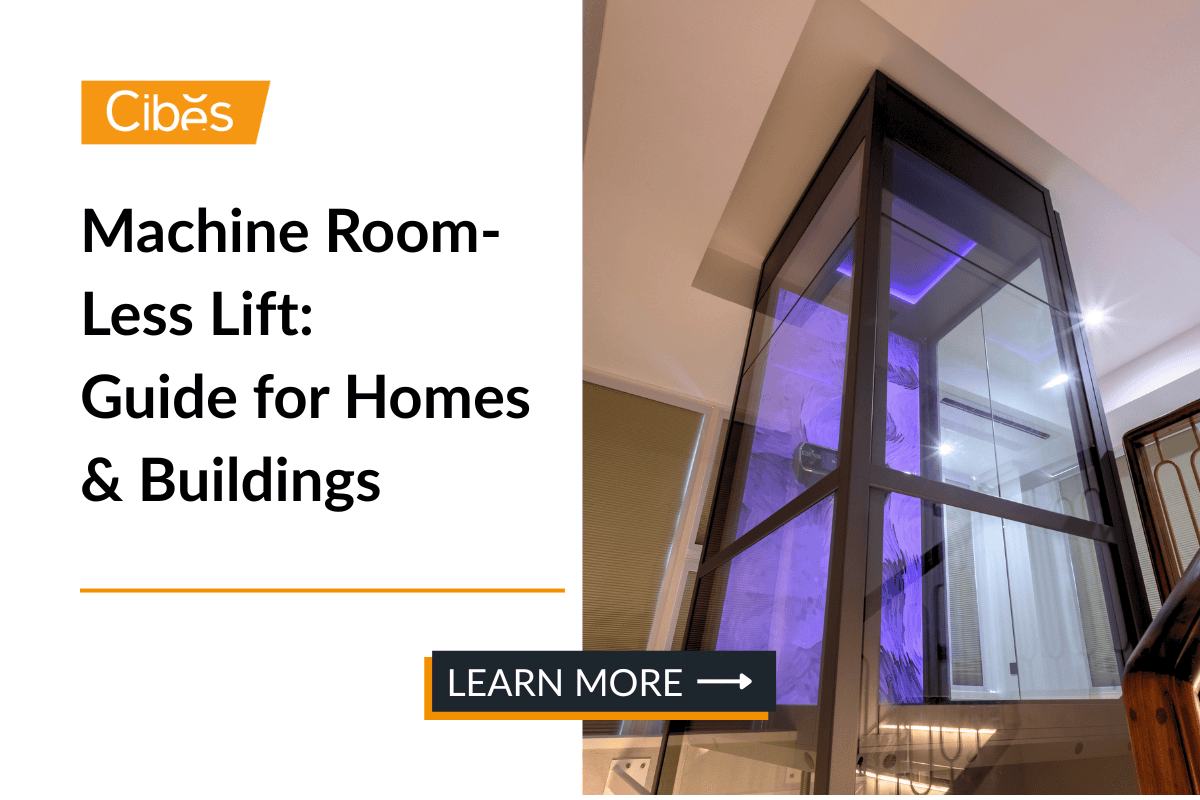
Whether you’re building a new home, renovating an ex isting property, or planning a commercial project, choosing the right elevator is an important decision. One of the most popular options today is the machine room-less lift. Unlike traditional elevators that require a separate machine room, a machine room-less lift integrates the drive equipment into the […]

In Cambodian villas, borey houses and shophouses, a home elevator can be installed in the middle of the staircase, beside the stairs, in an open stair void or outside the house. The right location depends on the available space, staircase design and structural conditions. TL;DR The best location for a home elevator depends on your […]
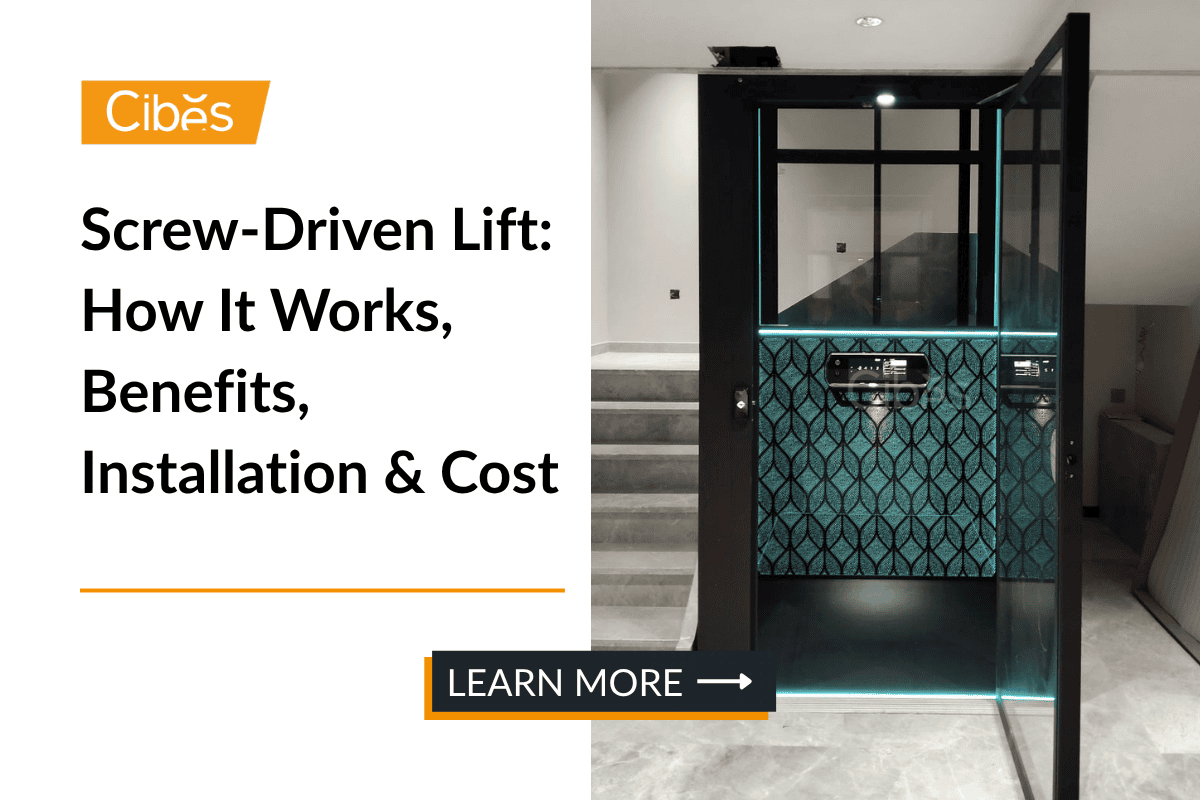
A screw-driven lift is a compact home lift that moves a lift with a motor, steel screw and drive nut. For Cambodian villas, borey houses, clinics and small buildings, it is often chosen because it can work without a machine room and with a shallow pit or ramp, depending on the model and site condition. […]
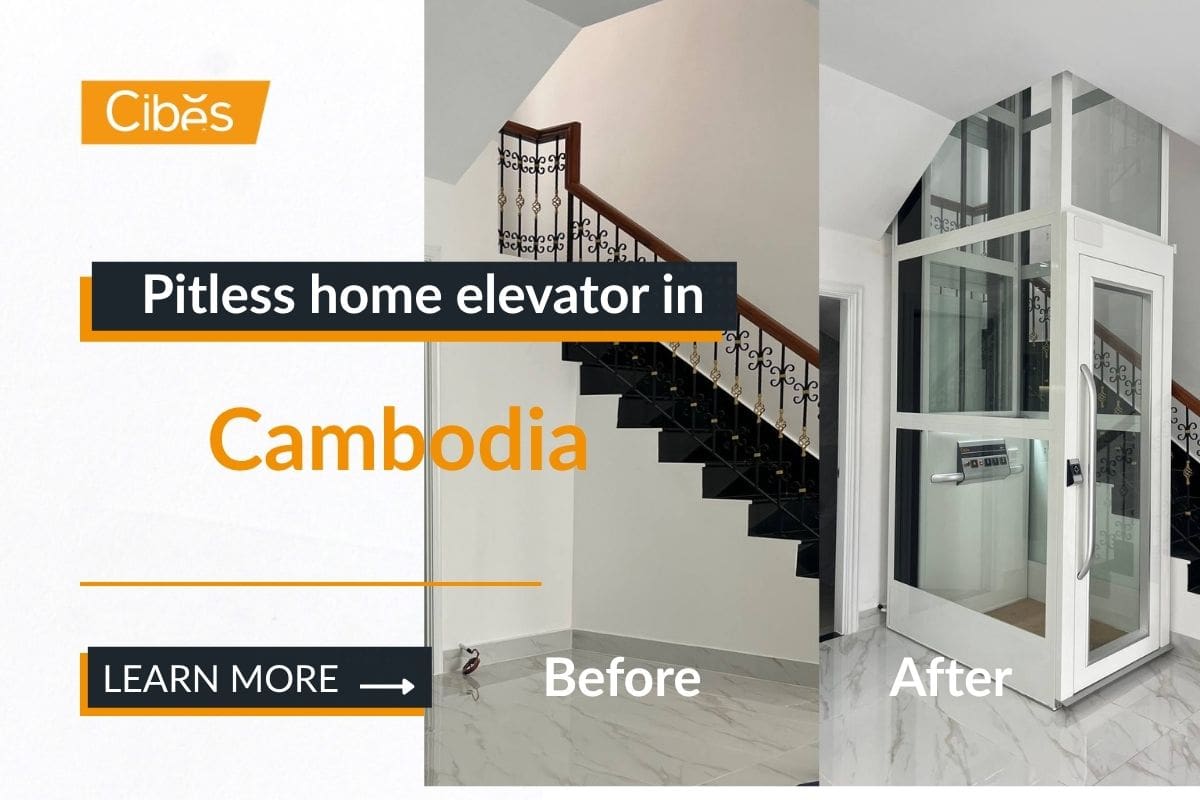
A pitless home elevator is a residential lift that operates with little or no pit below the lowest landing. A traditional home elevator needs a pit of about 600 to 1500 mm. A pitless lift works with 0 to 120 mm, so it can sit on a finished floor with minimal building work. TL;DR: This […]